


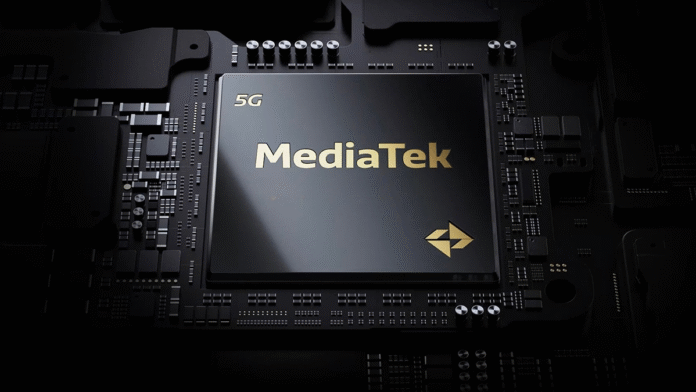
Samsung’s next flagship tablets are shaping up to be a big deal for Android fans, especially as the company expands Galaxy AI across devices like the upcoming Samsung Galaxy S27. A fresh APK teardown of Samsung’s AI Core app has revealed that the upcoming Galaxy Tab S12 series will be powered by MediaTek’s Dimensity 9500 chipset, marking the third consecutive generation of Samsung premium tablets running on MediaTek silicon.
The discovery was first reported by Android Authority, which found references to the model number “MT6993” buried inside the app’s code. That identifier corresponds directly to MediaTek’s current flagship mobile processor. While the code does not explicitly name the Galaxy Tab S12, Samsung’s recent track record makes the connection almost certain.
What the APK Teardown Revealed
The teardown didn’t just confirm the chipset. It also uncovered four AI-powered features associated with the Dimensity 9500 inside Samsung’s software:
- AI Wallpaper Generation: Creating custom wallpapers using on-device artificial intelligence
- Generative Photo Editing: Editing images with AI tools that run locally on the tablet
- AI Image Expansion: Extending the boundaries of existing photos beyond their original frame
- Image Harmonization: Automatically adjusting colors, lighting, and contrast so that composite images look more natural
These features suggest that Samsung is doubling down on Galaxy AI for its tablet lineup, and the Dimensity 9500’s powerful NPU could be the engine that makes it all work without relying on cloud servers.
What Is the MediaTek Dimensity 9500?
For those unfamiliar, the MediaTek Dimensity 9500 is a flagship 3nm mobile processor announced in September 2025. It was built on TSMC’s third-generation N3P process and quickly found its way into several high-end Android smartphones.
Here’s a quick look at the key MediaTek Dimensity 9500 specs:
- CPU: 3rd-gen All Big Core design with 1x C1-Ultra core at 4.21GHz, 3x C1-Premium cores at 3.5GHz, and 4x C1-Pro cores at 2.7GHz
- GPU: Arm Mali G1-Ultra MC12, delivering up to 33% higher peak performance and 119% faster ray tracing compared to the previous generation
- NPU: NPU 990 with Generative AI Engine 2.0, offering 2x the compute power of the Dimensity 9400’s AI processor
- Storage: Industry-first 4-channel UFS 4.1 support, doubling read/write speeds
- Process: TSMC 3nm (N3P)
- Connectivity: 5G Sub-6GHz, Wi-Fi 7, Bluetooth 6.0
The NPU 990 is particularly relevant for Samsung’s tablet ambitions. It supports BitNet 1.58-bit model processing and can generate 4K ultra-HD images entirely on-device. According to MediaTek, it delivers 100% faster output for 3-billion-parameter large language models while consuming up to 56% less peak power. This dual-NPU architecture pairs a high-performance unit for demanding tasks with a super-efficient always-on processor for lightweight AI operations.

Which Phones Already Use the Dimensity 9500?
The chip has already been tested in the real world across multiple flagship smartphones. Here’s a list of confirmed Dimensity 9500 phones released so far:
- Vivo X300 and Vivo X300 Pro (launched October 2025)
- Oppo Find X9 and Oppo Find X9 Pro (launched October 2025)
- Honor Magic8 Pro Air (launched early 2026)
Several more devices are rumored to adopt the chip, including the iQOO 15T, Redmi K90 Max, and OnePlus Ace 6 Ultra. The Samsung Galaxy Tab S12 series would be the first tablet to officially feature this processor.
Dimensity 9500 vs Dimensity 9400+: How Big Is the Upgrade?
The Galaxy Tab S11 series ran on the Dimensity 9400+, so the jump to the Dimensity 9500 represents a generational leap. The improvements are significant across every major area.
In terms of raw CPU performance, MediaTek claims up to 32% higher single-core scores and 17% better multi-core results. The ultra core alone uses 55% less power at peak performance compared to its predecessor, which should translate to noticeably better battery life during intensive tasks.
GPU performance sees an even bigger jump. The new Arm Mali G1-Ultra GPU delivers 33% more peak performance while being 42% more efficient. Ray tracing capabilities are 119% faster, meaning supported games can run at 120 FPS with ray-traced lighting effects enabled.
AI processing doubles in capacity. The NPU 990 is roughly twice as powerful as the NPU inside the Dimensity 9400+, handling larger language models and generating higher-resolution images without needing a cloud connection.
Real-world benchmark data from smartphones backs up these claims. The Dimensity 9500 typically scores around 3.3 to 3.5 million on AnTuTu V11, compared to roughly 2.8 million for the Dimensity 9400+. On Geekbench 6, single-core scores land around 3,300 to 3,400 points, representing a substantial generational improvement.
How Does It Compare to the Snapdragon 8 Elite Gen 5?
This is the question many potential buyers want answered. The Dimensity 9500 and the Snapdragon 8 Elite Gen 5 are the two flagship Android chipsets of 2026, and each has distinct strengths.
Qualcomm’s chip holds an edge in raw CPU performance, with its custom Oryon cores clocking up to 4.6GHz and delivering roughly 13% higher scores in both single-core and multi-core benchmarks. This matters for tasks like game emulation, where Snapdragon has traditionally been stronger.
MediaTek fights back on GPU performance and thermal management. According to testing by Android Authority, the Dimensity 9500 delivers better sustained gaming performance and lower temperatures under load. This advantage becomes even more meaningful in tablets, where users often play games for extended sessions without active cooling.
Battery efficiency is another area where the Dimensity 9500 shines. Multiple reviewers have noted that Dimensity 9500 devices tend to last longer than their Snapdragon counterparts with similar battery capacities. For a tablet that might pack a 10,500mAh cell, that efficiency advantage could add meaningful hours of screen time.
Why Samsung Keeps Choosing MediaTek for Its Tablets
Samsung’s decision to stick with MediaTek for a third straight generation of flagship tablets says a lot about where the chipmaker stands in 2026.
The Galaxy Tab S10 series was the turning point. Before that, Samsung exclusively used Qualcomm Snapdragon processors in its premium tablets. The switch to MediaTek’s Dimensity 9300 was seen as a cost-driven move at the time. But Samsung continued with the Dimensity 9400+ for the Tab S11, and now the Dimensity 9500 for the Tab S12.
This pattern suggests that Samsung’s experience with MediaTek silicon in tablets has been positive enough to continue the partnership. The thermal management characteristics of MediaTek chips are especially well-suited to tablets, where thin form factors and large screens make heat dissipation more challenging than in smartphones.
There’s also a strategic angle. Samsung still relies heavily on Qualcomm and Exynos for its Galaxy phones and foldables, including devices like the Samsung Galaxy Z Fold7. By using MediaTek for tablets, the company diversifies its supply chain while potentially benefiting from more competitive pricing on the chipset itself.

Galaxy Tab S12: What Else Do We Know?
Beyond the Dimensity 9500 confirmation, here’s what leaks and reports have revealed about the upcoming Galaxy Tab S12 lineup:
- Models: Samsung is expected to release the Galaxy Tab S12+ and Galaxy Tab S12 Ultra only, skipping the standard model (following the same pattern as the Tab S10 series)
- Display: The Tab S12+ should feature a 12.4-inch OLED panel with QHD+ resolution and 120Hz refresh rate, while the Ultra retains its massive 14.6-inch screen
- Battery: The Tab S12+ may come with a 10,500mAh battery, about 4-5% larger than the Tab S10+
- RAM and Storage: Expect at least 12GB of RAM with 256GB base storage and microSD expansion
- Software: Android 17 with One UI 9.0, including expanded Galaxy AI features
- Other specs: Quad speakers with Dolby Atmos, IP68 water resistance, S Pen included, Wi-Fi 7, Bluetooth 6.0, 45W wired charging
- Launch window: According to ETNews via SammyGuru, Samsung could debut the series around September 2026
- Pricing: Expected to start between $1,100 and $1,200 for the Tab S12+

Should You Wait for the Galaxy Tab S12?
The Galaxy Tab S12 looks like a strong upgrade if you are using a Galaxy Tab S8 or older. With the Dimensity 9500, improved Galaxy AI features, and better efficiency, it should deliver a clear jump in performance, battery life, and on-device AI tools.
For Galaxy Tab S11 Ultra owners, the upgrade may feel more incremental. The biggest reasons to wait are the faster chipset, new AI editing features, and better thermal performance.
Overall, the Galaxy Tab S12+ and Tab S12 Ultra could become Samsung’s most capable Android tablets yet, with a launch expected around September 2026.
FAQs
Q1. What chipset will the Samsung Galaxy Tab S12 use?
The Galaxy Tab S12 series is expected to use the MediaTek Dimensity 9500, based on an APK teardown that found the chip’s model number (MT6993) inside Samsung’s AI Core app. This would make it the third generation of Samsung flagship tablets powered by MediaTek processors.
Q2. What are the MediaTek Dimensity 9500 specs?
The Dimensity 9500 is a 3nm flagship chipset featuring an 8-core All Big Core CPU (up to 4.21GHz), Arm Mali G1-Ultra MC12 GPU with 120 FPS ray tracing support, NPU 990 with Generative AI Engine 2.0, 4-channel UFS 4.1 storage, Wi-Fi 7, and Bluetooth 6.0.
Q3. Which phones use the Dimensity 9500?
As of May 2026, confirmed Dimensity 9500 phones include the Vivo X300, Vivo X300 Pro, Oppo Find X9, Oppo Find X9 Pro, and Honor Magic8 Pro Air. The Samsung Galaxy Tab S12 would be the first tablet to use this chip.
Q4. Is the Dimensity 9500 better than the Snapdragon 8 Elite Gen 5?
It depends on the use case. The Snapdragon 8 Elite Gen 5 leads in raw CPU performance by roughly 13%, while the Dimensity 9500 offers better sustained GPU performance, lower temperatures during gaming, and superior power efficiency. For tablets specifically, the Dimensity 9500’s thermal advantage is a significant benefit.
Q5. When will the Samsung Galaxy Tab S12 be released?
The Galaxy Tab S12+ and Tab S12 Ultra are expected to launch around September 2026, following Samsung’s established annual refresh cycle for its premium tablet lineup. Pricing is rumored to start between $1,100 and $1,200.
Q6. How much faster is the Dimensity 9500 compared to the Dimensity 9400+?
The Dimensity 9500 delivers approximately 32% higher single-core CPU performance, 17% better multi-core scores, 33% faster peak GPU performance, and 119% faster ray tracing compared to the Dimensity 9400+ found in the Galaxy Tab S11 series.
The post Samsung Galaxy Tab S12 Will Use the Dimensity 9500: Specs, AI Features, and What It Means appeared first on Memeburn.