



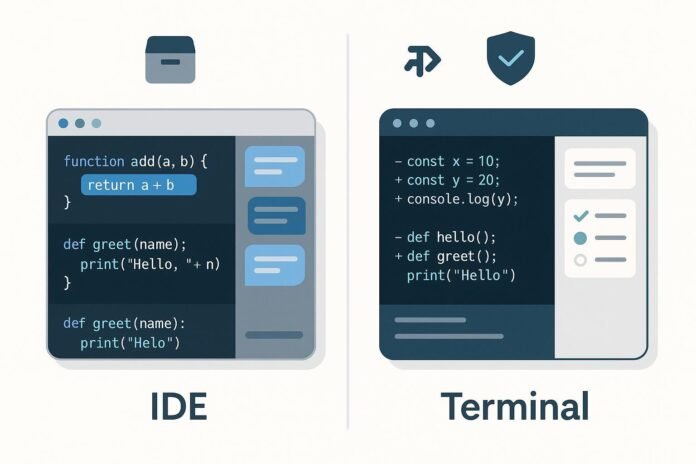
Microsoft just told thousands of its own engineers to stop using one of the most popular AI coding tools on the market — Anthropic’s Claude Code — and switch to its own GitHub Copilot CLI by June 30. The shift, first reported by The Verge’s Tom Warren, comes six months after Microsoft handed those same engineers Claude Code seats and watched adoption explode. Here’s what changed, why it matters for the AI tools you might use yourself, and what it says about the bigger fight over who controls the AI coding stack.
A tool that worked too well
In December 2025, Microsoft gave thousands of its employees — engineers, designers, and project managers — access to Claude Code.
The idea was simple: let people who don’t normally write code prototype apps with AI, and let serious engineers compare Claude Code against GitHub Copilot head-to-head. The experiment worked.

According to The Verge, Claude Code became wildly popular inside Microsoft over the next six months. The problem, as Tom Warren put it, was that it became “perhaps a little too popular.” Engineers were picking Anthropic’s tool over Microsoft’s own one, and the Copilot CLI — Microsoft’s command-line AI coding agent — was being quietly ignored.
What Microsoft is doing now
On May 14, 2026, Microsoft began rolling back the Claude Code experiment. The Experiences + Devices group — the org responsible for Windows, Microsoft 365, Outlook, Teams, and Surface — will lose most of its Claude Code licenses by June 30.

That date isn’t random: it’s also the last day of Microsoft’s fiscal year. In an internal memo, Rajesh Jha (Executive Vice President) framed the move as standardizing on a single AI coding tool: “Claude Code was an important part of that learning… at the same time, Copilot CLI has given us something especially important: a product we can help shape directly with GitHub.”
Why we think this is really about money and control
Microsoft’s official line is toolchain unification. The unofficial story, according to multiple reports, is cost.
Coding agents are expensive to run, based on data from The Product Compass — they chew through tokens, iterate over big codebases, and rack up real bills.

Sources told The Verge the decision is partly financial. We’ve also seen Anthropic itself tighten Claude Code access this year, briefly making it unavailable to new Claude Pro users before walking that back. The cost pressure is industry-wide.
There’s a control angle too: if Microsoft’s own engineers prefer a rival’s tool, why would any CIO standardize on Copilot? Letting that signal go public would have been bad for sales.
What this means for you, even if you don’t work at Microsoft
If you’ve never touched Claude Code or Copilot CLI, here’s the takeaway.
The AI coding tool you use at work in two years probably won’t be the one that’s “best” — it’ll be the one your employer can control, audit, and bill for.
That’s the real fight playing out here. Microsoft is choosing the tool it owns end-to-end (GitHub Copilot CLI runs on its own infrastructure, even though it can still call Anthropic’s Claude models in the background) over the one that worked better but lived outside its ecosystem.
We’ve seen variations of this story before — like when Microsoft Threat Intelligence recently flagged a malicious package in the Mistral AI supply chain, which underlined exactly why big companies want their AI traffic running through tooling they can monitor and govern themselves.
Claude isn’t banned — just the interface
One important detail: Microsoft isn’t cutting off Anthropic’s models. Anthropic’s models will remain accessible through Copilot CLI, alongside OpenAI’s and Google’s.
What’s going away is the Claude Code interface — the actual app and workflow that Microsoft engineers grew fond of.

Think of it like switching from one music player to another while keeping the same songs. The same model can produce different results depending on the “harness” wrapped around it (the rules, the memory, the tool permissions), which is why some engineers are unhappy.
And the underlying tension over who actually controls access to top-tier AI is showing up everywhere, not just inside Microsoft. A recent investigation found that a grey market in China is reselling Claude API access at 90% off, exposing user data in the process.
Whether it’s a U.S. trillion-dollar company or an underground proxy in Shenzhen, the same question keeps surfacing: who owns the pipeline?
What to watch next
The big thing we’re watching is whether GitHub can close the gap. Jha said GitHub has “already shipped significant improvements based on Microsoft feedback”, but engineers don’t switch tools out of loyalty. They switch when the new one is at least as good. If Copilot CLI doesn’t measure up, expect the internal pushback to spill into public view fast.
The other thing to watch: whether Amazon, Google, and other big tech employers follow Microsoft’s lead — or, like Amazon reportedly has, lean harder into giving staff the best third-party tools available. We’re at the start of a new phase of enterprise AI, and the rules aren’t written yet.
The post Microsoft Drops Claude Code: Engineers Forced Back to Copilot CLI appeared first on Memeburn.