



South Africa’s food and water challenges require more than big ideas. They require entrepreneurs who can build practical solutions, test them on the ground, and turn them into models that communities can use.
For Dr Phindile Cebekhulu-Msomi, group chief executive of Hazile Group, this work sits at the centre of her leadership. Her journey began in Orlando West, Soweto, where resilience and community shaped her early life. Although she once wanted to become a doctor, her path led her into business leadership, agribusiness and social impact. Today, she holds a Doctorate in Business Administration and leads ventures across agribusiness, consulting and social development.
Through Hazile Group, Dr Cebekhulu-Msomi is focused on water-efficient farming, sustainable business strategies and practical innovation. Her work includes hydroponics, agroprocessed products, water management, renewable energy projects and community development.
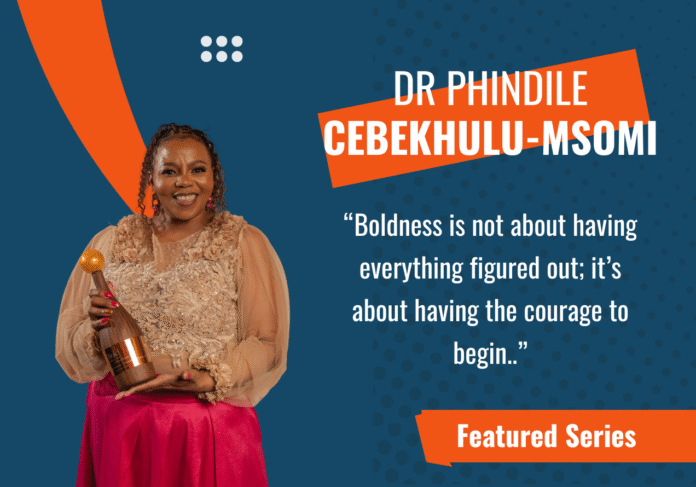
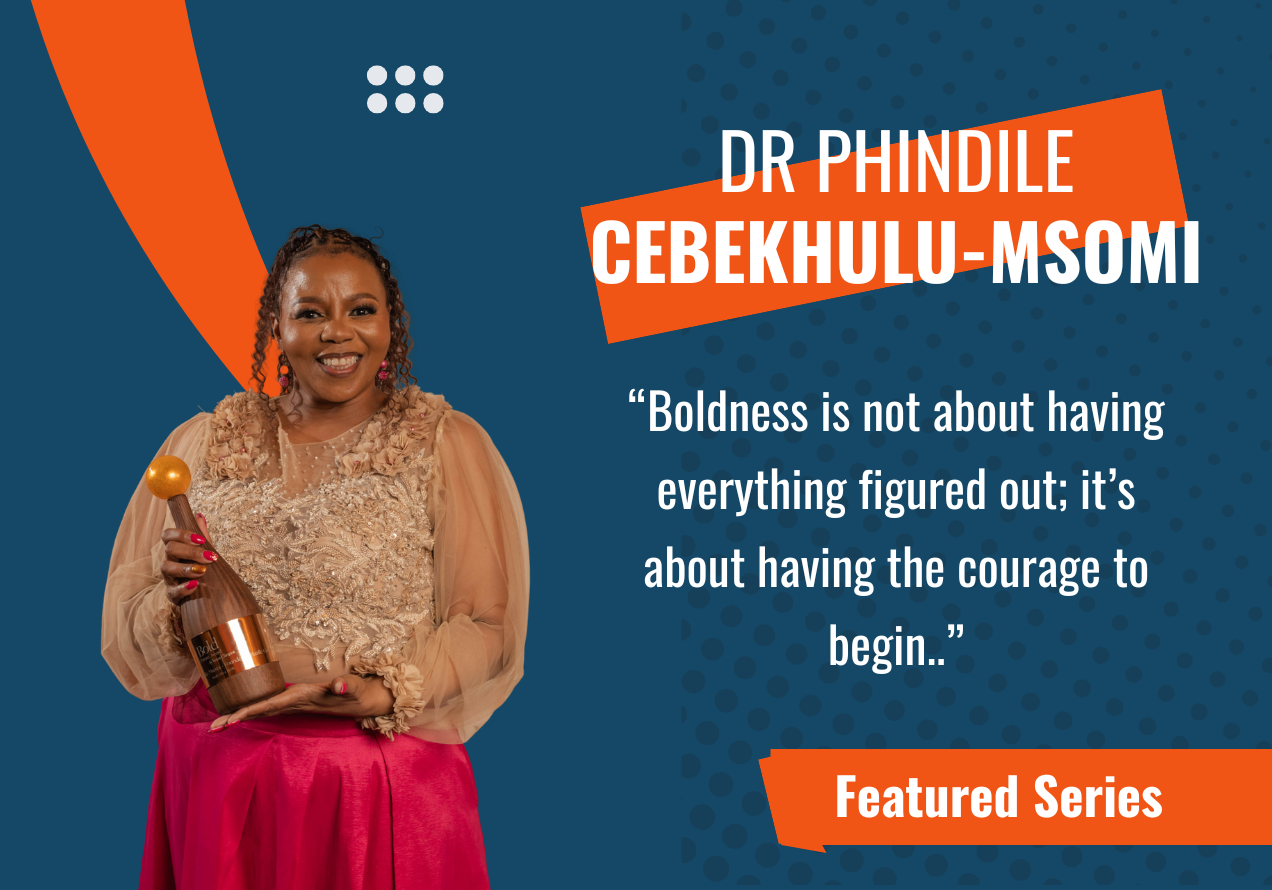
Her business has also gained national recognition. In 2025, she was named a Veuve Clicquot Bold Future Award winner, an achievement that she says accelerated both the visibility and credibility of Hazile Group.
“Winning the Veuve Clicquot Bold Future Award in 2025 accelerated both the visibility and credibility of Hazile Group,” she says. “Since then, we’ve strengthened our positioning in climate-smart agriculture and water innovation, expanded our processed and dried product lines, and are deepening partnerships within sustainability and food systems networks.”
Building From Resilience
Dr Cebekhulu-Msomi uses her work to teach entrepreneurship, leadership and confidence-building, especially through initiatives such as Basadi Bakopane NPO.
For her, business is not only about what the company achieves, but about how many opportunities it creates for others.
Hazile Group’s work reflects this. The business has expanded its hydroponics farm from one to three tunnels, revived farming operations after COVID-related losses, moved into agroprocessed products, and completed the Eco-Farm Pod prototype and trademark registration. It also trains women and young people in sustainable farming practices.
Climate-Smart Agriculture With Practical Roots
Climate-smart agriculture can often sound technical, but Hazile Group’s work brings it closer to everyday economic realities. The company focuses on farming and production systems that use resources more responsibly while creating room for local participation.
At a practical level, this includes hydroponics, water cleaning and reuse, greywater and rainwater harvesting systems, and renewable energy solutions.
These are important areas for South African SMEs because agriculture, food processing and water access are deeply connected. A small farming business cannot grow sustainably if it is exposed to high water costs, unreliable supply or outdated production methods. Hazile Group’s model speaks to this gap by linking innovation with training and enterprise development.
Since receiving the Bold Future recognition, Dr Cebekhulu-Msomi says the company has seen increased interest from partners, particularly within women-led and impact-driven ecosystems.
“We’ve also seen a notable increase in partnership enquiries and collaborative opportunities, particularly within women-led and impact-driven ecosystems,” she says. “The award didn’t just open doors; it validated the seriousness of our work in green innovation.”
From Visibility to Responsibility
Awards can bring attention, but for Dr Cebekhulu-Msomi, the recognition carried a deeper meaning. She says one of her biggest “pinch me” moments came when people began recognising her before she introduced herself.
But the moment that stayed with her the most was more personal.
“The real ‘pinch me’ moment was when a young woman approached me and said, ‘If you can do it, maybe I can too.’ That’s when it became bigger than business. It became about representation,” she says. “The award transformed visibility into responsibility, and that has been deeply humbling.”
Scaling Without Losing Purpose
For many founders, growth can create pressure to move faster than the business can manage. Dr Cebekhulu-Msomi’s approach is more deliberate. She says the award sharpened her vision around scale, governance and measurable impact.
“The recognition clarified my responsibility to think bigger, operationally and systemically,” she says. “Post-award, my vision has sharpened around scalability and policy alignment. It’s no longer just about running a successful business; it’s about building replicable models that can influence broader food and water security frameworks in South Africa.”
This is a significant point for SMEs. Growth is not only about selling more products or entering more markets. In sectors such as agriculture, water and sustainability, responsible growth also means building systems that can be repeated, measured and trusted.
The Value of the Bold Network
Beyond the award itself, Dr Cebekhulu-Msomi credits the Bold network with helping her think more deeply about responsible scale.
“The Bold programme offers something incredibly valuable: proximity to excellence,” she says. “Being surrounded by high-calibre women founders challenges you to elevate your own standards.”
She describes the network as a space for strategic insight, peer mentorship and conversations about scaling without compromising purpose.
“Responsible growth is intentional growth, and the network reinforces that sustainability, governance and innovation must move together. It’s a sisterhood of accountability and ambition,” she says.
For a founder working across agriculture, water, innovation and social development, that kind of network matters. It creates space to test ideas, refine strategy and build relationships that can support long-term growth.
A Legacy of Women-Led Innovation
Dr Cebekhulu-Msomi is also part of a five-year milestone for the Veuve Clicquot Bold programme in South Africa. For her, that milestone represents more than a celebration.
“It means legacy. Five years represents consistency, belief and investment in women’s leadership. To be counted among that legacy is an honour,” she says. “This milestone signals that bold women are not exceptions; we are a movement. And movements change industries, economies and narratives.”
Her work through Hazile Group reflects this broader movement. It combines business strategy with community development, technology with farming, and leadership with mentorship. It also challenges the idea that impact businesses must remain small or informal.
Instead, Hazile Group shows that social impact can be structured, measured and scaled.
Advice For Future Founders
For entrepreneurs still waiting for the perfect moment to start, Dr Cebekhulu-Msomi’s message is direct.
“Enter and do it now. Don’t wait until your business feels ‘perfect’ or fully formed. Boldness is not about having everything figured out; it’s about having the courage to begin,” she says.
She believes platforms such as the Bold programme do more than recognise businesses. They affirm that the founder’s vision matters.
“If you are building something that solves real problems and challenges the status quo, this is your space. Step forward boldly. South Africa needs you,” she says.
Dr Cebekhulu-Msomi’s story is a reminder that entrepreneurship in South Africa is not only about survival. It can also be about designing practical systems for food security, water resilience and inclusive growth. Through Hazile Group, she is proving that green innovation can be both commercially relevant and deeply human.