


IMF chief
As global economic uncertainty deepens with the ongoing conflict in the Middle East, Sub-Saharan Africa is emerging as one of the regions most exposed to the fallout, with rising fuel shortages, inflationary pressures, and renewed financing needs.
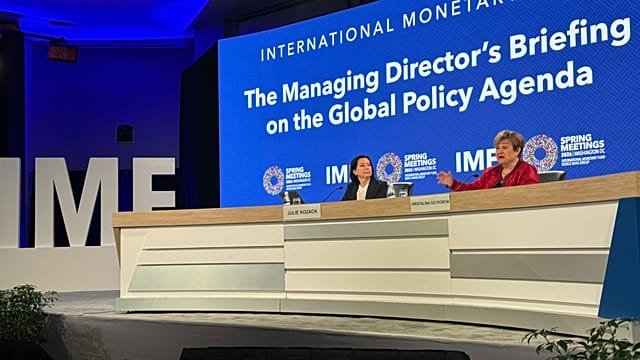
Speaking at the Spring Meetings of the International Monetary Fund in Washington, Managing Director Kristalina Georgieva acknowledged the growing strain on vulnerable economies and reaffirmed the institution’s role in supporting its member states.
“We are watching closely the events in the Middle East, which are causing pain around the world,” Georgieva said, expressing hope that a ceasefire could pave the way toward lasting peace.
But she warned that if the conflict persists, “we must brace for tough times ahead.”
Sub-Saharan Africa on the front line of the shock
The economic shock triggered by the conflict is global, driven largely by rising energy prices. However, its impact is far from evenly distributed.
“The heaviest burden falls on oil-importing countries and low-income countries,” Georgieva stressed, a category that includes many Sub-Saharan African economies.
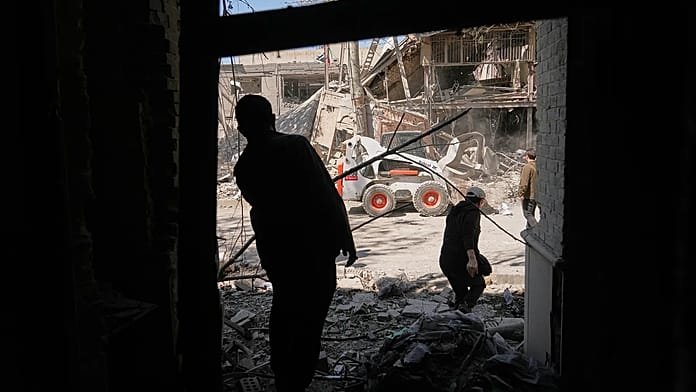
Already, the effects are being felt across the region, with fuel shortages spreading and costs of living increasing. Damage to infrastructure in conflict-affected areas has contributed to higher global prices, fueling inflation and slowing development prospects.
At the same time, demand for IMF support is rising.
Several countries in Sub-Saharan Africa are seeking new programs as they grapple with tightening financial conditions and limited fiscal space.
“Building resilience in times of peace”
In response to these challenges, Georgieva emphasized the importance of forward-looking policymaking. “Build sustainable policies in times of peace, do not wait for crisis,” she urged, highlighting the need for countries to strengthen economic fundamentals before shocks occur.
For those already in crisis, the IMF’s approach remains centered on stability. “Maintaining macroeconomic and financial stability is key,” she said, underscoring the importance of credible policy frameworks.
Limited fiscal space, difficult trade-offs
A central concern for many African economies is the growing burden of public debt. According to Georgieva, a succession of global shocks, from the pandemic to geopolitical tensions, has pushed debt levels to highs “not seen since the aftermath of World War Two.”
This leaves governments facing difficult choices.
“There must be a balance between fiscal sustainability and protecting those who are hit the hardest and the most fragile,” she explained, cautioning against broad, untargeted spending measures that could further strain public finances.
Instead, the IMF advocates for targeted support to vulnerable populations, combined with prudent fiscal management to preserve long-term stability.
The IMF as a “firefighter” in times of crisis
As pressures mount, Georgieva reiterated the IMF’s role as a critical backstop for countries in distress. “The role of the IMF is that of a firefighter for member countries,” she said, emphasizing the institution’s commitment to step in with financial assistance and policy guidance.
For Sub-Saharan Africa, this support is particularly crucial at a time when access to private capital is tightening and external vulnerabilities are increasing.
Yet beyond emergency response, the IMF’s broader mission remains unchanged. “The IMF’s mission is to help countries help themselves,” Georgieva said, a principle that underscores the need for both immediate support and long-term resilience.
A fragile road ahead
With uncertainty still high and risks tilted to the downside, the outlook for Sub-Saharan Africa will depend heavily on the trajectory of the conflict and the global policy response.
For now, the message from Washington is clear: while international support will be essential, the path to stability ultimately lies in a combination of sound domestic policies, targeted reforms, and strengthened resilience to future shocks.
You may also like