



Pentagon gives new $29bn Iran war price tag, downplays munitions concerns
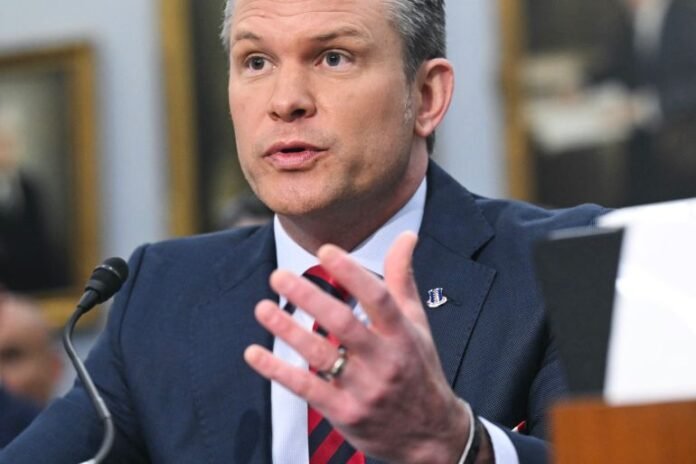
Appearing before congressional panel, Defense Secretary Hegseth says US is prepared to escalate or wind down war.
Save


Published On 12 May 202612 May 2026
The Pentagon has released a new price tag for the US-Israel war with Iran, saying it has cost the United States $29bn.
The department’s comptroller revealed the new total during a Senate committee hearing on Tuesday alongside Pentagon chief Pete Hegseth.
Recommended Stories
list of 3 itemsend of list
The estimate is an increase from the $25bn the official, Jules Hurst, reported to members of Congress in late April, the first time the administration of US President Donald Trump had given an official figure. Several experts have questioned the Pentagon’s ledger, saying the real cost to US taxpayers was likely much higher.
Fighting has remained generally paused in the US-Israeli war since April 8, barring a handful of flare-ups. Hurst attributed the discrepancy in the earlier to an “updated repair and replacement of equipment … and also just general operational costs”.
The administration has so far not offered a clear picture of damage sustained at US military installations across the Middle East since the US and Israel began launching attacks on February 28, nor has it revealed the true extent to which the fighting has affected the military’s munitions stockpile.
Asked about concerns over the US’s ability to replenish its weapons supply without weakening its global posture, Hegseth said the Pentagon was “well aware of all those dynamics”.
“The munitions issue has been foolishly and unhelpfully overstated,” Hegseth told the House Appropriations subcommittee. “We know exactly what we have; we have plenty of what we need.”
Advertisement
The Pentagon chief also gave little indication of long-term plans for the war, a day after Trump rejected a new ceasefire proposal from Iran.
Trump told reporters the ongoing pause in fighting was “on life support” and was “unbelievably weak”.
Hegseth said there were plans to both resume fighting and to de-escalate.
“We have a plan to escalate if necessary,” he said. “We have a plan to retrograde if necessary. We have a plan to shift assets.”
It has remained unclear whether the Trump administration will indeed have the political will to resume fighting amid the protracted standoff over the Strait of Hormuz.
The war – and its economic toll – has proven unpopular in the US and threatens to harm Republicans in the midterm elections in November.
On Tuesday, the US Labor Department reported that its consumer price index had risen 3.8 percent from April 2025, the highest annual increase since 2023. On a monthly basis, April prices rose 0.6 percent from March as prices for gasoline or petrol rose 5.4 percent.
The apparent dilemma for Washington was set to loom large during Trump’s visit to China this week, although US officials have said they hope to make progress on other issues, aside from disagreements over the war in Iran.
Speaking during the hearing, which concerned the Pentagon’s historic $1.5 trillion funding request, Chairman of the Joint Chiefs of Staff Dan Caine said responding to China’s growing influence would remain the top priority during the trip.
He said the Pentagon wants “a range and mix of capabilities that create outsized dilemmas for [Chinese President] Xi Jinping and others that are out there, to ensure that we maintain and sustain deterrence”.