


A Friday night youth church gathering was supposed to be like any other for me. Instead, on this night in 2024, it ended with me collapsing in a bathroom and waking up in a hospital bed at Netcare Blaauwberg Hospital, confused.
What the doctors found was the last thing I expected: hypertension.
But I was only 24. I’ve always thought high blood pressure was something that older people get.
Doctors initially said it was a drop in my blood pressure (BP) that caused me to pass out. But later checks told a different story. I vividly remember the doctor’s words to a family member.
“She can’t walk around with that kind of blood pressure. It could lead to a stroke.”
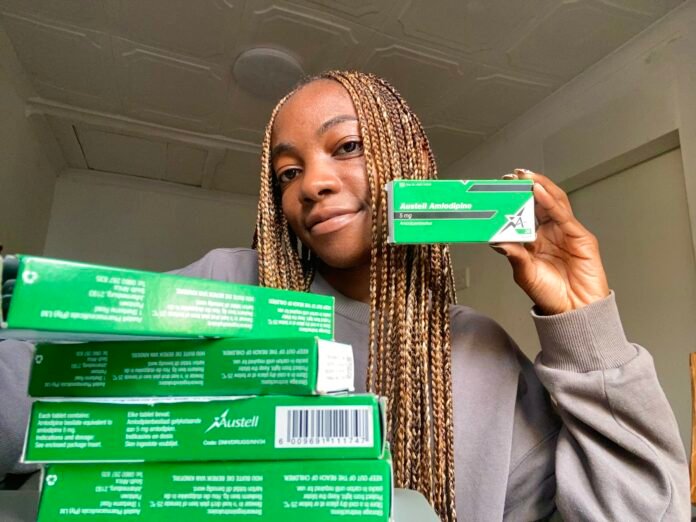
The doctor gave me amlodipine, medication to help regulate it, and I was discharged with a referral letter to New Somerset Hospital to see a specialist.
At Somerset, my BP readings were 147/91. According to the World Health Organisation 140/90 mmHg is the threshold for high blood pressure. Staff repeated the test checks multiple times, thinking the machine might be faulty. They were surprised that someone my age, with a petite size, had numbers that high.
It turns out my body had been giving me small warnings that started around July 2023. There were random fast heartbeats before bed, extreme fatigue and nausea after simple physical activities and dizziness that I couldn’t quite explain. At general check-ups, my BP would be 150/90, the normal range is 120/80. But I was told it could be stress, low iron, or even my diet.
On Monday 18 November 2024, I was officially diagnosed with hypertension.
A guide to blood pressure reading (Heart & Stroke Foundation South Africa)
While the exact number of young people with hypertension are unknown, national estimates show that between 2000-2010, the number of 15-24 year olds living with hypertension doubled.
I spoke to cardiovascular disease researcher Professor Lebo Gafane-Matemane from North West University’s Hypertension in Africa Research Team (HART) to get a better understanding of why more young people like me are being diagnosed with high blood pressure.
“There are very limited studies when it comes to the detection of childhood and young adult hypertension in South Africa, on the African continent and many other places in the world. So the numbers actually might be an underestimation of the actual problem,” she explains.
Deeper than lifestyle choices
Conventional wisdom tells us that high blood pressure is associated with being overweight or obese, caused by living an unhealthy lifestyle, including eating highly processed food and physical inactivity.
But one of the lessons I’m learning is that it’s more complex than that.
Gafane-Matemane explains that this shift is not only being driven by diet or weight-related factors, but by a much wider mix of social and environmental pressures affecting young people’s daily lives.
“We must look at things like household income, because that’s what will most likely affect the kind of food that people are able to afford. Are they healthy foods? Are they those that are easily accessible, although they might not be healthy?”
In addition to low socioeconomic status, Gafane-Matemane says that where people live or grow up, can also contribute to a hypertension risk.
“As a child, it can contribute to chronic stress.”
Exposure to adverse childhood experiences, including abuse, neglect, household dysfunction and living in high-crime areas, can lead to chronic stress, putting children at risk of higher blood pressure levels, which can continue into adulthood.
Fewer exercise opportunities and exposure to environmental hazards, such as air and noise pollution, are also contributing factors.
According to Gafane-Matemane, other overlooked drivers, depending on a person’s environment, can include excessive screen time, low levels of physical activity, even in those who are not overweight, and not getting enough sleep.
Early detection is key
Hypertension is often called a “silent killer” because damage can build up over time without obvious symptoms. It is the third leading cause of death in South Africa.
Gafane-Matemane says hidden damage caused by uncontrolled hypertension can develop into serious conditions such as chronic kidney disease and cardiovascular disease.
“One of the best ways to prevent the damage that hypertension causes when it’s not detected early is to expand screening programmes to include children and teenagers. This will ensure that even at young ages, we are able to detect and intervene early,” she says.
My diagnosis did not end at the hospital. It was only the start of a lifelong journey. I was never a heavy drinker, I would have the occasional beverage at social or celebratory events. But I have since decided to cut that completely out because it’s recommended to avoid alcohol.
Sugary drinks were a tough one to cut down on, especially because they were frequently consumed in my family. I’ve had to sit out of certain high-intensity physical and social activities like hiking, which might elevate my blood pressure.
At times, I still experience mini-blackouts, nausea and light-headedness when I push my body too far. Sometimes, even standing up too quickly gives me a confusing dizziness.
There’s been a mental shift; it has forced me to think differently about health.
Whole of society approach
South Africa has a National Strategic Plan For The Prevention and Control of NCDs 2022 – 2027. The goals are that by 2027:
- 90% of adults should know if they have high blood pressure,
- 60% should be on treatment, and
- 50% of those on treatment should have controlled blood pressure.
But Gafane-Matemane says prioritising a disease on paper is not the same as being addressed in real time.
“If you look, for example, at the advocacy work in our country, I don’t think there’s enough awareness when it comes to the consequences of not diagnosing, treating and controlling hypertension, which will increase kidney disease, heart disease and strokes.”
She believes civil society, researchers from academic institutions, and the private sector should rally against hypertension. “Along with young people with lived experiences, we need to push for hypertension to be a priority, not only on paper, but also in action.” – Health-e News