


9:39
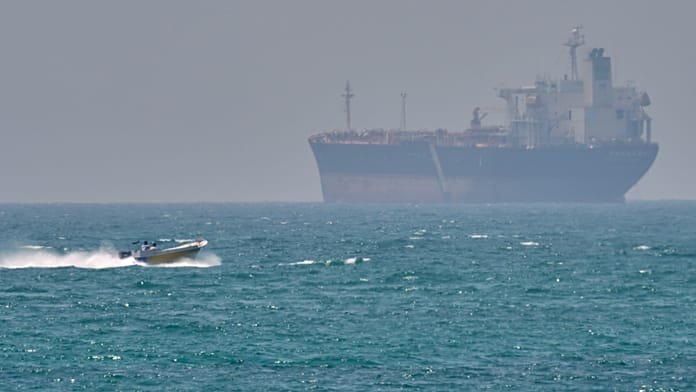
Despite an ongoing ceasefire, the US and Iran are locked in a standoff over the Strait of Hormuz, through which a fifth of the world’s oil and gas trade passes in peacetime.
Iran offered to end its chokehold on the Strait of Hormuz if the US lifts its blockade on the Islamic Republic, in a proposal that would postpone discussions on Tehran’s nuclear program, according to media reports.

ADVERTISEMENT
ADVERTISEMENT
The offer emerged Monday as Iran’s Foreign Minister Abbas Araghchi visited Russia, a key backer of Tehran, following the cancellation of a potential weekend ceasefire talks between US and Iran in Pakistan.
US President Donald Trump called off the trip by his envoys and suggested the talks could take place by phone instead.
According to media reports, the Trump administration seems unlikely to accept the offer passed to Washington by Pakistan, which would leave unresolved the disagreements that led the US and Israel to strike Tehran on 28 February and kill its topmost leaders in the initial salvo of the war.
“We can’t let them get away with it,” US Secretary of State Marco Rubio said speaking to US media outlets on Monday.
“We have to ensure that any deal that is made, any agreement that is made, is one that definitively prevents them from sprinting towards a nuclear weapon at any point.” Rubio added.
Despite an ongoing ceasefire, the US and Iran are locked in a standoff over the Strait of Hormuz, through which a fifth of the world’s oil and gas trade passes in peacetime.
A US blockade which came into force mid-April has led to a dual blockade, something that Trump says is designed to prevent Tehran from selling its oil, depriving it of crucial revenue while also potentially creating a situation where Iran has to shut off production because it has nowhere to store oil.
The closure has also put pressure on Trump, as oil and gasoline prices have skyrocketed ahead of crucial midterm elections, pressuring his Gulf allies, which use the waterway to export their oil and gas.
On Monday, the spot price of Brent crude, the international benchmark, closed above $108 per barrel, about 50% higher than it was when the war began.
European leaders express frustration
In a joint statement led by Bahrain, dozens of nations repeated calls to open the critical waterway on Monday just as the United Nations Secretary-General António Guterres told the Security Council that the humanitarian toll is mounting.
“These pressures are cascading into empty fuel tanks, empty shelves — and empty plates,” he said.
Across Europe, leaders also voiced their frustration.
German Chancellor Friedrich Merz criticised Washington for entering the war without what he said was a strategy.
“The problem with conflicts like these is always the same: It’s not just about getting in. You also have to get out,” Merz said.
In Paris, French Foreign Minister Jean-Noël Barrot criticised all sides but emphasised the crisis only began after the US and Israel struck Iran without clear goals “in a manner that flouts international law.”
Barrot condemned Tehran for closing the passageway. “Straits are the arteries of the world. They are not the property of any individual,” he said.