

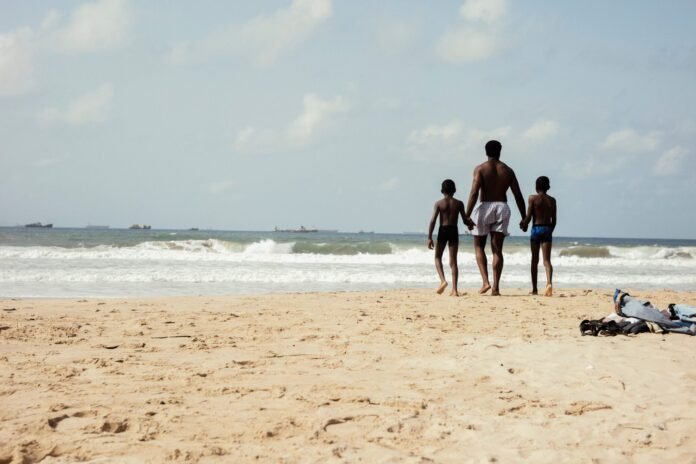
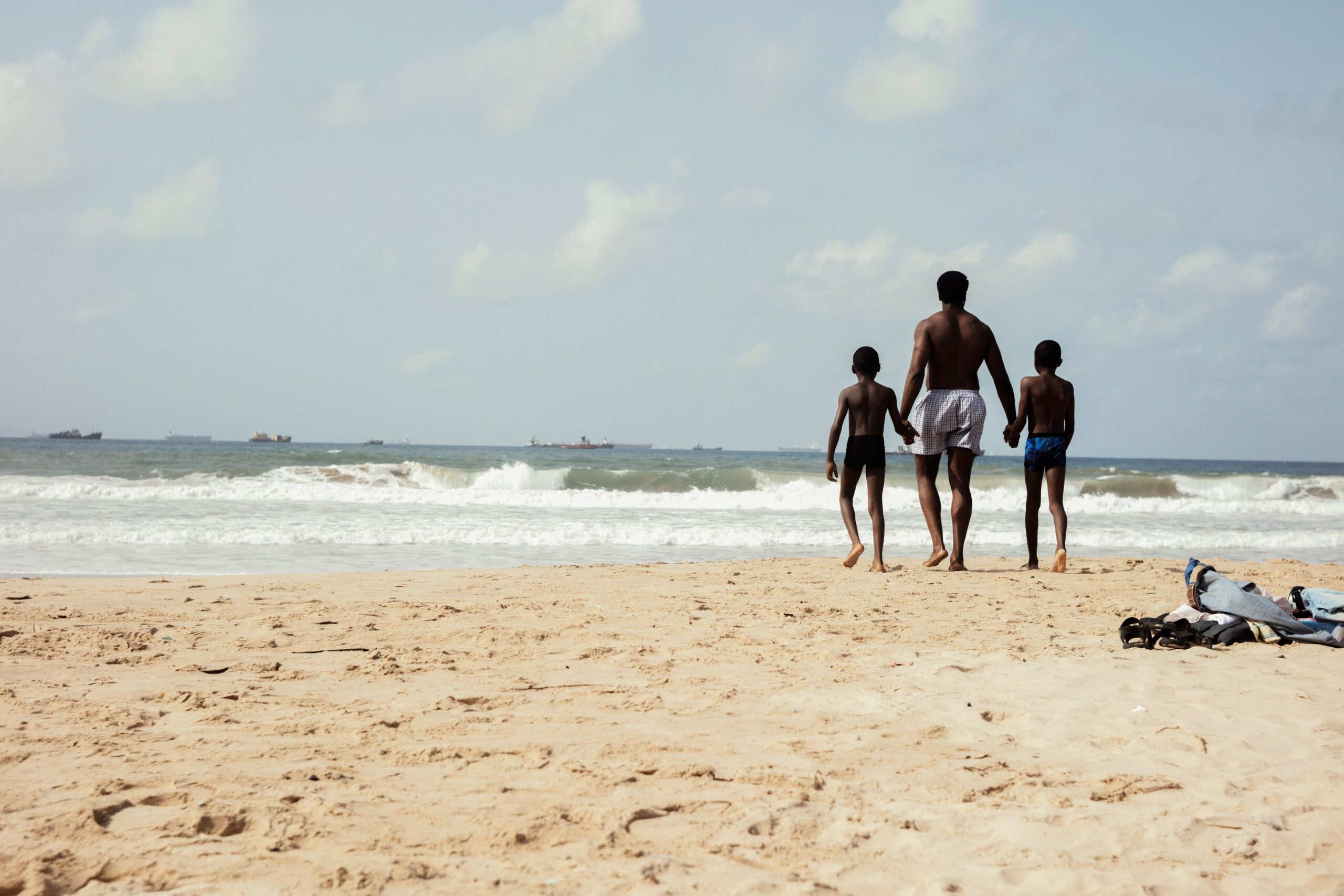
Still from My Father’s Shadow, a film directed by Akinola Davies Jr. and written by Wale Davies. Credit: Lakin Ogunbanwo
At the twelfth African Magic Viewers’ Choice Awards, on 9th May, My Father’s Shadow, Akinola Davies Jr.’s directorial debut, swept the major and most wins at the award show, including Best Movie, Best Director, Best Writing and others. The film was initially released in 16 states across Nigeria from September to October 2025, but due to its short run in Nigerian cinemas, most Nigerians missed out on watching the film. However, the recent AMVCA major awards clearouts ignite Nigerians’ interest in watching the film.
Therefore, to coincide with the month of Democracy in Nigeria, as My Father’s Shadow is a semi-autobiographical tale set over the course of a single day in the then Nigerian capital Lagos during the 1993 general election crisis, the film will return to Nigerian cinemas from 5th June 2026 for a special limited re-release in partnership with FilmOne Entertainment. The re-release is meant to invite audiences to revisit the acclaimed film as a living archive of memory and nationhood ahead of June 12.
Ahead of its re-release, we sat with the film’s producer, Funmbi Ogunbanwo, on the process of making the film, her personal story, working with Wale Davies and Akinola Danies Jr., their company Fatherland, and her general observations on the status of Nollywood.
Enjoy the conversation.
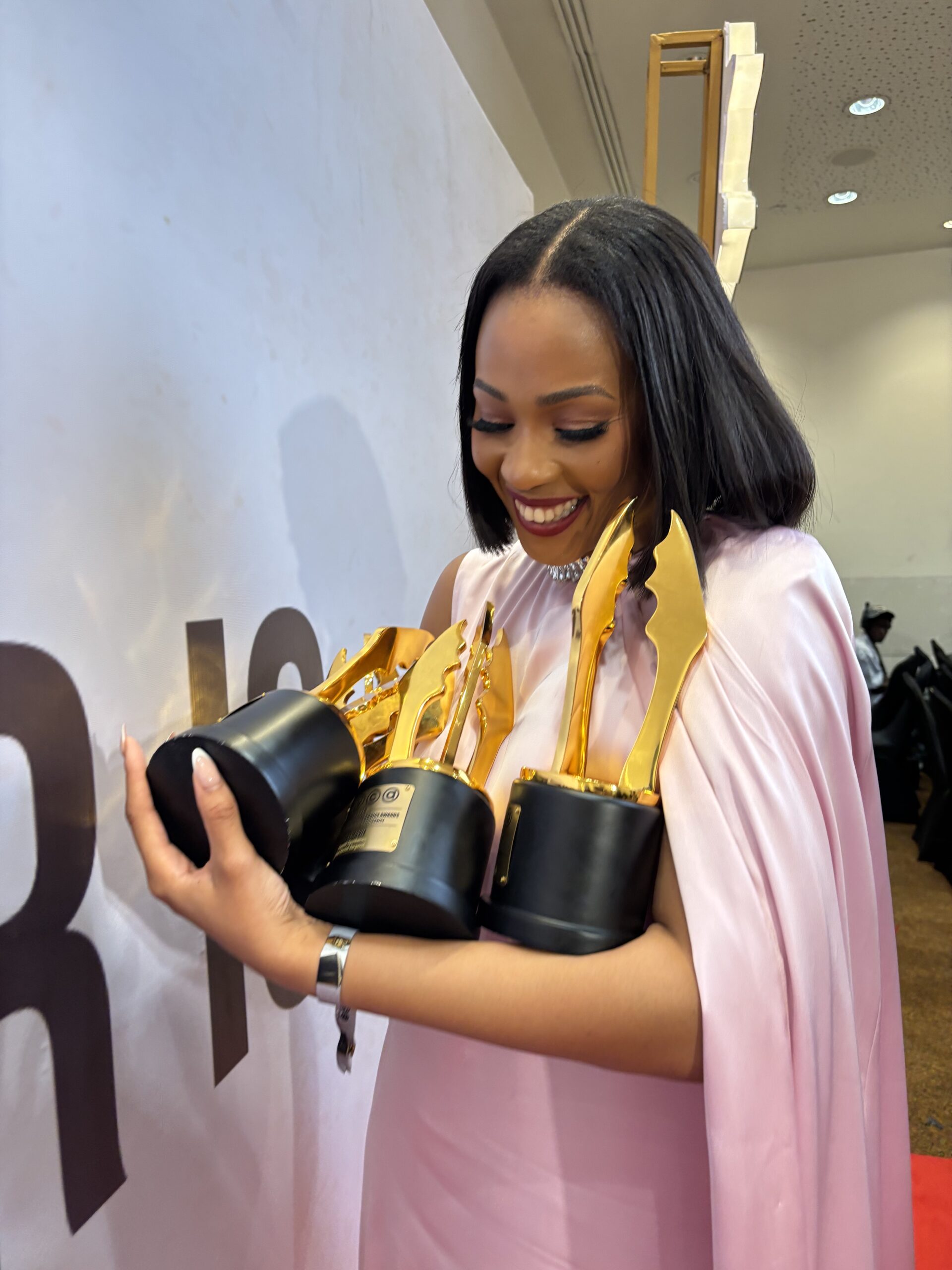
Funmbi Ogunbanwo at the AMVCA.
Hello Funmbi. How are you feeling today?
I’m feeling very well, very blessed, deeply fulfilled and humbled.
Congratulations to you and the team on the recent AMVCA wins. My Father’s Shadow is a terrific film, and it deservedly won most of the major categories. While shooting the film, as the producer, did you and the team envisage the film to be this successful?
No, we didn’t envisage that it would be this successful. My Father’s Shadow is a beautiful story and very gripping. At heart, it’s an honest take by Wale and Akin on what it means to deal with grief. It’s an honest take on Nigeria as a country and Nigeria as a father, on being a child and longing for the love of a father. It’s that honesty we always knew and felt when making the film. With these things, you almost never know, and you’re just showing up every day. We didn’t think it would be this successful.
Well, it turns out to be successful, winning multiple awards and premiering arguably the biggest movie stage in the world. Please tell us about the early days of My Father’s Shadow when the idea to shoot the film emerged
I’ve been working with Akin and Wale for many years now. We founded Fatherland together. I lead Fatherland as CEO and co-founder. My Father’s Shadow was a project we’ve been working on together for many years now. It was first written as a short film that Wale sent to me, which I thought was very beautiful. Wale would tell you he’s a new writer, and this is his first feature, but I could hear the tone of voice clearly in the script. For me, clarity is always a big thing in anything I’m working on. In any script or story, is the voice clear? When Akin and Wale decided to develop it into a feature from a short film, that clarity shone even more. The location, the 90s, was the detail and the subtlety. Not having light in your house as a 90s kid and playing outside with action figures, longing for your father to come back so you can play with him.
What prompted the foundation of Fatherland as a production company, and how has it been managing and directing the affairs of the production company?
Fatherland is a production company founded by Wale, myself and Akinola Davies.
I’m their unofficial adopted sister. I met Wale over a decade ago. We started off the company because we believed stories from here could travel, and more specifically, there were other kinds of stories that we were drawn to, and we both really wanted to tell. Akin was directing at the time and doing a lot of fashion projects. As Akin has said in interviews, at first he wasn’t sure he wanted to be a director because that comes with so much responsibility, but he’s such a strong visual storyteller and has a real knack and instinct. And that’s how you know good directors, they just have a pulse for these things.
We started off with just servicing Akin’s fashion projects and working with friends on other fashion projects and music videos. Then we started working with more international brands. The gap I saw was matching artistic integrity with structural efficiency, and that’s really what I handle as the CEO of the business. Yes, it’s great to do a cool project, but what are the systems you put in place to make sure that project is efficient? And that the next time you do that project, it is even more efficient? I sit in between creativity and business in the same breath. My passion revolves around building people, building stories and building systems. At the heart of Fatherland, that’s what we’re really committed to doing: nurturing talent, building stories that are culturally specific, contributing to the artistic lens through which we’re seen as African people and creating systems that enable these stories to thrive and reach the rest of the world.
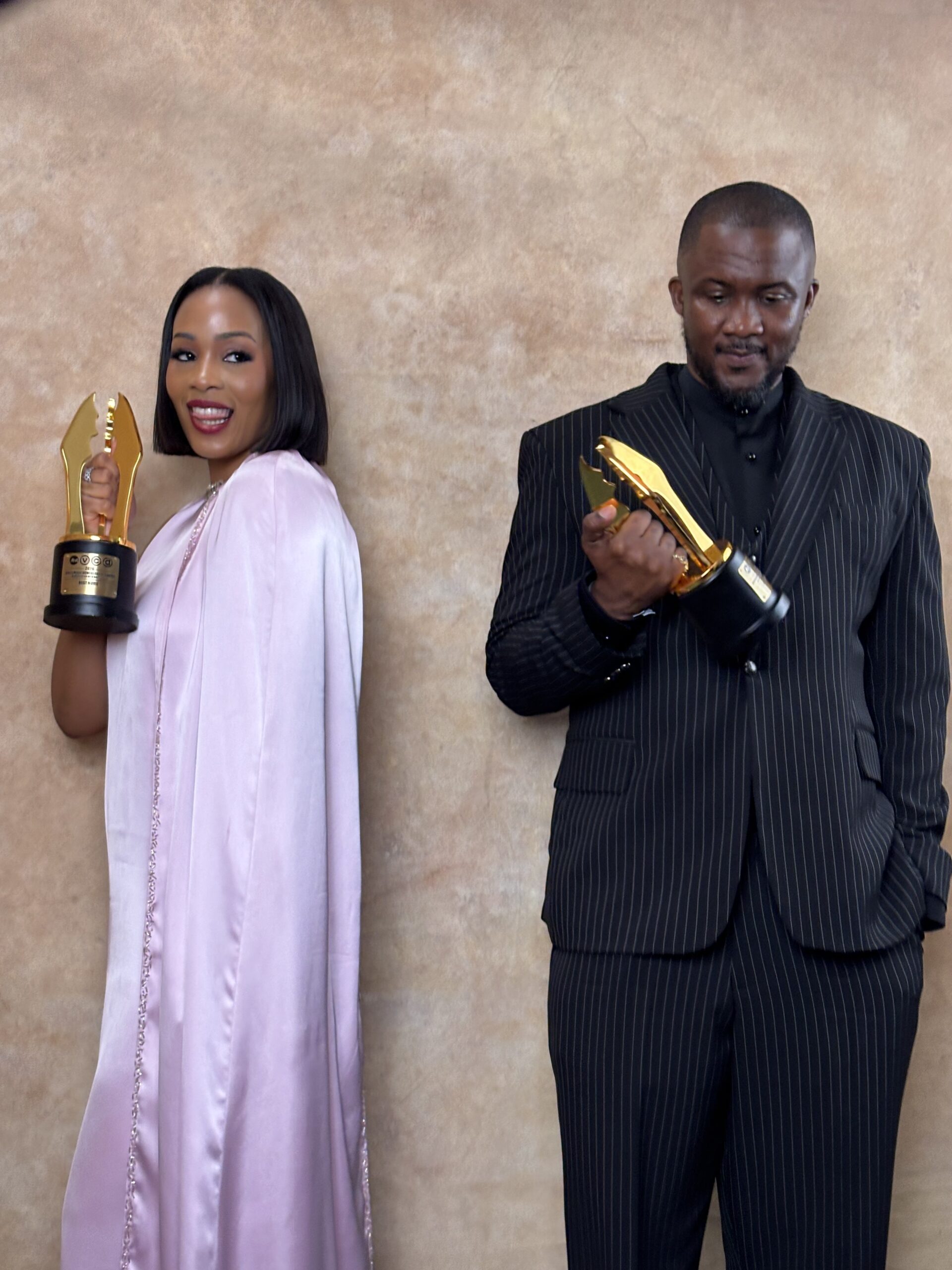
Funmbi Ogunbanwo and Wale Davies at the AMVCA.
What are your observations on filmmaking in Africa, particularly in Nigeria?
We need more long-term thinking investors. We need strategists, people who have resources and finances, who will look at this whole ecosystem and value chain, and then decide to plug or fix very specific solutions-based businesses and structures that will ultimately solve long-term problems in this space. Production across the world is challenging, and I think in this age it’s even more challenging, with the disruption from streaming, verticals and so on. Nigeria is living in parallels – a system fraught with both a lot of challenges and a lot of opportunities. What the system really needs is more long-term investors. I always say Lekki and parts of VI didn’t exist 50-60 years ago, and people decided to start to sandfill as they saw a population boom coming. That’s the kind of foresight and thinking we need in the creative ecosystem. It’s not just being a fund for the sake of being a fund. Do you know how to fund, do you know what you’re funding? Are you really a fund or are you just some cheeky way to put some money, get some accolades and disturb filmmakers to get your money back? I just feel there is a big gap between funding, nurturing talent and actually finding solutions to our existing problems.
Thank you for taking the time to speak to us. Finally, as My Father’s Shadow returns to Nigerian cinemas, what do you hope the re-release does to Nigerians?
This re-release is about creating space for reflection, for conversation, and the healing of our shared wounds. There’s something powerful about watching this story in a room full of our people here in Nigeria, as we approach June 12.
The post After the AMVCA Sweep, Funmbi Ogunbanwo Reflects on the Creation of “My Father’s Shadow” as the Film Returns to Nigerian Cinemas in June appeared first on BellaNaija – Showcasing Africa to the world. Read today!.