



Apple’s most expensive iPhones might cost the same next year — even as the rest of the phone industry quietly hikes prices. A new analyst report says the iPhone 18 Pro starting price could stay flat at $1,099 this fall, despite a global memory chip shortage that’s already squeezing Samsung, Xiaomi, and other Android brands. Here’s what’s behind the move, and the catch buyers should know about before September.
What the analyst actually said
GF Securities analyst Jeff Pu, who tracks Apple’s supply chain, told clients this week that he expects Apple to take an “aggressive pricing strategy” for the iPhone 18 Pro and iPhone 18 Pro Max, via Mac Rumors. In plain terms, that means the starting price stays the same — or goes up by only a small amount — compared to the iPhone 17 Pro.

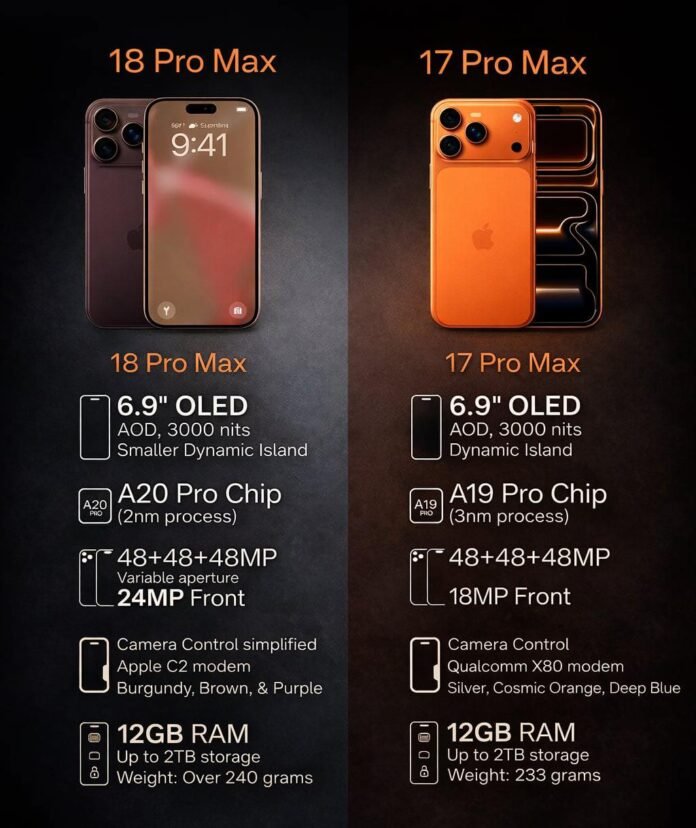
Today, the iPhone 17 Pro starts at $1,099 in the U.S., and the iPhone 17 Pro Max starts at $1,199. Both come with 256GB of storage and 12GB of RAM. Pu expects the iPhone 18 Pro to ship with the same 12GB of RAM, so you’re not losing memory to keep the price flat.
If you’ve followed Apple long enough, you know that holding a price isn’t exactly news. But this year, it kind of is.
Why “flat pricing” is a big deal in 2026
The whole smartphone industry is dealing with what some commentators have started calling the RAM crisis or RAMageddon. Memory chips have gotten much more expensive over the past year, mostly because AI companies are buying up huge amounts of RAM and storage for their data centers. That’s pushed up prices for everyone else, including phone makers.

Apple itself admitted this on its last earnings call, warning of “significantly higher memory costs” in the current quarter. So Apple isn’t immune. We’re just betting it can absorb more of the pain than its rivals can.
There are two reasons we think Apple can pull this off. First, it buys components at a much bigger scale than most Android brands, which gives it real leverage with memory suppliers. Second, Pu says Apple is finding ways to cut costs on other parts of the phone — like the display and cameras — to help balance the higher memory bill.
The catch: there’s no cheap iPhone this fall
Here’s where the good news runs into a wall. According to a Forbes report by Jay McGregor, Apple is splitting its 2026 launch in a way it has never done before. Bloomberg’s Mark Gurman first reported the plan: only the iPhone 18 Pro, iPhone 18 Pro Max, and the new foldable iPhone will arrive in September. The base iPhone 18, iPhone 18e, and a rumoured iPhone Air 2 are pushed to spring 2027.

That means if you want a brand-new iPhone before the holidays, your only options are the Pro models or the foldable — none of which start below $1,000. You can’t just grab a cheaper base iPhone 18 this Christmas. It doesn’t exist yet.
McGregor also points out that Apple might quietly follow a familiar playbook: keep the headline price flat, then raise costs on higher storage tiers or on the cheaper models that arrive later. Samsung did exactly that earlier this year with the Galaxy S26, and now it’s rumoured S27 lineup, holding the Ultra flat while bumping the base and Plus models.
What you actually get for $1,099
If the rumours hold, the iPhone 18 Pro should bring some real upgrades for that unchanged price. Based on supply chain leaks and analyst notes, you can expect:
- A new A20 Pro chip built on a 2-nanometer process (faster and more efficient)
- A smaller Dynamic Island, with some Face ID parts moved under the display
- A variable aperture main camera, an iPhone first
- A new C2 modem that supports 5G via satellite
- A larger battery, especially on the Pro Max (around 5,100 mAh)
- A new Dark Cherry colour option

That’s a meaningful list. A 2nm chip alone is the kind of upgrade Apple usually charges more for. Getting it at the same starting price would be a genuinely good deal — by 2026 standards, anyway.
So what does this mean for you?
If you’ve been waiting to upgrade, the iPhone 18 Pro looks like the safer bet this fall. A flat sticker price means the RAM crisis probably won’t blow up your budget the way it might if you bought a high-end Android. The trade-off is that “affordable” Apple options simply won’t exist until 2027.
We’d also keep an eye on storage tiers. Apple could easily keep the 256GB price flat and quietly charge more for 512GB or 1TB. The number on the product page might not tell the full story.
For now, the September launch is still a few months away — and as analysts like Pu, Gurman, and Ming-Chi Kuo have all pointed out, things can change quickly when memory prices are this volatile.
The post iPhone 18 Pro Starting Price May Stay Flat Despite RAM Crisis appeared first on Memeburn.