


Meme coins keep dominating crypto conversations in 2026, driven by viral trends, celebrity mentions, and sudden price swings. If you’re asking what a meme coin is, these tokens now sit at the center of internet culture, pulling in beginners faster than traditional cryptocurrencies.
Here’s how meme coins work and what it means for you.
Key Takeaways
- Meme coins are cryptocurrencies driven by internet culture, community, and hype rather than core utility.
- The meme coin market moves fast, so price swings, scams, and rug pulls are major risks.
- Checking tokenomics, liquidity, and contract details before buying can help reduce risk.
- The top meme coins in 2026 include Dogecoin, Shiba Inu, Pepe, and Official Trump, but each carries a different level of risk.
What Is a Meme Coin?
Meme coins are cryptocurrencies born from internet jokes or cultural moments. Unlike traditional cryptocurrencies designed to solve real-world problems, meme coins thrive on community hype. With a market cap of about $33.14B, these tokens have become a major force in speculative trading.
When you’re buying meme coins, price movement depends on community activity and visibility rather than revenue models. Their value isn’t tied to utility but to the strength of their cultural relevance and the enthusiasm of their supporters. Meme coins are highly volatile, with prices that can skyrocket or plummet in hours.
Meme Coin vs. Altcoin: What’s the Difference?
When we compare meme coins and altcoins, the difference comes down to purpose, value drivers, and how blockchain affects financial technology. Altcoins are any cryptocurrencies that are not Bitcoin. Many aim to solve real problems, like faster payments, decentralized finance (DeFi), and smart contracts. Meme coins, on the other hand, focus on community attention and cultural relevance, not technical innovation.
To understand this clearly, here’s a side-by-side breakdown:
| Feature | Meme Coins | Altcoins |
| Core purpose | Built around internet culture, memes, or personalities | Built to solve financial or technical problems |
| Value driver | Community hype, social media trends, influencer attention | Utility, adoption, technology, real-world use |
| Technology focus | Limited or copied from existing blockchains | Strong focus on innovation, like smart contracts |
| Examples | Dogecoin, Shiba Inu, Pepe | Ethereum, Solana, Cardano |
| Use cases | Trading, tipping, community engagement | Payments, decentralized apps, lending, NFTs |
| Risk level | High due to volatility and sentiment shifts | Varies, but often tied to project fundamentals |
| Longevity | Depends on continued attention | Depends on adoption and development |
How Do Meme Coins Work?
Meme coins run on blockchain networks like Ethereum or Solana, so you can buy, sell, or store them without going through a bank. A developer creates the token, sets the supply, and launches it on a crypto exchange or a decentralized exchange, known as a DEX.
In the meme coin market, price usually moves with attention. If you see a coin spreading across X, Reddit, Telegram, or TikTok, that visibility can push demand higher. Unlike many crypto projects, meme coins do not depend on a product or service to hold interest.
The token’s setup also shapes how it behaves. A large supply can keep the price per coin low. Token burning removes coins from circulation, which can change scarcity. Reflection sends a small part of the transaction fees back to holders. So while the code powers the coin, the market responds to visibility, demand, and timing.
The Role of Community and Social Media
Traditional investments rely on revenue and product launches to build value. Meme coins run on pure social sentiment. When we track the most successful projects, they all share one vocal online following.
Communities act as a decentralized marketing department for the token. When you buy a meme coin, you join a network of investors who actively promote the project across social handles like Discord. Group members coordinate social media raids, create viral graphics, and tag prominent influencers to generate hype. This continuous online chatter creates the actual market demand.
This dynamic turns community engagement into the metric you can track. A strong, growing community can sustain a token through market dips and push it to new highs. If the core group loses interest and moves to a newer project, the value usually collapses right alongside the social momentum.
Tokenomics: Supply, Burning & Reflection
Tokenomics shapes how a meme coin behaves after launch. When you’re evaluating one, supply, burning, and reflection give you real signals about how the price might move. Supply controls how many tokens exist. Many meme coins launch with massive supplies. For example, Shiba Inu started with 1 quadrillion tokens, which kept the price per coin low and attracted early buyers. A large supply can limit price growth unless demand increases at the same pace.
Burning reduces the number of tokens in circulation. This happens when tokens are sent to a dead wallet that no one can access. Some projects go further. PEPE burned 50% of its 420 trillion supply at launch, removing about 210 trillion tokens to create scarcity.
Reflection redistributes value to holders. A small fee from each transaction goes back to wallets that already hold the coin. This rewards holding instead of selling and can slow down rapid exits.
Why Are Meme Coins So Popular?
Meme coins spread fast because they connect finance with internet culture. When you see a coin trending across X, TikTok, or Reddit, that visibility can turn into demand within hours. This cycle is a key factor causing crypto price surges, where attention drives buying activity and pushes prices higher without relying on traditional financial metrics. You’re not tracking earnings or products here. You’re tracking momentum, reach, and how quickly a trend moves.
At the same time, investing in meme coins feels accessible. You can enter with small amounts, and the low price per token creates a sense of upside potential. This draws in new users who may not engage with complex crypto projects. Community participation also plays a role because holding a meme coin often means being part of a shared online movement. That mix of low entry, fast visibility, and cultural relevance keeps meme coins at the center of crypto conversations.
Top Meme Coins in 2026
Meme coins now hold a visible share of the crypto market, with total meme token market cap hovering around $34B. These coins dominate attention cycles, trading volume, and social trends, which is why you keep seeing them across platforms and exchanges. Here are the popular meme coins in 2026.
1. Dogecoin (DOGE)

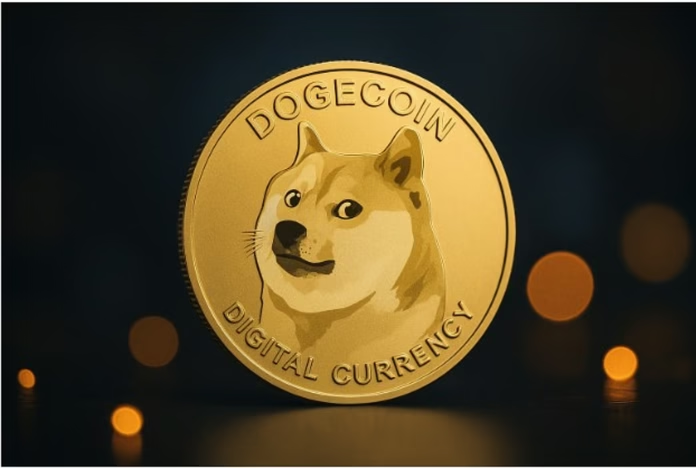
Dogecoin remains the pioneer of meme coins, holding its position as a market leader. Originally created as a joke, it now boasts a market cap of over $14.27 billion. Its widespread adoption for tipping and microtransactions, combined with endorsements from figures like Elon Musk, keeps it at the forefront of the meme coin space. Dogecoin’s active community and consistent updates to its blockchain ensure its relevance in the crypto world
2. Shiba Inu (SHIB)

Shiba Inu has solidified its place as a top contender, with about 1.24 trillion SHIB as outflows and 1.13 trillion SHIB for inflows. SHIB has expanded its ecosystem with features like ShibaSwap, a decentralized exchange, and plans for a metaverse project. Its token-burning mechanism has also helped reduce supply, driving demand. Shiba Inu’s loyal community continues to push its growth and innovation.
3. Pepe (PEPE)

Pepe has emerged as a cultural phenomenon, leveraging the popularity of the Pepe the Frog meme. With a market cap of over $1.6 billion, it has gained traction through its humorous branding and strong online presence. Pepe’s appeal lies in its ability to connect with internet culture while maintaining a dedicated community that actively promotes the token.
4. Official Trump (TRUMP)

Official Trump (TRUMP) has reached a market cap of about $682M, placing it among the top meme coins tied to public figures. Reports and market data link the project to over $500 million in value tied to Trump-related crypto activity, showing how political branding can influence demand. This meme coin gained attention due to its association with former President Donald Trump, attracting both supporters and speculators. Its unique branding and connection to a high-profile figure have made it a notable player in the meme coin market.
Risks of Investing in Meme Coins
Meme coins carry high volatility, so prices can rise fast and drop just as quickly within hours. When you’re investing in meme coins, value depends on attention, which can disappear without warning. Many projects lack clear use cases, which means long-term value is uncertain. You also face risks like rug pulls, where developers abandon the project and take funds, leaving holders with worthless tokens.
Examples of Meme Coin Rug Pulls
- Squid Game Token (SQUID): Developers blocked selling and disappeared after the price surged, leaving holders unable to exit.
- AnubisDAO (ANUBIS): Raised about $60 million in ETH (Ethereum), and funds vanished within hours of launch.
- SaveTheKids Token: Promoted by influencers, then crashed after insiders sold large holdings.
- Luna Yield: Built on Solana, developers drained liquidity and deleted all project channels.
How to Reduce Risks When Investing in Meme Coins
- Check liquidity: Make sure funds are locked so developers can’t withdraw them easily.
- Review the contract: Look for verified smart contracts on platforms like Etherscan.
- Avoid hype-only projects: If a coin has no clear roadmap or team, the risk is higher.
- Track token distribution: Large holdings by a few wallets increase sell-off risk.
- Use trusted platforms: Stick to known exchanges or audited decentralized exchanges (DEXs).
How to Create a Meme Coin
Creating a meme coin starts with an idea that people can relate to and share. You need a clear concept, whether it’s based on humor, culture, or a trending topic, because meme coins gain traction through recognition and community interest, not technical depth.
Next, you choose a blockchain. Networks like Ethereum, Solana, or BNB Chain let you create tokens using smart contracts, which are self-executing programs that control how the coin works.
Then you define tokenomics. You decide total supply, distribution, and features like burning or rewards. These rules shape how your coin behaves once it starts trading and how you position it in a crowded market.
After that, you deploy the token. This step puts your coin live on the blockchain, where it becomes available on exchanges. Finally, you build a community. Meme coins depend on visibility, so you need active channels on platforms like X or Discord.
Are Meme Coins a Good Investment?
Meme coins can deliver fast gains, but they also carry a high risk of loss. When you’re investing in meme coins, price depends on demand and attention, not on underlying value. You can see sharp price swings within short periods, which makes timing difficult. For that reason, meme coins are considered speculative assets rather than stable investments.
How to Buy Meme Coins Safely
Follow the process below to buy your meme coin safely:
1. Choose a trusted platform
Start with a well-known crypto exchange or a decentralized exchange, known as a DEX. A centralized exchange manages trades for you, while a DEX lets you trade directly from your wallet. If you’re new, a large exchange may feel easier because it has a simpler setup and stronger account security tools.
Before you use any platform, check whether it has a strong track record and clear security features. Look for two-factor authentication, transparent fees, and real trading activity. If a platform looks rushed, unknown, or full of fake hype, that’s a reason to step back.
2. Set up a secure crypto wallet
You need a crypto wallet to store your tokens and connect to trading platforms. This wallet holds your private keys, which are the codes that control access to your funds. If someone gets those keys, they can take your crypto, so wallet security matters from the start.
Choose a wallet that matches your needs. A mobile or browser wallet is easier for frequent trading, while a hardware wallet gives stronger long-term protection. Write down your recovery phrase and keep it offline, because if you lose it, you may lose access to your funds for good.
3. Fund your wallet with the right crypto
Once your wallet is ready, add funds using a widely accepted coin such as Ethereum or a stablecoin like USDT, which is designed to track the US dollar. The coin you need depends on where the meme coin trades. For example, if the token runs on Ethereum, you may need ETH to pay network fees.
Check the network before sending funds. Sending crypto to the wrong blockchain can lead to permanent loss. Sending a small test amount first gives you a chance to confirm the wallet address before moving more money.
4. Verify the token before you buy
Always confirm that you have the correct token contract address. Many scam tokens copy the name, logo, or ticker of popular meme coins to trick buyers. If you skip this step, you could end up buying a fake version with no real market.
Use the project’s official website or verified exchange page to check the contract address. You can also compare it with trusted blockchain explorers such as Etherscan or Solscan. If the project gives no clear contract details, that’s a warning sign you shouldn’t ignore.
5. Start small and keep watching the market
Begin with a small amount that you can afford to lose. Meme coins can move fast, and a small position gives you room to learn how the token behaves without taking on too much risk. This matters because price swings can be sharp even within a single day.
After you buy, keep watching liquidity, trading volume, and wallet activity. Liquidity shows whether you can sell easily, while trading volume shows whether the market is active. If activity drops or large wallets begin selling, that can signal rising risk and help you decide your next move.
Final Verdict
Meme coins have grown into a multi-billion-dollar segment of crypto, with market activity driven by visibility rather than fundamentals. You’re entering a space where price depends on demand cycles, token design, and market access, not business performance. This means outcomes vary widely between coins, even within the same category. If you understand how these factors interact, you can assess meme coins based on structure and risk instead of hype.
FAQs
What is a meme coin used for?
A meme coin is used for trading, community participation, and online engagement within crypto markets. You can buy, sell, or hold it, and some projects also support tipping, payments, or access to community-driven features, depending on the ecosystem.
What is the difference between a meme coin and a regular cryptocurrency?
The difference is that meme coins rely on community attention and trends, while regular cryptocurrencies focus on utility, technology, or financial use cases. Meme coins move with demand and visibility, while other cryptocurrencies depend more on adoption and development.
What was the first meme coin ever created?
The first meme coin was Dogecoin, created in 2013 as a joke based on the Doge internet meme. It started as a parody of Bitcoin but gained traction through its community and became one of the most recognized cryptocurrencies.
Are meme coins worth anything?
Yes, meme coins can hold value because people trade them in the crypto market, but that value depends on demand and attention. Prices can change fast, so their worth can rise or fall based on market activity rather than underlying assets.
The post What Is a Meme Coin? The Ultimate 2026 Investor Guide appeared first on Memeburn.