


Some change, but much more of the same in Palestinian Fatah elections
Abbas’s son Yasser joins Fatah leadership, raising questions about nepotism and the group’s commitment to inclusivity.
Save

Published On 18 May 202618 May 2026
The Palestinian group Fatah concluded its eighth General Conference late Saturday but the results of the elections of the group’s leadership bodies, the Central Committee and Revolutionary Council, were not announced until Monday afternoon. The delay compelled Wael Lafi, the head of the elections committee in the General Conference, who is also the legal advisor of the Palestinian President, to defend the process and delay.
Even before convening, questions about membership, funding, and the general political direction of the group – which dominates the Palestinian Authority – overshadowed preparations for the General Conference.
Recommended Stories
list of 3 itemsend of list
Sixty candidates competed for 18 seats in the Central Committee, Fatah’s highest leadership body.
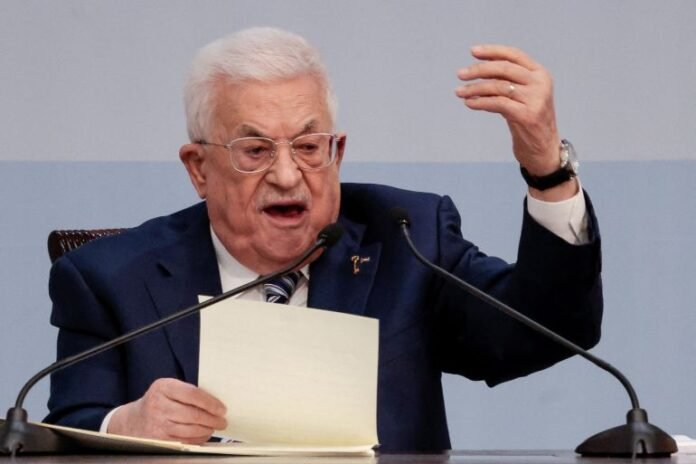
Mahmoud Abbas, the 91-year-old Palestinian President, was unanimously voted as chair ahead of the vote, foreshadowing the results of the elections and Abbas’s tightening grip on power.
Dr Nasser al-Qudwa, who was the only member of the Central Committee to boycott the General Conference, told Al Jazeera, “Mahmoud Abbas engineered this meeting to produce the outcome he wants and he succeeded”. Many Fatah members agree with that assessment.
The election results of Fatah’s top body saw the replacement of half of the incumbent old guard. Those included all but one of Gaza’s representatives in the Central Committee, with Ahmed Hilles, a close ally of Palestinian President Mahmoud Abbas, the only one remaining.
Abbas’s close ally and intelligence chief, Majed Faraj, also won a seat on the Central Committee. Faraj is seen by many in Fatah as a competitor to Hussein al-Sheikh, who Abbas appointed as vice president a year ago.
Advertisement
Another signal of Abbas’s grip on the Congress was the nomination and victory of his son, Yasser, to the Central Committee. That was despite the fact that Yasser Abbas has never held a leadership position at any level in Fatah, and the development has overshadowed Fatah’s argument that the Congress was a sign of democratic vitality and inclusion.
Palestinian detainees secured three seats in Fatah’s top leadership body, with Marwan Barghouti – imprisoned by Israel for more than 20 years – earning the highest number of votes among all competitors.
Another winner is Zakariya al-Zubaidi, a prominent Fatah figure who has been imprisoned repeatedly by Israel over the years. Al-Zubaidi notoriously escaped with five other Palestinian prisoners from Gilboa prison in 2021 only to be recaptured and then freed again in one of the prisoner exchange deals struck between Israel and Hamas during the Gaza genocide.
Fatah and Hamas make up the two main Palestinian political factions, with Hamas dominant in Gaza, and Fatah in the occupied West Bank.
Victory for Abbas?
There were 450 members competing for the 80 seats of the Revolutionary Council, which serves as Fatah’s legislator and in theory has strong sway over Fatah policy choices.
However, the winners appear to be dominated by the party’s insiders.
Absent from the Central Committee for the first time is a representative of Fatah outside Palestine, which is seen by many as a worrying precedent for a movement that has followers across the widespread Palestinian diaspora.
But the new Central Committee has an abundance of technocrats and senior officials working in the Palestinian Authority (PA), like the popular Ramallah Governor Laila Ghannam or the head of the PA’s General Personnel Council Musa Abu Zaid.
“These are not leaders. They are employees. They will do as ordered,” one Fatah official, who spoke to Al Jazeera on condition of anonymity, said.
Dr al-Qudwa views the results as a victory for the Palestinian president, not Fatah.
“President Abbas is the biggest winner,” al-Qudwa said. “He succeeded in completely subduing Fatah to his will.”
A significant proportion of the winners are also current or former PA employees, especially in the security sector.
Most of the old guard were replaced by younger members, but many of that new cohort themselves rose through the ranks of Fatah’s youth movement. Several sons and daughters of former Fatah leaders were also elected despite having no history of involvement or membership in the group, like the daughter of the late chief negotiator Saeb Erekat, Dalal.
Facing crises
Kifah Harb, a prominent Fatah figure who ran unsuccessfully for the Central Committee, confirmed to Al Jazeera that many members had concerns and misgivings about the organisational committee of the Congress.
Advertisement
But she struck a conciliatory tone about the process as a whole.
“As members of the Congress, we are leading members of Fatah and regardless the outcome of the elections, we must stand by it and help Fatah march forward in leading the Palestinian national movement,” Harb said. “There are no alternatives.”
Fatah’s Congress was closely followed by world governments and the Palestinian public, who saw the competition within the group play out in advertisements and posts on social media platforms.
Governments around the world see Fatah leaders as their Palestinian counterparts when it comes to bilateral relations, but Western governments are also demanding reforms in return for increased support to the Palestinian Authority.
Fatah leaders say the Congress is proof of their commitment to reform, pointing to the change of some names and a younger demographic emerging, even if the balance of power ultimately remained firmly in Abbas’s hands.
Whether that placates the international community is one matter, but Fatah will have a tough time getting the Palestinian public on side.
Fatah’s new leaders are faced with the task of resolving several chronic crises, including the PA’s inability to pay civil servants and Israel’s hostile policies – including the unlawful withholding of Palestinian tax revenues, unprecedented land grabs, settler attacks, and the Israeli-made humanitarian disaster becoming entrenched in Gaza.
On Monday, after the announcement of the election results, Fatah offered general policy lines in a statement, but provided no answers on the way forward.
And now it has to content with that future, and a public demand for presidential and legislative elections that will likely become more pressing – one of the many tests that awaits Fatah’s reformulated leadership.