


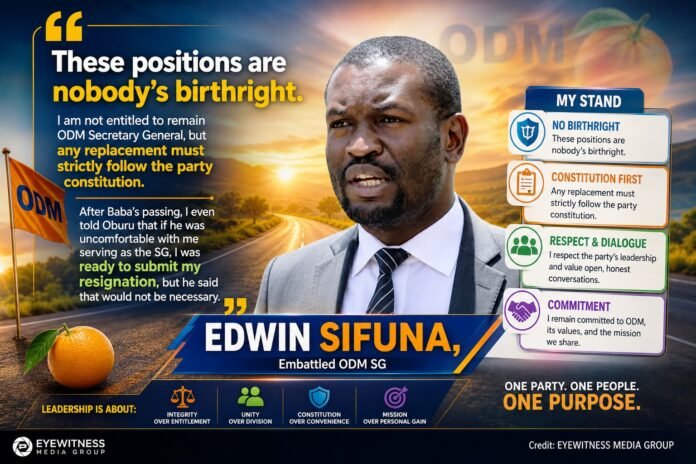
Embattled ODM Secretary General Edwin Sifuna and Embakasi East MP Babu Owino, during a recent political rally. PHOTO/UGC.
By PATRICK MAYOYO
As I watch the ongoing political realignments unfold, I can’t help but reflect on one powerful, resounding truth: the young people of Kenya have spoken, and they have chosen their leader. When Edwin Sifuna declared “Mimi Ndio Sifuna,” they responded with a fervor that echoed across the nation, “Sisi Ndio Sifuna.” And those words were not uttered lightly, they were the cries of a generation tired of the same empty promises, the same recycled faces, and the same tired rhetoric.
Sifuna, in that moment, embodied their hopes, their dreams, and their thirst for change. He became a symbol, not just of political ambition, but of the kind of leadership they desperately seek: one that is not mired in the status quo but rooted in values of transparency, good governance, and, most importantly, integrity.
But let’s not kid ourselves. The political world, especially for someone as bright and ambitious as Sifuna, is full of traps and distractions. Since his star began to rise, many have weighed in with their opinions on what he should do next.
Some are genuinely concerned about his future, while others are intent on pulling him down. After all, this is politics. People will tell you what they think you should do, but few will ever understand the depth of the choices before you.
So, what are the choices before Sifuna? Some say he should remain as ODM Secretary General, others suggest he should break away and form his own party, and then, of course, there’s the matter of his ambitions for 2027; should he run for president? Should he vie for the deputy seat? These are not just simple political maneuvers; they are decisions that will shape not only his political career but also the future of millions of young people who have placed their faith in him.
I have no doubt that Sifuna is fully aware of the gravity of these choices. But what strikes me most is that his political journey is not just about him; this is about the millions of young people who now see him as their beacon of hope.
This is not some abstract group of people, these are real young men and women; millennial, Gen Z, and even the Alphas, who have embraced him as their own. They have chosen him because he speaks to their needs, to their desires for a future rooted in fairness, justice, and accountability. They want to be leaders now, not in some distant, far-off future.
Think about it, these young people are the ones who led the charge last year in the protests against the 2024/25 Financial Bill. The bill, which sought to burden Kenyans with oppressive taxes, sparked demonstrations that quickly turned into a fight for freedom and democracy. The youth marched in the streets, defied the government, and faced abductions, forced disappearances, and even deaths at the hands of those in power.
It was a chilling reminder of how far the powers that be will go to crush dissent. But in the middle of all that, Sifuna’s voice rang loud and clear. He did not cower. He did not fall in line with the ODM party elite.
He stood firm in his belief that the people deserve better, and he consistently rejected any attempts to align ODM with the oppressive government that many young people despise.
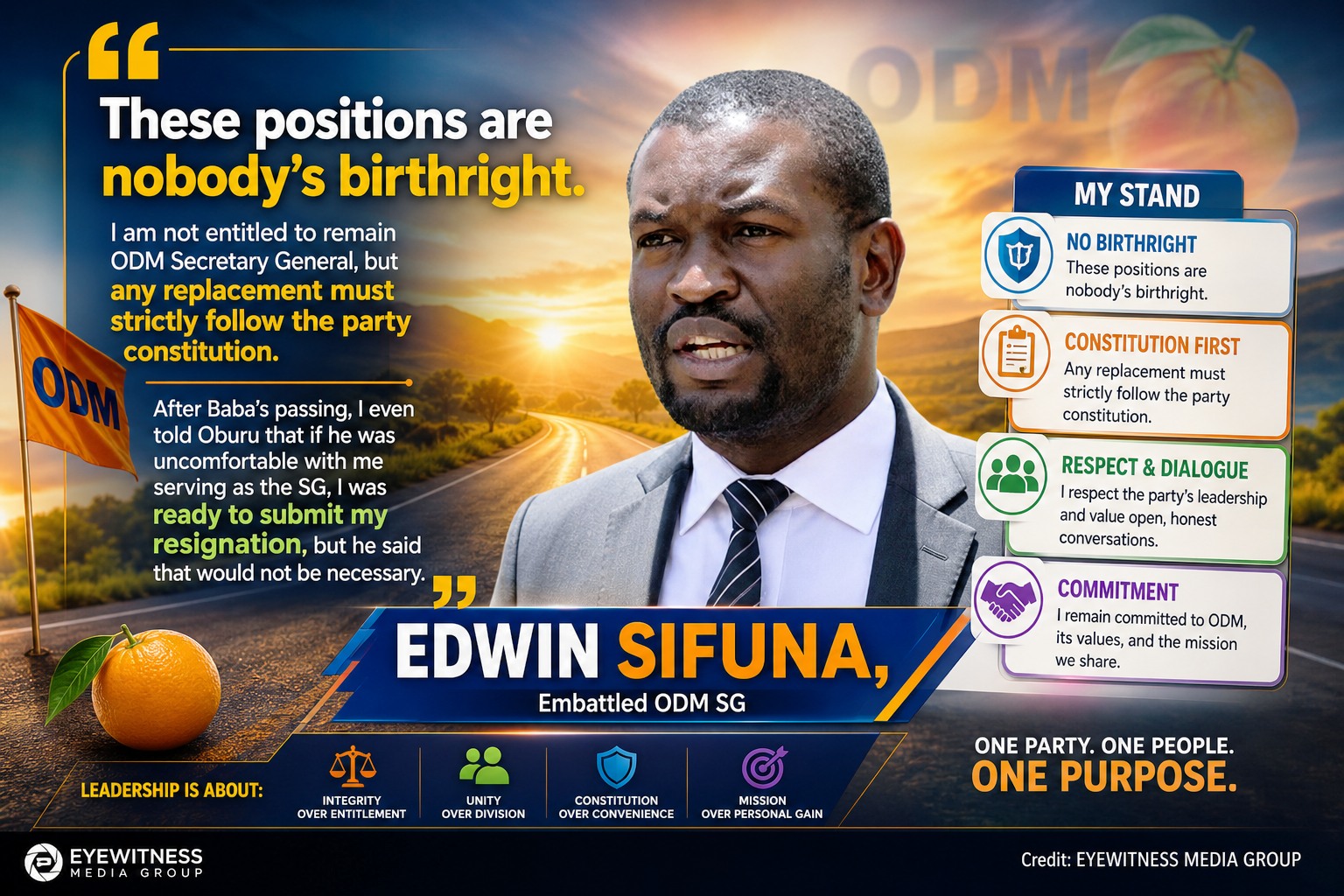
It’s this consistency, this unwavering commitment to principle that sets Sifuna apart. He didn’t succumb to the pressures of the political elite, even when his colleagues in ODM chose to cozy up to President William Ruto’s administration. When Raila Odinga, the then ODM party leader, announced his intention to work with Ruto and signed an MOU with the Kenya Kwanza government, Sifuna was among the few who openly disagreed.
And that, my friends, is what true leadership looks like. He didn’t compromise his values for the sake of political convenience. He stood for what was right, not for what was easy. In a country where political indecision often results in leaders being dubbed “watermelons,” those who lack a clear position or spine, Sifuna’s consistency stands as a beacon of integrity.
Now, as we stand on the precipice of a crucial political moment, I feel the weight of those three words—Sisi Ndio Sifuna—heavy on our collective shoulders. The youth of Kenya are no longer waiting for someone to tell them they are “future leaders.” They want to see a new reality, one where their voices are not only heard but acted upon.
They want to be in positions of power today; not 10, 20, or 30 years from now. They want to see someone who is not afraid to challenge the status quo, someone who will fight for them, someone who will make their aspirations a reality. These are your burden!
And that brings me to the next big question: Is Sifuna ready to lead now? Should he wait until 2032, as some advisors suggest, or should he seize the moment in 2027? I believe, without a doubt, that Sifuna has what it takes to lead Kenya now. We have seen it before. We saw it with Barack Obama, who, at 47 years old, leapfrogged political giants like Hillary Clinton and Joe Biden to become the 44th president of the United States.
Obama didn’t wait for the “right time.” He saw a window of opportunity, and he took it. His vision resonated with the people, and he inspired millions around the world. The same can happen here. Age, as they say, is just a number. What matters is the vision and the ability to lead.
In Africa, we have seen young leaders rise to power, and they are changing the narrative. Bassirou Diomaye Faye, at the age of 44, became the president of Senegal, with a mandate built on promises of anti-corruption and economic reform. Africa’s youth are hungry for change, and they are ready to follow leaders who can deliver on those promises.
Edwin, you are at a crossroads. Your decision, whatever it may be, will shape the future of Kenya. If you choose to run for president in 2027 and lose, that is not a defeat. Just like Bobi Wine in Uganda or Julius Malema in South Africa, you will continue to be a voice for the voiceless, a champion for the youth. You will continue to inspire and empower the next generation of leaders.
So, I urge you to listen to your heart and to the voices of those who believe in you. Don’t let anyone tell you to wait. The time for change is now. The youth have already declared that Sisi Ndio Sifuna. It’s time for you to rise to the occasion and lead.
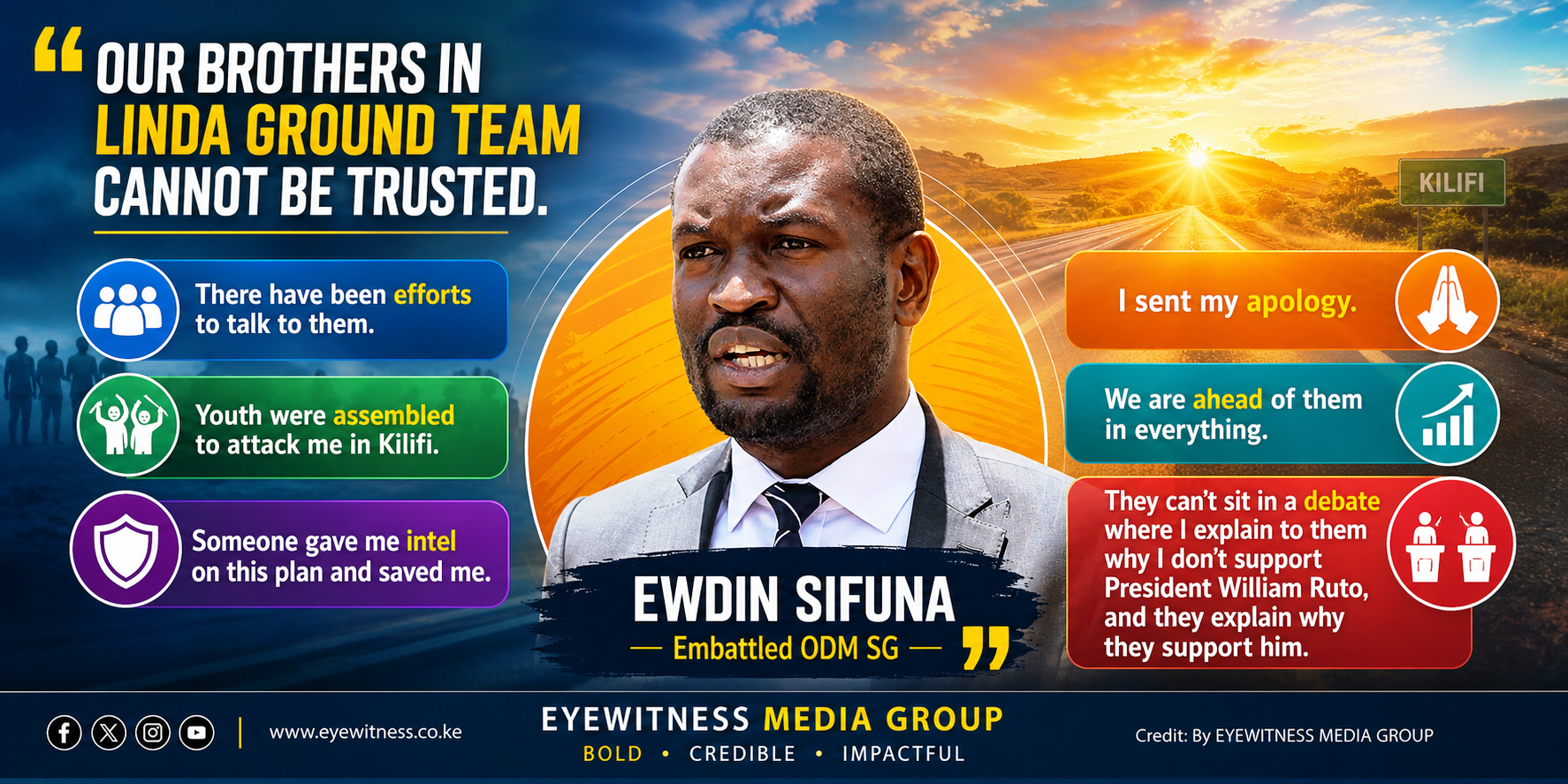
And remember; at the heart of this emerging youth-driven political movement is the idea of generational change. The 2019 Kenya Population and Housing Census paints a clear demographic picture: Kenya is overwhelmingly a youthful nation, with young people forming the largest share of its population.
According to the census, those aged between 18 and 35 account for about 30 per cent of the population, while a further 45 per cent are below the age of 18. Taken together, this means that roughly three-quarters of Kenyans are young people, underscoring the fact that youth are not merely a significant segment of society, but the dominant majority.
This demographic reality carries profound social, economic and political implications. It means Kenya’s present and future are largely shaped by the aspirations, needs and frustrations of young people.
From education and employment to healthcare, innovation and political participation, the country’s policy priorities must reflect the interests of a predominantly youthful population.
In effect, the census confirms that Kenya is a young nation whose development trajectory will depend heavily on how effectively it invests in, empowers and engages its youth.
And remember, in the end, leadership is not about titles; it’s about making a difference. It’s about empowering others. Raila Odinga died aspiring to be the president of Kenya, but he remained the most powerful person in the country outside the presidency.
The time for the youth to lead is now, and with you at the helm, I believe that vision can become a reality.
The writer is a journalist and a political modeling specialist.