



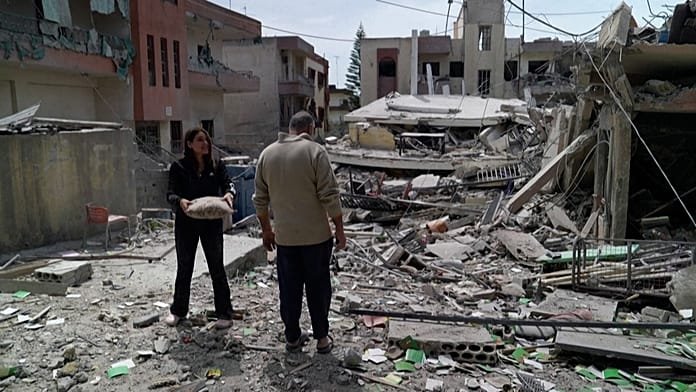
Israel-Hezbollah ceasefire: civilians return to ruined towns in southern Lebanon
Last updated:
5 minutes ago
As a 10-day ceasefire came into force on Friday 17 April 2026, halting weeks of heavy fighting between Israel and Hezbollah, residents began returning to southern Lebanese cities such as Nabatiyeh to find widespread destruction. Streets were strewn with debris, shattered glass and the remains of damaged buildings after strikes continued until the final hours before the truce.
Families started arriving the same morning, on foot or by minibus, stepping back into neighbourhoods they barely recognised. Many found their homes flattened or charred. Some paused in silence before entering what was left; others immediately began clearing dust and broken glass. A few shopkeepers reopened where they could, sweeping thresholds as a first gesture towards normal life, while neighbours sifted through rubble in search of documents, photos or anything salvageable.
Residents described working side by side, often with bare hands or basic tools. Despite cracked walls and exposed wiring, some chose to sleep in damaged flats, preferring uncertainty at home to displacement elsewhere.
A man returning from Tyre said relief outweighed shock. “Being here is better than staying as a guest,” he said, watching others share food, water and generators in a quiet effort to rebuild daily routines.
Strikes hit Nabatiyeh and nearby areas minutes before the ceasefire took effect, targeting zones near official and security sites, including parts of the Sérail district. The timing has drawn criticism, with some seeing the truce as following a final wave of bombardment. While it opens space for talks involving Iran and the United States, its durability remains uncertain.