


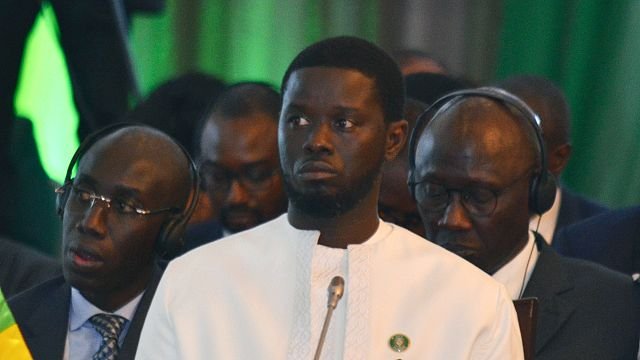
Bassirou Diomaye Faye
How has political Africa behaved over the past decade?Across the continent, some countries have maintained institutional stability, while others have faced political tensions and shifting international alliances.
In countries such as Senegal, Ghana and Botswana, democratic institutions have largely held firm, with regular transfers of power in some cases.
Elsewhere, tensions remain over constitutional rules and political competition, notably in Zimbabwe, Côte d’Ivoire and Cameroon.
In North Africa, politics is still shaped by the aftermath of the Arab Spring, with outcomes that now vary widely from one country to another. In Egypt, the transition gave way to a strong presidential system. In Tunisia, democratic progress was followed by more recent setbacks. And in Algeria, the Hirak protest movement of 2019 showed strong public demand for change, but without major institutional reform.
On the international stage, partnerships are becoming more diverse, with growing involvement from players such as Russia and several Gulf states.
At the same time, the relationship between citizens and institutions is changing, driven by digital platforms and wider access to information, raising expectations around governance.
New forms of political engagement are also emerging among younger people, often outside traditional party structures, from Senegal’s Y’en a marre movement to the #EndSARS protests in Nigeria.
Taken together, these trends are continuing to reshape the continent’s political balance, between stability, social pressure and outside influence.
You may also like