



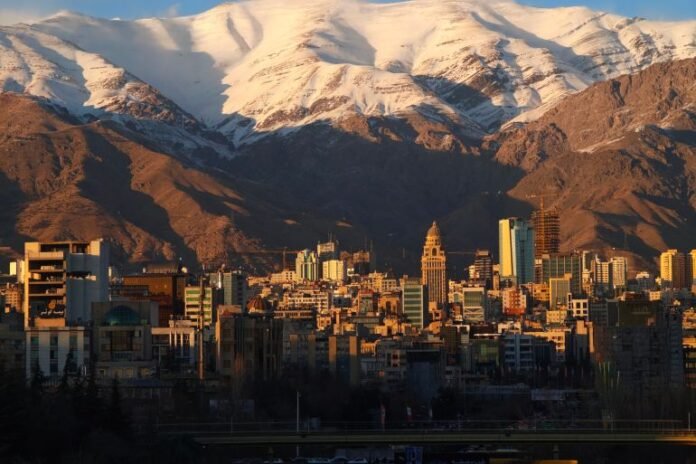
High prices in Iran’s stunted housing market leave tenants with few options
Tenants face bleak prospects as economic uncertainty persists amid a potential resumption of fighting.
Save

Published On 19 May 202619 May 2026
Tehran, Iran – When Mohammad, a 29-year-old resident of western Tehran, renewed his tenancy contract earlier this week, the price increase did not come as a surprise.
His landlord had raised the rent for the 20-year-old apartment to 230 million rials ($130), up from 130 million rials ($73), while keeping the fast-depreciating deposit at 5 billion rials ($2,800 at the current exchange rate).
Recommended Stories
list of 3 itemsend of list
Monthly minimum wage in Iran is currently about $90, which can go to $120 after accounting for government-issued subsidies, electronic coupons and marriage or housing-related allowances.
Most tenants are believed to be surviving under the poverty line, which is about 700 million rials ($400) in monthly income per average family.
“I think the landlord was happy to extend for another year because of the market conditions, and I wanted to stay because the price increase could be worse,” Mohammad, who works as a driver for a ride-hailing app, told Al Jazeera.
Moreover, he said, his neighbourhood was not directly targeted in the air attacks that the United States and Israel launched in late February, before strikes were suspended more than a month ago under a tenuous ceasefire.
He added that more affordable alternatives to the 60-square-metre (645-square-foot) apartment would be smaller and older, or located in southern Tehran, which would mean having to commute an extra hour daily to go to work.
Incomes and expenses hardly match for many Iranians who do not own homes, forcing them to pay large amounts to keep a modest roof over their heads or make compromises.
Advertisement
According to the Statistical Center of Iran, rents rose 31 percent year-on-year in Farvardian, the first month in the Persian calendar, which ended on April 20.
No official data has been released for Tehran, but reports in local media and realtor associations indicate that prices in the capital are now 30 to 40 percent higher on average compared to last year. Areas less affected by the war are growing more expensive faster.
Those figures are technically lower than year-on-year inflation, which was at 73 percent in the same month, and is believed to have surged even higher in the weeks since, as the impact of the war further strains the ailing and sanctions-hit Iranian economy.
But even before the war, rents were already coming off a very high base after years of unchecked price hikes. And with wages not even remotely keeping pace, the annual contract resets have become a source of anxiety for many.
A real estate agent in Tehran told Al Jazeera that fewer housing contracts are being signed due to uncertainty over the potential resumption of fighting amid the deteriorating economic conditions.
“The prices are shifting lifestyles in the tenancy market; I’ve had people looking for housemates to cut expenses in half, people going back to smaller cities or city suburbs, and people moving back into their parents’ homes,” the 45-year-old said.
He said the price of buying a home has increased significantly as well, in some areas even more than the skyrocketing inflation. The fast-rising prices of construction materials have also squeezed builders, some of whom have halted work to see if the war would end, he noted.
‘Must endure hardships’
Facing a budget crunch amid the punishing US and United Nations sanctions, the extent of the backing provided by Iranian authorities has been very limited.
Earlier this month, the Tehran Association of Realtors cited the Supreme National Security Council as decreeing that tenancy contracts expiring during the war may be automatically extended for up to two months.
The authorities have also set a cap of 25 percent for annual rent increases, but local media have reported that the figure virtually acts as a floor, rather than a binding ceiling, for tenancy deals.
The government also offers loans to help people pay the deposit for a rent contract.

But the figure is up to 3.65 billion rials ($2,050) in Tehran, and decreases to 2.8 billion rials ($1,582) for provincial capitals; 1.85 billion rials ($1,050) for other cities; and 750 million rials ($420) for villages.
Advertisement
These numbers can help some tenants, but often prove inadequate, especially in Tehran, where deposits are several times the allotted loan amount for a family-sized unit in many districts.
Targeted emergency relief was also provided to those who lost their homes during the war or suffered damages. These people were given emergency housing in hotels by the Tehran Municipality or relevant authorities in their region.
Affected households were also eligible for additional rental-deposit support. Bombings may have also caused some legal issues for tenants living in damaged homes, since those homes were not subject to automatic rent cancellation.
According to the state-linked ILNA news agency, the rent obligation generally remains unless the unit has a defect or damage that affects habitability. Tenants are urged to refer to a dispute-resolution council set up to adjudicate civil cases if necessary.
Looking ahead, prices in the housing sector are expected to rise, similar to other parts of the economy that have been stuck in a limbo during a protracted period of no war and no peace.
On Monday, US President Donald Trump said he had held off an attack on Iran that was planned for Tuesday at the request of Gulf allies. But he warned that his forces may still strike if a deal is not reached.
“We fight, but we have problems. We will certainly have more inflation. Those who fight must endure the hardships,” Iran’s President Masoud Pezeshkian said during a speech on Monday.
A woman who identified herself with a last name, Rezaei, told Al Jazeera in central Tehran that prices right now are not comparable to last month, and have further increased in recent days.
“I bought many things last week, and now their prices have doubled,” she said.
“My purchasing power has decreased by at least 70 percent; people’s purchasing power has decreased a lot.”