


The United States on Tuesday denied funding paramilitary units charged with securing mines in the Democratic Republic of Congo, a day after Kinshasa announced the creation of a mine guard.
In a statement on Monday, the General Inspectorate of Mines (IGM) of the DRC said it would set up a “paramilitary special unit intended to secure the entire mineral exploitation chain” in the country.
The IGM said the guard would receive $100 million in funding as part of “strategic partnerships” with the United States and United Arab Emirates.
But the US embassy in the DRC said the US government “is not funding paramilitary groups to guard mines.”
Washington remains “committed to advancing shared economic growth, stability, and prosperity” in Congo under the Strategic Partnership Agreement between the two countries, the embassy said in a statement.
The IGM also clarified its announcement in a Tuesday statement, saying the unit’s funding would come from “different types of stakeholders” and would “not involve direct funding from any single government.”
Chronic insecurity
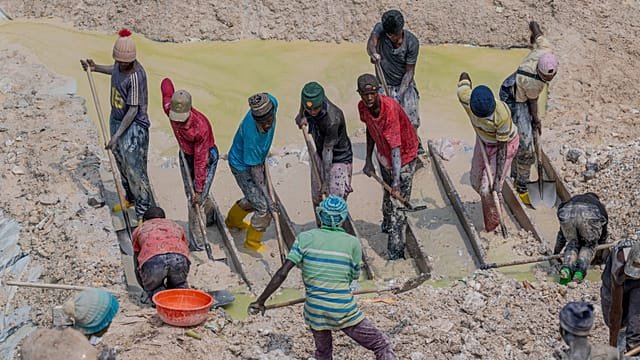
The DRC produces around 70% of global cobalt output — key for making electric batteries and in defence technology — and holds some of the world’s richest deposits of copper, coltan and lithium.
Chinese mining firms have a dominant position in the country, though there are companies from the United States and elsewhere.
The vast country has long struggled with illicit mineral trafficking and chronic insecurity, particularly in its eastern provinces, where fighting between government forces and Rwanda-backed M23 rebels has killed thousands of people and displaced hundreds of thousands.
The new unit will be deployed gradually, with an initial 2,500 to 3,000 personnel expected to be operational by December following six months of training in military collaboration, the IGM said in a statement.
The paramilitary force is projected to have more than 20,000 personnel across all of Congo’s 22 mining provinces by the end of 2028, with the aim of boosting investor confidence and strengthening state oversight of mineral production.
It will take over security duties currently performed by conventional military forces.
Its mandate includes securing mine sites, escorting mineral shipments to processing facilities and border crossings and protecting foreign investments.