


11:54
Desperate to communicate with the outside world, Iranians are increasingly travelling to the border with Iraq, where Iraqi SIM cards and impromptu hotspots became a hot commodity, they told Euronews.
Iranians living near the border with Iraq’s Kurdistan region are crossing into neighbouring territory or gathering at the frontier just to get online, as the Tehran regime’s months-long internet blackout has cut tens of millions of people off from the outside world.

ADVERTISEMENT
ADVERTISEMENT
The Islamic Republic officials have justified the restrictions by citing “security considerations” and the need to counter “cyber warfare”.
Citizens say the blackout has cut them off from independent news sources, made it impossible to reach family members abroad, and in many cases destroyed their livelihoods.
Authorities have also outright criminalised many of the tools Iranians have turned to in order to get online, including VPNs and Starlink satellite internet.
“After the war began, the internet in Iran was completely shut down and practically no communication existed between inside and outside the country,” a resident of the border city of Baneh told Euronews, speaking anonymously for security reasons.
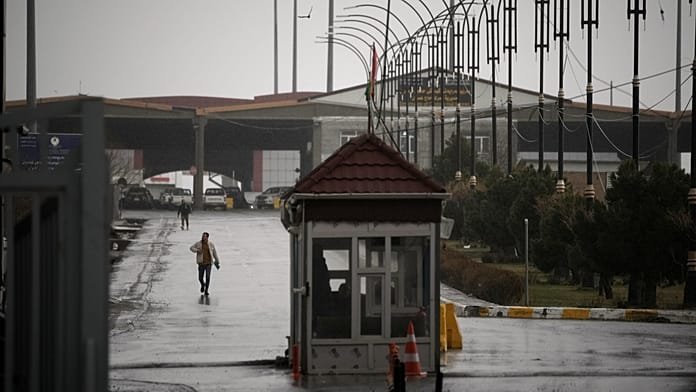
Iran and Iraq share a 1,600-kilometre-long border, from the tripoint with Turkey to the Arvand river and the Persian Gulf to the south. Baneh, a city of some 100,000 residents, is just 30 kilometres from the nearest crossing.
“In Baneh, where much of the economy depends on trade, many merchants and shopkeepers needed internet access to continue their work, and for this reason they turned to SIM cards from neighbouring countries,” they explained.
The concern was not limited to traders. Iranians living abroad had no way of knowing whether their homes had been struck or whether their loved ones were safe.
“Many of us did not know during the war what was happening or what fate awaited us. That is why some people tried to use this method to gain access to the free flow of information,” a resident of the nearby border city of Sardasht told Euronews.
Incidentally, a town of some 50,000 people, Sardasht was one of the first cities in the world to come under a chemical weapons attack, after Iraqi forces under Saddam Hussein dropped mustard gas bombs on it in 1987 during the Iran-Iraq war.
Baneh itself was bombed by both parties during the Iran-Iraq war, with most of the locals fleeing to Iraq.
Iraqi SIM cards a hot commodity
One solution that spread through border communities was the use of Iraqi mobile network SIM cards from providers Korek and Asiacell, which carry partial coverage into Iran’s frontier areas.
“These SIM cards have some coverage in Iran’s border areas, and the closer you get to the frontier, the better the connection. For that reason, traders and people who wanted to inform family members abroad about their situation used them to connect to the internet,” the Baneh resident said.
Some residents of towns near the Kurdistan region already held Iraqi SIM cards or travelled into Iraq to obtain them. In areas with stronger cross-border reception, people called relatives abroad or tried to keep their businesses running.
An improvised internet access point eventually appeared several kilometres outside Baneh, near the frontier.
“Many people would go to an area about 3 to 4 kilometres outside the city of Baneh, near the Iraqi border, where reception was better and it was possible to connect to the internet,” the Baneh resident explained.
“Gradually, the number of people going there increased, and a group built a small shack on the spot and started offering internet access by the hour in exchange for money, by sharing their mobile internet with others via Wi-Fi,” they said.
More than 50 arrests
Islamic Republic authorities eventually raided the site. “They raided the area, arrested more than 50 people and confiscated their mobile phones,” the Baneh resident said.
“The agents went through all the data stored on the mobile phones of those arrested and then warned that anyone who approached the border or carried an Iraqi SIM card would face a harsh response.”
“Those detained were put under pressure to explain why they had sought to access the internet.
Many had only called relatives abroad, while others were traders and businesspeople who needed the internet to do their work,” he added. Most were released after signing written pledges. Around 10 people remain in custody, according to eyewitnesses Euronews spoke to.
The crackdown made people more cautious at the border crossings as well.
“At the moment, because of security sensitivities, people avoid some border crossings, and many of those travelling between Iran and the Kurdistan region wipe their mobile phones and laptops to avoid arrest or being accused of collaborating with Israel and the US,” another witness told Euronews.
Internet for the few
Over the past months, only a small number of Iranians have managed to access the global internet through costly or officially prohibited means.
A limited category of business licence holders can register for what authorities call “pro internet,” but a 50-gigabyte package costs around 2.8 million tomans — around €15 at current free-market exchange rates — and is charged separately from registration fees.
For many workers whose monthly salary does not reach 20 million tomans (€110), the cost is out of reach.
A select few also have access through special SIM cards or privileged journalistic access. Some who have such access refuse to use it, either because it is unavailable to most Iranians or because they are concerned that their online activity is being monitored.
VPN prices, which spiked sharply at the start of the blackout, have since fallen as supply has increased. A limited number of Starlink devices, most of them smuggled, are also circulating — but their use carries the risk of prosecution and has already cost one person their life.
In the latest incident, a 40-year-old businessman from Tehran died in detention after security forces arrested him when he went to follow up on the case of his brother, who had been held on charges related to the use of Starlink equipment.
A resident of Sardasht told Euronews that access conditions in the border areas were now “somewhat better” and that most people without any of these options were using Iran’s domestic “national internet” and waiting for the restrictions to end.
The head of the Iran Chamber of Commerce’s economy commission Afshin Kalahi told domestic media that the shutdown was causing direct daily losses of $30 million to $40 million (€25.5m to €34m) for Iran’s economy.
Iran’s ministry of communications separately cited daily business losses of 600 billion toman (€30.3m) for businesses.
The ministry also said that around 10 million people — mainly from the middle and lower classes — depend on stable digital communications for their work.