


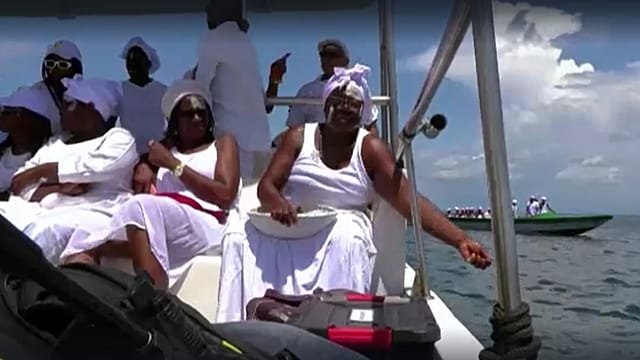
In Gabon on Sunday, a procession of dugout canoes took to the sea off the Pointe Denis peninsula to perform Mpago, a centuries-old animist rite which honours the sea spirits in a tradition intended to protect the coastline.
Wearing traditional white clothes, the Mpongwè faithful crisscrossed the waters of the mangrove, the estuary, and the ocean for hours, singing songs, pouring liqueurs, tobacco, and mixtures of fragrant herbs as gifts.
Gérard-Aimé Adande is the grandson of the late Gabonese traditional leader, Prince Félix Adande Rapontchombo, who was head of the Mpongwè clans in the estuary region.
“Mpago, we’re not the only ones who practise this rhythm here in Gabon. But around the estuary, we are the only ones. So the Assiga clan,” he said.
“It’s about being in a relationship between the sea spirits, our ancestors the Agombés, and the deity.”
Every five years, hundreds of people from this Myènè ethnic sub-group, gather on the peninsula to pay their respects to the mystical entities they believe live in the estuary’s waters.
Several days of rites culminate in Mpago or the day of offering. The night before, Mpongwè women, crowned with greenery, sing and dance to ensure the balance of their environment.
“We believe that it is the anger of the spirits that creates the rising waters and erosion,” through these ceremonies, we fight to keep our ancestral lands,” said Adande.
With coastal erosion – largely driven by climate change and sea-level rise – a major threat to people living along Gabon’s coastline, the rite has gained a new significance.
The tradition also raises awareness among visitors about the need to protect the environment.