


Franchising in South Africa is growing. Entrepreneurs are looking for access and opportunities to participate in the formal economy.
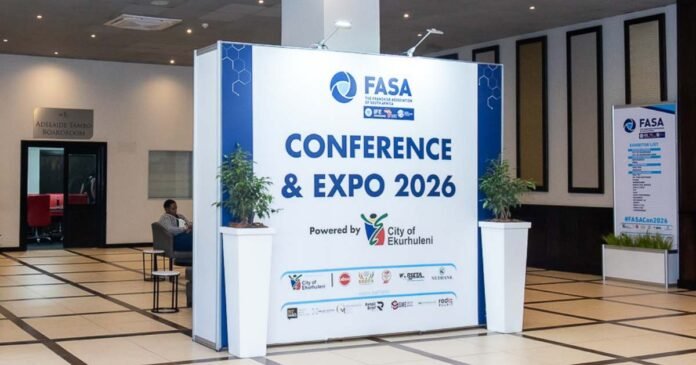
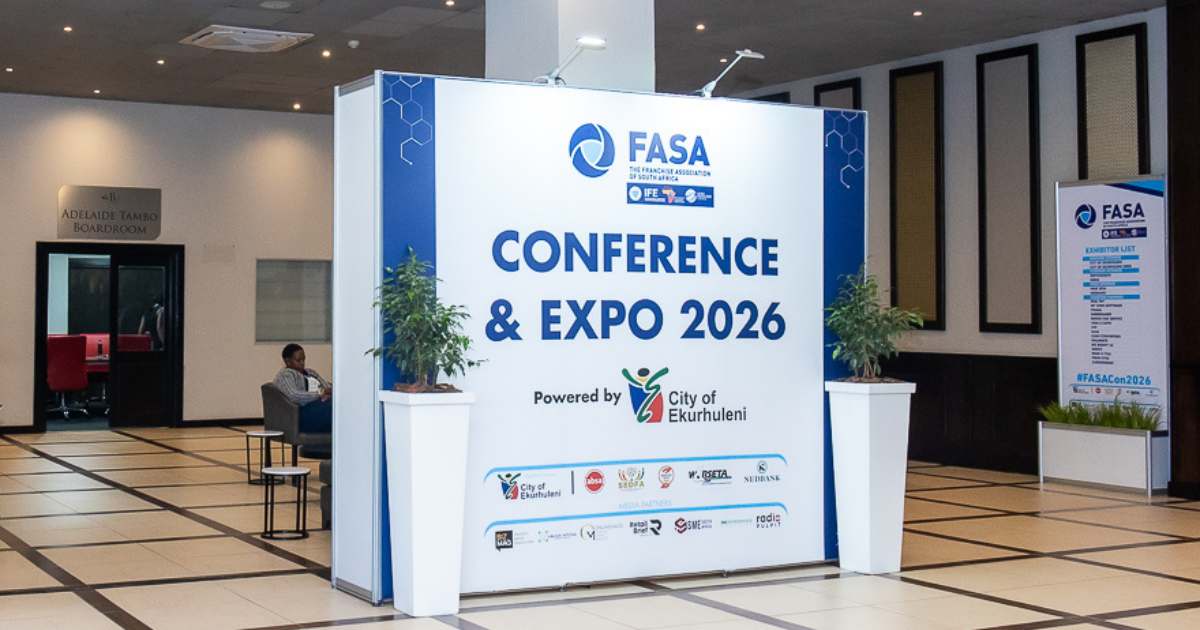
That was the underlying message at the recent Franchise Association of South Africa conference and expo, hosted in the City of Ekurhuleni. The room was filled with franchisors, franchisees, exhibitors, government representatives and funding stakeholders.
South African SMEs face immense pressure. Having to deal with tight margins, strict compliance expectations, and regular industry changes is no small feat. Consumers are cautious. Yet franchising continues to position itself as a structured growth model for entrepreneurs who want lower risk than starting from scratch.
Government’s Position on Franchising and Inclusive Growth
The Executive Mayor of the City of Ekurhuleni, Alderman Nkosindiphile Xhakaza, addressed the conference with a strong focus on inclusive growth through franchising. The Mayor emphasised partnership between the public and private sectors.
Municipalities sit at the centre of infrastructure delivery, licensing, zoning and local economic development. When municipalities streamline regulated processes and support infrastructure, they reduce friction for franchise expansion. That reduces time to market. It also improves survival rates for franchise outlets.
Entrepreneurs need local government support. This determines whether a franchise location succeeds. Support includes access to reliable utilities, permits, and safe trading environments. These are factors that impact daily turnover.
The mayor also highlighted youth empowerment, women entrepreneurship and emerging entrepreneurs. This aligns with current economic policy trends in South Africa. Franchising offers structured systems, brand recognition and operational support. That lowers the learning curve for first-time business owners.
Why South Africa Must Take Franchising Seriously
Imagine a sector that already contributes roughly 15% of GDP, yet remains underleveraged, with untapped potential to generate jobs, skills, and social cohesion. That sector is franchising. FASA CEO Freddy Makgato addressed the audience on where franchising stands today and gave us insight into where he hopes franchising is headed. While the sector contributes significantly to GDP, Makgato challenged the need to think beyond incremental gains.
Scale Matters
Internationally, mature franchising markets contribute a larger share of GDP and drive employment growth more effectively than South Africa’s current level. The target for local franchising is deliberate: move from 15% to 20% of GDP contribution.
Franchising is Structured
Unlike informal businesses, franchise operations follow standardised procedures, providing clear pathways for employees to transition into management and eventually ownership. This structure underpins stability, skills transfer, and long-term viability.
Economic Inclusion is Non-negotiable
Freddy Makgato highlighted that South Africa cannot prosper while fragmented by social divisions. Franchising, when scaled intentionally, provides a platform for equitable participation in economic activity.
There’s a strong connection between employment and social stability. Without jobs, structural issues like crime and inequality persist. Franchising can address these challenges by offering replicable, disciplined, and manageable business models that empower individuals while sustaining brand consistency.
He also addressed entrepreneurs, “If you are to build a business, you have to work hard. Consistency is essential. Under-capitalised or loosely managed operations fail, not because of the brand, but because of weak execution,” he said.
Finally, Makgato challenged the government to play an active role. Creating regulatory frameworks, infrastructure reliability, and streamlined approvals to facilitate franchise expansion. Electricity, water, and zoning clarity are fundamental enablers of growth.
Services SETA and Skills Development for Franchises
One of the governmental partners on the day was Services SETA. Services SETA funds skills development. It supports businesses that want to train and upskill their workforce. It offers discretionary grants and special project grants.
At the conference, Ms Mamabele Motla, Executive Manager of Strategy and Insight at Services SETA, acknowledged something important. Not enough awareness has been created around these opportunities.
SMEs do not realise that skills development funding is not only for large corporations. SMEs and franchise businesses can access support if they align with the required criteria or even partner with the government as a skills provider.
Franchising relies heavily on standardised skills. Customer service, operational procedures, financial management, health and safety compliance, and more. These are all trainable competencies.
If you are a franchise owner in South Africa, you should be asking this question. Are you leveraging skills development grants to strengthen your franchise network?
Manabele highlighted that SMEs can become accredited training providers themselves. That opens another revenue stream. It also strengthens industry capacity.
Technology and Reconciliation Challenges in Franchises
The exhibition floor has a range of options for delegates to explore, from government to franchisors, and even technology and reconciliation opportunities for franchise businesses.
Technology providers are becoming central to franchise success. One such exhibitor, STEM Software, highlighted a growing problem in the franchise sector. The problem is reconciliation complexity.
Modern franchise businesses do not deal with one payment method. They deal with a variety of payment methods, such as:
- Card payments.
- Loyalty rewards.
- Delivery platforms.
- Multiple bank accounts.
- Merchant integrations.
We spoke to STEM Software’s operational manager, Hendrik Kotse, who took us through the benefits of using such software.
“You’ll basically have a system where you can connect to all various types of boss systems. You can manage your income and all your different methods of payment. We automate the import of the bank statement at the end of the day, where we reconcile every single income-related transaction back to the method of payment and the effective dates in those payments,” he says.
Many franchise owners reconcile income manually. That not only consumes hours daily, but it also increases error risk and can weaken financial oversight.
Inclusive Growth Through Franchising
The phrase inclusive growth appeared repeatedly throughout the conference. Franchising can create ownership pathways for previously disadvantaged communities. It can provide structured entry into formal business operations, and it can create employment.
However, inclusive growth requires intentional design. Inclusivity includes the following:
- Franchise entry fees must be realistic.
- Training must be accessible.
- Financing partnerships must be structured.
One of the quiet conversations happening at the event was about funding access. Many potential franchisees struggle with upfront capital requirements.
This creates demand and opportunities for blended finance models, public-private partnerships, development finance institutions, and structured mentorship.