


31/03/2026 – 10:16 GMT+2
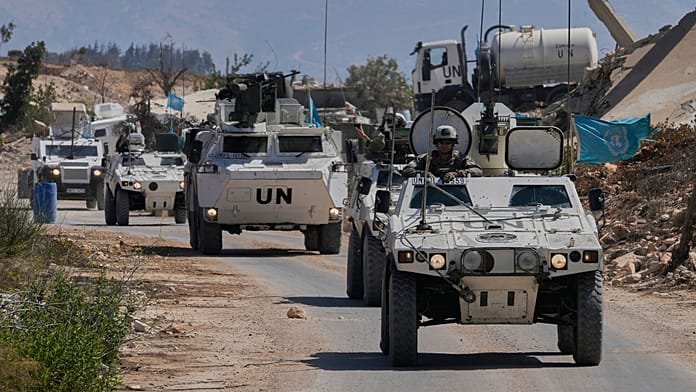
The UN Interim Force in Lebanon (UNIFIL) said two of its personnel were killed Monday in an explosion and another died late Sunday when a projectile hit their position. The UN force said it launched an investigation into the separate incidents.
The UN Security Council are set to convene an emergency session on Tuesday at the request of France after officials said three UN peacekeepers in southern Lebanon had been killed in less than 24 hours.

ADVERTISEMENT
ADVERTISEMENT
The United Nations Interim Force in Lebanon (UNIFIL) said two of its personnel were killed Monday in an explosion, and another died late Sunday when a projectile hit their position.
An explosion of “unknown origin” on Monday destroyed a vehicle near the village of Bani Hayyan, killing two peacekeepers and wounding two others.
It was unclear who was behind the projectile and explosion that killed the three peacekeepers, as the UN says the incidents remain under investigation.
Jean-Pierre Lacroix, under-secretary-general for peace operations, said Monday that all three peacekeepers who were killed were from the Indonesian army.
The three deaths bring to 97 the number of UNIFIL peacekeepers killed by malicious acts since the mission began in March 1978. In total, more than 330 UNIFIL personnel have died while on duty — the highest toll of any UN peacekeeping operation.
Condemning the “heinous” attacks, Indonesian Foreign Minister Sugiono said on Tuesday that he had discussed the deaths with UN chief Antonio Guterres, and asked for an emergency UN Security Council meeting as well as “a swift, thorough and transparent investigation”.
“The safety and security of UN peacekeepers is non-negotiable and must be upheld at all times,” Sugiono said.
The Indonesian Ministry of Defence said in a written statement that two other soldiers were also seriously injured amid intensifying hostilities in the area.
“The Ministry of Defence emphasises that the safety of peacekeeping forces must be the top priority,” the statement said. “All parties involved in the conflict are expected to respect international humanitarian law and ensure the safety of peacekeeping personnel.”
The Israeli army said it is aware of reports regarding the two instances in which UNIFIL peacekeepers were killed. The IDF said it is reviewing them to determine whether the deaths resulted from Hezbollah activity or Israeli fire, noting that “these incidents occurred in an active combat area.”
Fighting intensifies amid Israeli invasion
Lebanon was pulled into the Middle East conflict when the Iran-backed Hezbollah militants fired rockets at Israel on 2 March in what they said was an act of revenge for the killing of Iran’s Ayatollah Ali Khamenei in the initial US-Israeli strikes on Tehran on 28 February.
Israel has repeatedly struck targets in southern Lebanon, as well as Beirut, as it seeks to deliver a heavy blow to Hezbollah. Israel has moved thousands of troops across the border into Lebanon, as Israeli forces and Hezbollah have engaged in heavy fighting on the ground for at least three weeks.
Defence Minister Israel Katz and other officials have stated that Israel wants to take control of the entire area south of the Litani River, some 30 kilometres north of the border, and that displaced Lebanese residents will not be allowed back until Israel decides that its northern border is safe.
Jeanine Hennis-Plasschaer, the UN special coordinator for Lebanon, issued a statement Monday, saying that the humanitarian impact in southern Lebanon as Israel trades fire with Hezbollah has reached devastating levels.
The envoy detailed that the three UN peacekeepers and nine Lebanese paramedics killed in just the last few days are part of a broader death toll that now stands at more than 1,240, while more than 1 million people remain displaced.
“One thing is clear: the longer this goes on, the harder it will be to come back from,” Hennis-Plasschaer said. “As maximalist rhetoric abounds, the prospect of a negotiated settlement is a daunting one. But we must start somewhere.”
She added that while “tactical military gains may produce short-term wins, on and off the battlefield,” they do risk “long-term damage to the stability and prosperity both Lebanese and Israelis deserve.”