



09/04/2026 – 13:06 GMT+2
Britain and Norway announced new joint naval patrols aimed at protecting undersea cables from Russia in December, with a fleet of at least 13 warships protecting critical infrastructure in the North Atlantic.
The UK and Norwegian militaries led an operation to deter Russian submarines suspected of “malign activity” in the north Atlantic, the British defence secretary said on Thursday.

ADVERTISEMENT
ADVERTISEMENT
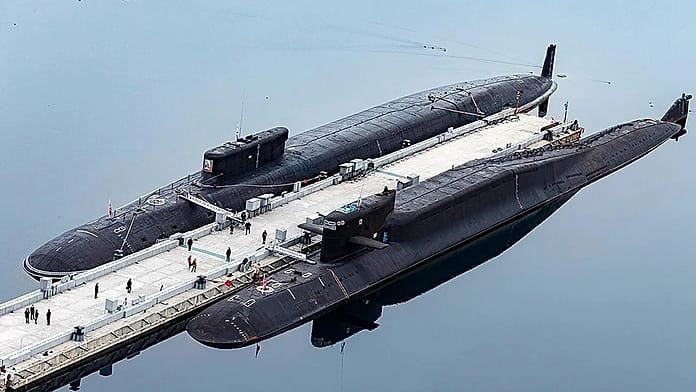
John Healey said a frigate, planes and hundreds of personnel monitored a Russian attack sub and two spy submarines near undersea infrastructure north of the UK.
He said the Russian vessels eventually left after the operation that lasted more than a month.
Healey said his message to Russia was “we see your activity over our cables and our pipelines and you should know that any attempt to damage them will not be tolerated and will have serious consequences.”
British officials have tried to keep Russia in the international spotlight even as the world’s attention is focused on the conflict in the Middle East.
They have also stressed the overlap between wars there and in Ukraine, saying Russia has supplied Iran with drone parts and other support. Tehran has backed Moscow in its all-out war in Ukraine, providing it with its Shahed drones, now also made in Russia under the designation Geran.
Healey told a news conference that “Putin would want us to be distracted by the Middle East,” but Russia is the main threat to the UK and its allies.
“We will not take our eyes off Putin,” he said.
In late March, the UK said its military was ready to seize ships suspected to be part of Russia’s “shadow fleet” of vessels shipping oil in violation of international sanctions over Moscow’s war on Ukraine.
Previously, Britain had only helped France and the US monitor ships before they were boarded.
“We are ready to take action” against the vessels, Healey said.
Russia has reportedly built up a flotilla of old oil tankers of opaque ownership to get around sanctions imposed by the EU, as well as the US and the G7 group of nations, over Moscow’s 2022 full-scale invasion of Ukraine.
Naval alliance
Britain and Norway announced new joint naval patrols aimed at protecting undersea cables from Russia in December, after Prime Minister Keir Starmer and his Norwegian counterpart Jonas Gahr Støre held talks on defence.
The UK government said a combined fleet of at least 13 warships will “hunt Russian submarines and protect critical infrastructure in the North Atlantic.”
Norway’s Defence Minister Tore O. Sandvik, who signed the deal with his British counterpart John Healey, said it would allow both countries to “defend themselves together.”
It follows a £10 billion (€11 billion) deal struck in August for Norway to buy at least five British-made frigates.
Those Norwegian vessels and eight British ships will operate jointly in the seas along NATO’s northern flank.
Britain says Russian naval activity around UK waters has increased by 30% in the past two years.
NATO’s senior expert on cyber and hybrid threats said late last year that persistent attacks on undersea cables across Europe is “the most active threat” to Western infrastructure.
Acting Assistant Secretary General for Innovation Hybrid and Cyber, James Appathurai, said recent attacks on communications cables attributed by the alliance to Russia is part of a significant growth in cyber, hybrid and other interference in Europe.
Early in November, two cables were severed in the Baltic Sea between Sweden and Lithuania and another between Germany and Finland, immediately alarming member states and NATO among concerns of sabotage.
“The Russians are carrying out a programme they have had for decades. It’s called the Russian Undersea Research Programme, which is a euphemism for a paramilitary structure, very well-funded, that is mapping out all of our cables and our energy pipelines,” Appathurai told Euronews.
“It has so-called research ships. They have little submarines underneath. They have unmanned, uncrewed, remotely operated vehicles, they have divers and explosives.”