


08/04/2026 – 21:17 GMT+2
Homosexuality is not illegal in Turkey, but the LGBTQ+ community is frequently targeted by authorities who blame it for the country’s declining birth rate.
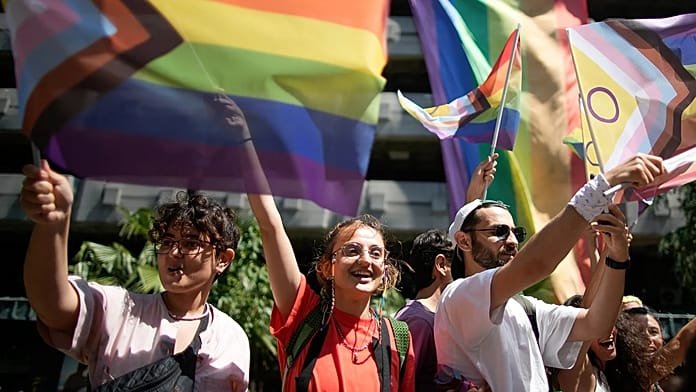
Eleven leaders of a Turkish LGBTQ+ rights group went on trial Wednesday on charges of “obscenity” and “violating the protection of the family,” their lawyer told the AFP news aGençy.

ADVERTISEMENT
ADVERTISEMENT
The defendants, leaders of the Genç LGBTI+ association (Young LGBTI+ in Turkish), are accused of breaching an article of the Turkish constitution on protecting family values, as well as publishing images on social media showing same-sex couples kissing, deemed “obscene” by authorities.
They face up to three years in jail and having their civil rights suspended if found guilty by the court in the western city of Izmir.
Homosexuality is not illegal in Turkey, but the LGBTQ+ community is frequently targeted by President Recep Tayyip Erdoğan and his ruling AK Party, who have blamed it for Turkey’s declining birth rate.
“This trial arises from a policy of excluding LGBT+ people from the public sphere,” said Kerem Dikmen, the association’s lawyer.
“It is an attack on freedom of expression and freedom of association,” said Dikmen, himself on trial for being a member of the group’s supervisory board.
“This is not about obscenity. Activities that are perfectly legitimate, legal and in line with the constitution are being criminalised. It is a form of dehumanisation,” he added.
LGBTQ+ rights campaigners have appealed against another court ruling issued in December ordering the association’s dissolution on the basis of the same charges.
“We will not give up defending human rights. But they are trying to send a message to society through us,” said Dikmen.
The next hearing in the case is slated for 14 October.
A draft amendment of Turkey’s penal code that proposed prosecuting lesbian, gay, bisexual and transgender people for behaviour deemed “contrary to biological sex and general morality” and promoting such behaviour in Turkey was withdrawn last November.
Since 2015, the annual Pride march has been almost systematically banned and suppressed in cities across the country.