


Trump rejects call from Russia’s Putin to extend cap on nuclear deployments
US president says that he wants to negotiate a replacement for strategic nuclear deployment treaty that recently expired.

New START Treaty ends, leaving US and Russia free to expand nuclear arsenals

Published On 6 Feb 20266 Feb 2026
Save
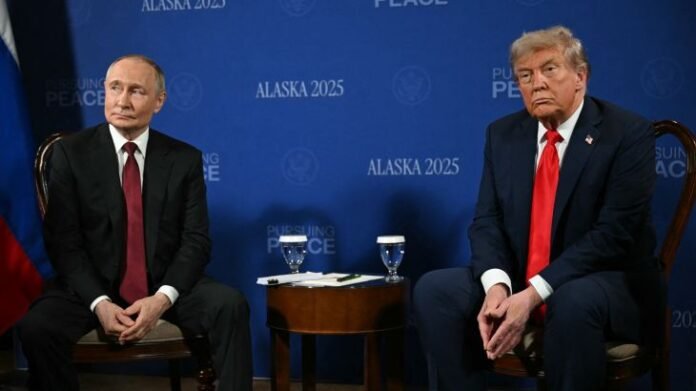
United States President Donald Trump has shot down an offer from Russian counterpart Vladimir Putin proposing a voluntary extension of recently-expired limits on the deployment of strategic nuclear weapons.
Trump said on Thursday that he wants negotiators from both countries to sit down and hammer out a new agreement, calling the old treaty “badly negotiated”.
Recommended Stories
list of 3 itemsend of list
“Rather than extend ‘NEW START’ (A badly negotiated deal by the United States that, aside from everything else, is being grossly violated), we should have our Nuclear Experts work on a new, improved, and modernized Treaty that can last long into the future,” Trump said on his social media network, Truth Social.
Trump has previously stated that he would like China to be involved in the new treaty, but authorities in Beijing have shown little interest in doing so.
The expiration of the New START pact means fewer limits on the massive nuclear arsenals of the US and Russia, spurring concerns over a potential arms race at a time of resurgent anxiety over nuclear weapons.
Putin stated last year that he would abide by the treaty for another year if Washington would commit to doing the same.
The US, which has previously grumbled that the treaty limited its ability to deploy more missiles against Russia and China, has ignored the Russian offer.
Moscow expressed regret on Thursday over the expiration of the decades-long treaty. Kremlin spokesman Dmitry Peskov said Russia will continue with a “responsible, thorough approach to stability when it comes to nuclear weapons”, adding that “of course, it will be guided primarily by its national interests”.
Advertisement
Al Jazeera’s Shihab Rattansi, reporting from Washington, DC, said US and Russian delegations, who were in Abu Dhabi to discuss the war in Ukraine, reportedly also discussed extending the New START treaty for six months.
“It would be an informal handshake deal as the treaty itself doesn’t allow for any further extensions,” Rattansi said.
“Once that extension is in place, though, the aim is to begin formal discussions to craft an updated nuclear deal between the two countries,” he said.
Recent bouts of fighting between nuclear-armed states such as India and Pakistan have unnerved analysts, who worry about the erosion of taboos and treaties meant to restrain the use of nuclear weapons in conflict.
Putin also previously suggested that Russia could use nuclear weapons in response to Western efforts to support Ukraine, causing alarm among observers.
The first START agreement was signed by the US and the former Soviet Union in 1991.
A treaty titled New START was signed by former US President Barack Obama and Russian President Dmitry Medvedev in 2010, limiting each country to a maximum of 1,550 nuclear warheads and 700 missiles and bombers deployed and ready for use.
That deal was extended for another five years in 2021, following an agreement between Putin and then US-President Joe Biden.