


05/03/2026 – 14:58 GMT+1
Trump has given the Iran war four weeks. But if the conflict drags on, economists warn the euro could slide — and prominent economist Daniel Stelter goes further, predicting a full recession.
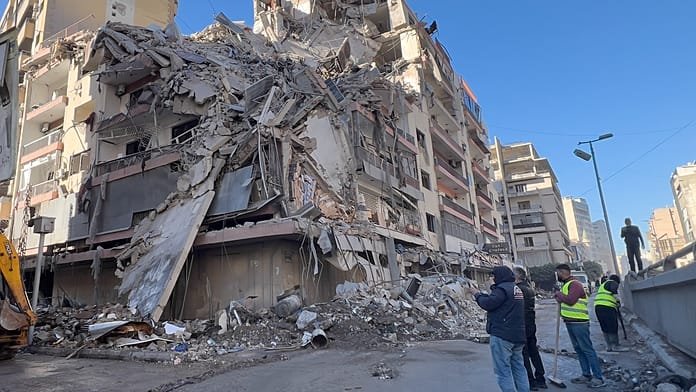
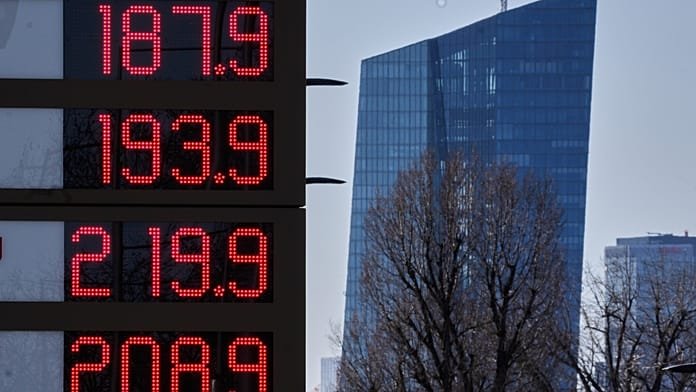
The war in Iran since the end of February has triggered an energy price shock and affected oil, petrol, diesel and gas.

ADVERTISEMENT
ADVERTISEMENT
The higher costs for consumers and energy-intensive industries such as chemicals and steel are also putting pressure on the German economy — which is already under strain due to less-than-ideal economic forecasts.
Now the euro, currently valued at around $1.16 — is also suffering. The euro could be hit particularly hard if the scenario of the Iran war lasting significantly longer than the “four weeks” announced by the US president materialises.
Economist Daniel Stelter warns that “an already structurally weak euro due to low growth, high debt and political discord would come under further pressure because capital would flow into dollar investments that are considered safe,” he told Euronews.
The chief economist at ING Bank, Carsten Brzeski, warns that “in such a scenario, the dollar would be the first to rise and the euro would slide further.”
How dangerously low could the euro fall?
A worst-case scenario for the euro would occur in the event of asustained regional escalation in the Middle East with massive energy disruptions affecting Europe.
In crisis mode, investors are more likely to drop shares and flee to “safe havens” such as the US dollar. As more dollar-tied stocks are bought, the dollar becomes more valuable and the euro falls.
Brzeski told Euronews that “if the blockade at Hormuz lasts longer, i.e. several weeks, the oil price could also rise to $100 per barrel [or] more. In such a scenario, the dollar would be the first to rise and the euro would slide further. Probably to around $1.10 per euro.”
In this case, the euro-US dollar exchange rate could fall to between $1.10 and $1.12 or much lower. That would be a significant loss in value against the dollar, of around 5% to 8%.
A holiday in the USA, including hotels, flights and shopping, would then also become more expensive and imported goods such as oil, electronics and raw materials, would consequently cost more when converted into euros.
A fall of 5% to 8% in the coming weeks would be the lowest level since the energy crisis of 2022-23 provoked by the full-scale invasion of Ukraine.
This development “does not necessarily mean a recession” in Germany, “but this worst-case scenario would be an enormous damper on the upswing that is currently emerging,” explains Brzeski.
Stelter even predicts an even deeper fall.
“In the worst-case scenario, I think the euro could slide well below the lows of the 2022-23 crisis and at the time temporarily below parity with the dollar, i.e. a scenario of $0.90 to $0.95 per euro.”
Recession? Severe consequences for Germany
Economist Daniel Stelter, on the other hand, sees particularly severe consequences for Germany in a worst-case scenario, such as a blockade over several months, prolonged war, destruction of crucial infrastructure.
“Higher energy prices act like an additional tax, dampening consumption and investment. Already weakly industrialised countries such as Germany will slide deep into recession — the entire eurozone into at least a technical recession,” Stelter explained.
Stelter’s prediction is that profit margins in energy-intensive sectors — chemicals, steel, automotive and mechanical engineering — will collapse. European indices are likely to fall “much more sharply than US markets”.
The “energy in, industry out” business model would come under renewed pressure.
Stagflation — high inflation combined with weak growth — could trigger a wave of selling on the German DAX, as panicked investors rush to offload shares simultaneously.
The longer the blockade, the worse the consequences
A longer blockade would create an imbalance in interest rates and bond markets.
“In the end, the ECB would have to intervene more strongly in the market again to prevent a new debt crisis,” says Stelter.
This is because “nominal yields at the long end could initially rise due to concerns about inflation, but at the same time the stress among highly indebted countries, including France, will increase due to rising risk premiums.”
Even “extreme price spikes” are conceivable, warns Stelter, in the event of escalations such as attacks on tankers or physical damage to infrastructure.
A so-called “energy black swan” event in the energy sector would then occur, with far-reaching consequences such as sudden supply disruptions or price explosions that would shake the global economy.
“Such a shock would reignite the debate about rationing, production shutdowns and the relocation of industry abroad,” says Stelter.
Exports could also collapse despite the favourable euro — which theoretically makes German exports cheaper.
The reason: global demand is collapsing as higher energy prices are weighing on the global economy as a whole, especially in energy-dependent countries such as China, India and the USA.
As a result, entrepreneurs there are spending less money, which means fewer orders for Germany’s industry.
Eurozone stability under threat?
The European Central Bank (ECB) could find itself in a difficult dilemma. It has a legal mandate to keep inflation at around 2% in the medium term.
If the war with Iran only lasts a short time, it would have to lower interest rates in order to support the economy: Lower interest rates make loans more favorable — this can boost investment and consumption.
But if the war with Iran lasts longer, a problem arises for the ECB: the ECB would then not be able to lower interest rates as economic aid due to the return of inflation — instead, it would have to pause or even raise interest rates.
The euro would then likely remain under pressure. At the same time, the economy would lose momentum — in the worst case scenario, stagnation and a recession would be imminent. This would cause capital to flee Europe.
“Rising energy prices would mathematically push up the inflation rate in the eurozone by at least an additional percentage point if prices remain high for a few months,” Stelter explained.
At the same time, growth is collapsing, which is “the classic stagflation trap”, according to Stelter.
“Politically, there is growing pressure to support highly indebted countries through low interest rates and bond purchases. This puts the ECB even more in the role of covert state financing — something I have been pointing out for years.”
“In the logic of my previous argument, such a conflict increases doubts about the long-term stability of the current monetary order in the eurozone,” he continued.
A quick end is a happy end?
A rapid de-escalation of the Iran war and a Middle East conflict lasting no more than 4-5 weeks could put the euro back on a slightly better course. So far, it is completely unclear when and how the Iran war will end.
Major resistance in Iran and from the Iranian leadership against a so-called “regime change” could, in the worst case, drag the conflict on for months.
“It would not be a problem if the conflict is over in a few weeks and the critical energy infrastructure in Saudi Arabia and Qatar is not significantly damaged,” Stelter concluded.