


Tuberculosis (TB) remains South Africa’s deadliest infectious disease, with 56 000 people dying from the disease in 2023.
The Department of Health says TB remains one of the country’s most pressing public health challenges. South Africa is still among the 30 high-burden countries for TB, HIV-associated TB and drug-resistant TB. This makes the government’s plan for prevention, diagnosis and treatment more urgent.
One of the biggest barriers to care
Experts say stigma and the fear of being judged, isolated or treated badly keep many people from testing for TB, starting treatment early or sticking to it.
Stigma is the shame, discrimination and unfair treatment directed at people with TB. The disease is also closely linked to poverty and HIV, which can deepen fear and make people hide.
The World Health Organisation (WHO) states that people living with HIV are 12 times more likely to fall ill with TB disease than people without HIV. The disease is also associated with poverty, resulting in patients hiding their condition for fear of isolation and being treated as outcasts.
Fear of infection behind stigma
The Human Sciences Research Council (HSRC) says fear of infection is one of the main reasons people stigmatise those with TB. For people with TB, stigma is experienced through insults, teasing, verbal and physical abuse and rejection.
In an article published in the HSRC Review quarterly magazine, TB expert and medical doctor, Professor Sizulu Moyo, says people who stigmatise others may not always realise the harm they cause. She says even gossip that may seem harmless can unintentionally fuel stigma and discourage someone from getting tested, starting treatment or continuing with it.
According to South Africa’s first TB prevalence survey, people with TB are discouraged from testing and getting treatment for the following reasons:
- Poor relationships between patients and health workers.
- Lack of support from family and friends.
- Distance from clinics and overcrowding.
- Inadequate counselling.
A separate study found that between 20% and 40% of TB patients say stigma continues even after they start treatment. But experts believe this presents an opportunity for healthcare workers to improve care and support patients to stay on treatment.
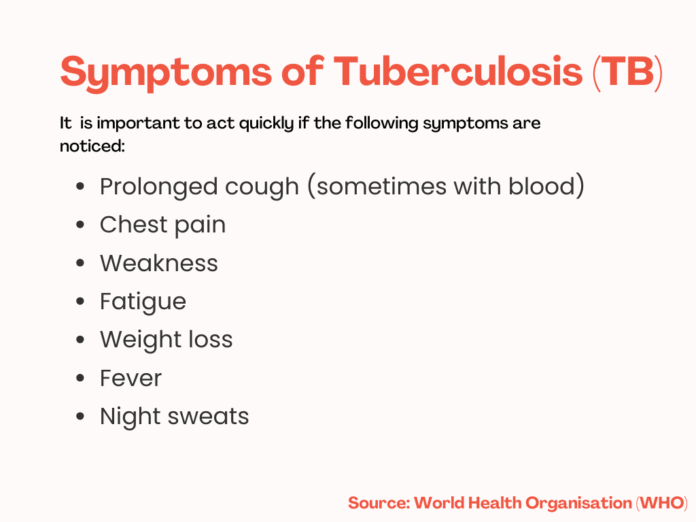
TB symptoms
TB symptoms often develop slowly and can look like symptoms of other illnesses. According to the World Health Organisation, a person who is not on TB treatment can pass the disease on to 10 to 15 people a year.

Poverty, HIV and TB closely linked
An estimated 23.2 million South Africans are poor, with 10 million of them living in extreme poverty. Researchers have long pointed to the close link between poverty, HIV and TB in South Africa.
Overcrowding, poor ventilation, undernutrition and limited access to healthcare can all increase people’s risk of illness and make it harder to get diagnosed and treated.
Poor living conditions, overcrowding, lack of access to healthcare and inadequate food and nutrition can all increase people’s risk and make it harder to cope with illness
People living with HIV are also far more likely to develop TB than people without HIV. According to the WHO, TB remains a leading cause of death among this group.
Of the estimated 56 000 people who died from TB in South Africa in 2023, more than half were co-infected with HIV.

Progress in treating TB
Since 2015, the rate of TB infection has declined by 57%, while treatment has increased to 79%. But more than half of TB-affected families still face serious challenges in accessing healthcare.
The good news, however, is that the government has made significant progress in restoring healthcare services affected by the COVID-19 pandemic. Almost three million TB tests were conducted in 2024 to strengthen the country’s ability to detect infection.
The Department of Health has launched the End TB Campaign, a nationwide programme to intensify efforts to find people with TB and get them onto treatment. The campaign aims to test five million people for TB between 2025 and 2026.
As South Africa marks World TB Day, health officials are urging the public to support the campaign by sharing information about TB symptoms, testing and treatment. – Health-e News