



Oil prices rise higher as Iran denies US talks, dimming deescalation hopes
Brent crude tops $104 a barrel as hopes fade for deescalation in US-Israel war on Iran.
Save

 By John PowerPublished On 26 Mar 202626 Mar 2026
Oil prices have climbed higher amid fading hopes of deescalation in the Iran war following Tehran’s denial that talks with the United States are under way.
Futures for Brent crude, the international benchmark, rose nearly 2 percent on Thursday to top $104 per barrel after Tehran dismissed reports of direct negotiations with US President Donald Trump’s administration.
Recommended Stories
list of 4 itemsend of list
The rise comes after oil prices eased on Wednesday following reports that Trump had shared a 15-point plan for ending the war with Iran.
Asian stock markets opened lower on Thursday, with Japan’s Nikkei 225, South Korea’s KOSPI and Hong Kong’s Hang Seng Index all seeing losses.
Iranian Foreign Minister Abbas Araghchi said in an interview with state media aired on Wednesday that Tehran was not engaged in direct talks with Washington and has “no intention of negotiating for now”.
White House Press Secretary Karoline Leavitt warned on Wednesday that Iran would be “hit harder” than ever before if Tehran did not accept military defeat.
Iran’s effective closure of the Strait of Hormuz, a conduit for one-fifth of global oil supplies, and its attacks on energy facilities across the Middle East have prompted a surge in energy prices worldwide.
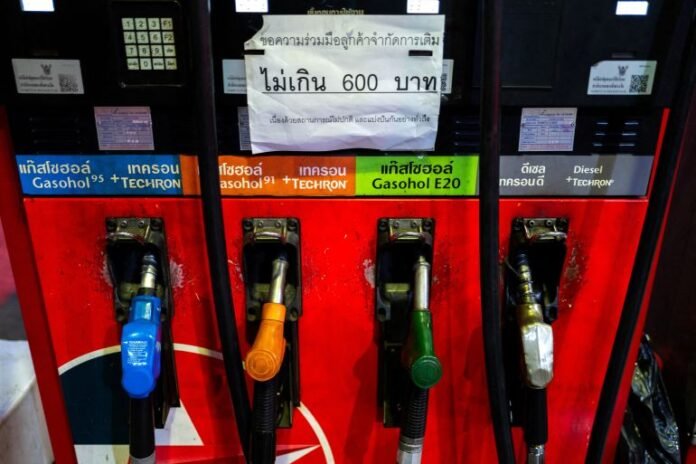
Oil prices are up more than 40 percent compared with before the US and Israel launched strikes on Iran on February 28, prompting numerous countries to implement fuel rationing and other energy conservation measures.
Market-watchers say prices are likely to rise further until shipping is free to traverse the strait, despite efforts by countries to bolster supply by tapping emergency stockpiles in coordination with the International Energy Agency.
Advertisement
While Tehran has repeatedly claimed that the strait is open to ships that are not aligned with its enemies, daily transits have all but collapsed since the start of the conflict.
Four vessels were tracked transiting the waterway via their automatic identification systems on Tuesday, down from an average of 120 daily transits before the conflict, according to maritime intelligence firm Windward.