


Minerals for aid: Are new US health deals ‘exploiting’ African countries?
Zimbabwe and Zambia have pushed back against ‘lopsided’ agreements after US asks for health data and minerals.
Save

 By Shola LawalPublished On 1 Apr 20261 Apr 2026
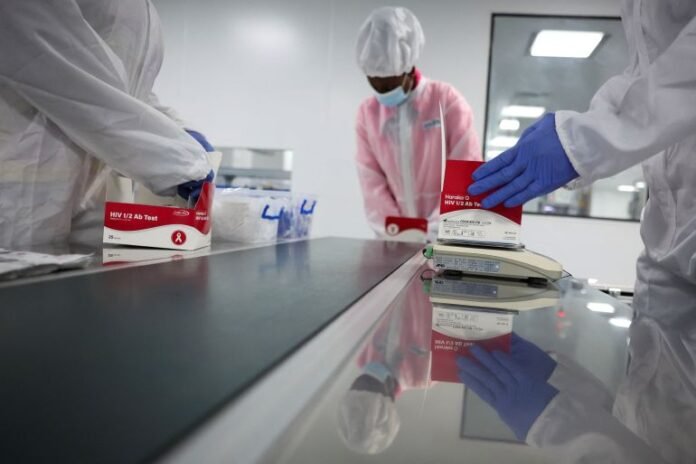
In late 2025 after the United States shocked the world by suspending global health aid and experts said it would lead to 700,000 more deaths, mostly of children, each year, Washington began proposing unusual bilateral health agreements to developing countries that have infuriated officials and health activists alike.
Critics said the deals, mostly made with African nations, smack of “exploitation” while at least two of the countries in dire need of health aid have pushed back against them.
Recommended Stories
list of 3 itemsend of list
In November, the US approached Zimbabwean authorities, promising more than $300m in funding in return for sensitive health data in negotiations that Harare felt were “lopsided” and promptly pulled out of, according to memos leaked in recent weeks.
About the same time, the US publicly announced $1bn in funding for neighbouring Zambia pending talks. However, Lusaka, too, called out “problematic” clauses in the US proposal that sought access to the country’s minerals and has since requested a review, according to statements from officials in early March.
Several other countries, though, such as Nigeria and Kenya, have gone on to sign the health pacts. The terms agreed remain unclear because the agreements have not been fully published.
Data or mineral demands in return for health aid are unprecedented in the history of the US, which is Africa’s largest health assistance provider. Policy experts said tying crucial funding to sensitive national assets could have negative consequences for African nations and also for the US itself.
Advertisement
“Supporting global health has clear benefits to the United States in terms of prevention of pandemics that can affect Americans too,” Sarang Shidore, Africa director at the US think tank Quincy Institute for Responsible Statecraft, told Al Jazeera.
“Linking such aid to payoffs in the extraction of critical minerals smacks of exploitative practices. Reform in the foreign aid sector is badly needed, but this is not the way to do it.”

Zambia pushes back against minerals-for-aid pact
African nations have long relied on US funding to foot many of their health bills. African countries received $5.4bn in US assistance in 2024, spent largely on humanitarian, health and disaster needs.
So when President Donald Trump’s administration abruptly cut funding in January 2025 and dismantled the US Agency for International Development (USAID), the impact reverberated around Africa and the globe. Boston University’s Impactcounter aid funding tracker revealed that the shocks from the cuts have since led to 518,428 child and 263,915 adult deaths from manageable diseases like HIV and tuberculosis. Close to 10 million new cases of malaria were also reported.
Washington has argued that the aid cuts suit its America First agenda, according to which foreign aid must directly serve US national interests. The stance backs long-held views from some economists that aid is often ineffective and causes overreliance.
Instead, Washington is now focused on government-to-government deals.
Details of what deals are being agreed to have just begun filtering out in recent weeks through leaks. The unusual secrecy surrounding the negotiations is itself a subject of controversy: Health NGOs and civil society groups in Africa said it leaves them out of crucial negotiations, making it harder to plan their programmes or track government funding.
The deals have typically required governments to take on an increasing share of their own health budgets in the next four to five years in a cofinancing arrangement.
Some analysts see that as a positive move to reduce overdependence on foreign funding and force governments to prioritise health spending in their budgets, something campaigners have long called for. As early as 2001, African countries promised at an African Union meeting to allocate 15 percent of their budgets to healthcare, but most currently meet half the threshold.
Advertisement
However, it’s the clauses that Washington is demanding to leverage its aid for data, rare earth elements and other minerals that have caused widespread outrage in some countries.
In the case of Zambia, the US reportedly asked the major copper, cobalt and lithium producer for access to its critical minerals in return for $1bn over five years on the condition that Zambia would cofinance the aid with $340m in new health funding. The US also asked for a one-way data-sharing agreement for 10 years.
When Zambian officials did not immediately sign, leaked internal memos prepared for US Secretary of State Marco Rubio said Washington would only “secure our priorities by demonstrating willingness to publicly take support away from Zambia on a massive scale”, according to reporting by The New York Times.
If Lusaka fails to ink a deal by this Wednesday, Washington will call off negotiations, and US aid funding to the country will be discontinued, according to a draft proposal seen by the Reuters news agency.
That could mean losing the remnants of funding Zambia still receives from the PEPFAR programme, the US government’s flagship global health initiative, which has helped countries around the world battle HIV.
Lusaka relies on PEPFAR for more than 80 percent of its HIV funding, which provides free treatment for 1.3 million people, about 6 percent of the population. Although Zambia received $367m from the programme in 2025, funding pauses have severely disrupted drug deliveries across the country.
Reuben Silungwe, a Zambian development analyst with a focus on HIV, said the US terms focus on mining, which represents 70 percent of Zambia’s export revenues, to aid funding and would undermine the country’s long-term fiscal independence.
Lusaka has adopted a “tactical and pragmatic approach” that could still secure US funding, but Zambia also allowed itself to be caught on the back foot, he said.
“The issue is not [about receiving] aid itself. It’s the need to transition towards sustainable, domestically financed systems while maintaining lifesaving services,” Silungwe said, highlighting a general failure among African countries to fulfil their healthcare pledges.

Is a middle ground possible?
Zimbabwe is so far the only known country to have walked away from the negotiations after the US reportedly asked Harare to share epidemiological data and biological samples that could be used for research and commercial purposes.
A government spokesperson told reporters Washington made those demands but was not willing to share the benefits, such as vaccines and treatments that could be developed from such contributions.
Although some have hailed Zimbabwe’s move as a positive one, others, including a doctors association in the country, are urging Harare to find a middle ground and avoid further shocks to ongoing HIV funding from the US.
Meanwhile, Kenya, which in September became the first country to sign an aid agreement with the Trump administration, was sued for taking that step.
Advertisement
A court suspended any part of the $2.5bn deal that might violate data privacy after a consumer rights lobbying group alleged it entailed transferring the personal data of millions of people in Kenya to the US. Kenyan authorities insisted the deal was drafted with “strict adherence to due process”, but the assertion is hard to verify because details have not been made public.
More than a dozen nations across Africa have signed memorandums of understanding with Washington since late 2025, according to tracking by the Council on Foreign Relations, a US think tank. They are: Nigeria, Kenya, Senegal, Botswana, Ethiopia, Guinea, Angola, Niger, Burkina Faso, Ivory Coast, Cameroon, Malawi, Mozambique, Burundi, Eswatini and Madagascar.
Rwanda, Uganda and Liberia have also reportedly inked new pacts.
Outside Africa, Panama, Guatemala, Honduras, the Dominican Republic and El Salvador have done the same.
It’s unclear in most cases what the US will get in return.
What is clear is that compared with pre-Trump-era aid budgets, countries are receiving far less. Senegal, for one, received $200m in overall aid from Washington in 2024 alone, about half of which was spent on health. The country is slated to get less than $100m over the next five years.
“Greatly reducing the foreign aid complex that the United States built over the decades is a good idea,” Shidore of the Quincy Institute said, noting how funds often flow to Western consultants in the end.
But, he added, global public health remains one of the few areas where significant foreign aid continues to make sense.
“It is a core humanitarian concern and literally a life and death issue,” Shidore said.