


02/04/2026 – 10:19 GMT+2
The Iran war is disrupting fuel and shipping, choking life-saving operations and pushing up hunger and poverty across Africa, Aid group IRC has warned.
The International Rescue Committee (IRC) warned that rising fuel prices, shipping delays, and supply chain disruptions linked to the Iran war and tensions in the Strait of Hormuz, have started choking life-saving services in crisis-affected countries.

ADVERTISEMENT
ADVERTISEMENT
The unfolding logistics crisis is an escalating humanitarian threat, the aid group said on Monday, building up on the drastic cuts to humanitarian funding last year, with life-threatening consequences for millions of vulnerable people.
Vital to power hospitals, ambulances and supply chains, fuel is becoming scarcer and more expensive, putting humanitarian response at risk.
“This is how a global crisis becomes a humanitarian one,” said Bob Kitchen, IRC vice president for emergencies. “Fuel shortages and supply delays don’t stay contained, they ripple outward, shutting down services, driving up food prices, and cutting off access to care.”
Across Africa, those ripples are already hitting hard.
In Nigeria, fuel prices have jumped by nearly 50%, raising the cost of running generators that power clinics and forcing mobile health teams to reduce coverage, the IRC said.
In Sudan, pharmaceutical supplies worth $130,000 intended to support about 20,000 people are stuck in Dubai, as disruptions to shipping routes delay deliveries to a country already facing one of the world’s worst humanitarian crises.
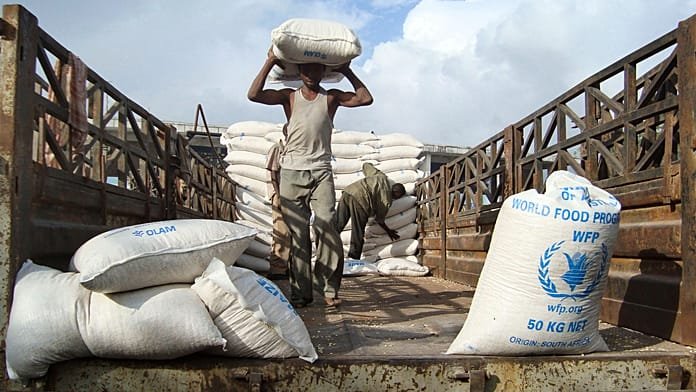
In Somalia, shipments of ready-to-use therapeutic food used to treat severe child malnutrition are stranded in India due to shipping delays, putting more than 1,000 children at risk of missing life-saving treatment. Rising operational costs, up by as much as 30% in some areas, are further limiting aid delivery.
In Kenya, fuel shortages have led to rationing, affecting operations in refugee camps such as Kakuma Refugee Camp and Dadaab Refugee Complex. Reduced diesel supplies are disrupting power for critical medical equipment, emergency care and ambulance services, as well as water systems, raising the risk of disease outbreaks, the IRC said.
Similar challenges are emerging in Ethiopia, Uganda, and the Democratic Republic of Congo (DRC), where fuel shortages and price spikes are restricting field movements and aid delivery.
“Disruptions in the Middle East and Red Sea are forcing ships to reroute around the Cape of Good Hope, adding weeks to delivery times and driving up costs”, said the IRC, which “has $130,000 of pharmaceutical supplies that could support up to 20,000 people, stuck in Dubai intended for Sudan”, a country already facing one of the world’s worst humanitarian crises.
For households already struggling with conflict, displacement, and climate-related disasters, the consequences are dire.
“Fuel shocks are pushing up the cost of food and basic goods, while rising fertiliser prices threaten the next planting seasons across multiple regions. For families already on the brink, this means eating less, earning less, and facing even fewer options to cope”, said the IRC.
These disruptions echo patterns seen in other conflicts, where war far from affected regions has cascading consequences. Russia’s war in Ukraine, for example, sent shockwaves through global grain markets, driving up food prices worldwide. Similarly, conflicts in the Middle East have historically triggered oil price spikes that ripple through economies and humanitarian systems alike.
The IRC’s warning comes as the humanitarian sector faces a sharp contraction in funding, limiting its ability to absorb new shocks.
It’s estimated that global humanitarian funding fell by more than 60% last year, a collapse driven mainly by steep cuts from the United States, with EU donors accounting for a smaller but significant share of roughly one-quarter.
According to the UN, funds covered only about 60% of estimated needs by mid-2025.
Without swift intervention, the IRC warns the impact of disruptions could escalate quickly, reducing access to healthcare, increasing hunger and deepening poverty across already vulnerable regions.
The organisation called for respect for international humanitarian law and protection of civilians, and urged donors to provide flexible funding to sustain aid operations and scale up emergency responses.