


18:38
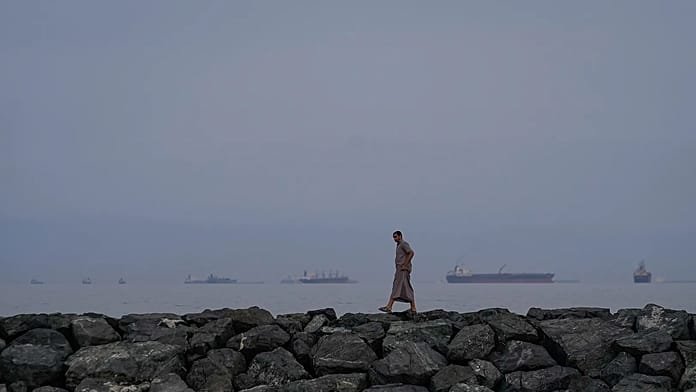
The Strait of Hormuz is one of the world’s most important energy routes and before the war carried around a fifth of global oil supply and key liquefied natural gas exports from the Gulf.
Diplomatic sources in the Spanish Foreign Ministry have confirmed to Euronews that the government in Madrid is aware that Iran is facilitating the transit of Spanish-linked vessels through Strait of Hormuz due to its position on the war.

ADVERTISEMENT
ADVERTISEMENT
The Iranian Embassy in Spain confirmed the decision in a post on X, saying “Iran considers Spain a country committed to international law.”
The war in Iran has transformed the vital Strait of Hormuz into a flashpoint for global economic survival, with approximately 20% of the world’s oil and 19% of liquefied natural gas (LNG) passing through the waterway from Gulf countries into the wider world.
Other raw materials such as fertilisers, aluminium and chemicals also pass through the strait, and its effective closure by Iran has had an impact on the global supply of energy and goods.
The strait’s closure has caused instability on the stock markets and rising fuel prices around the world.
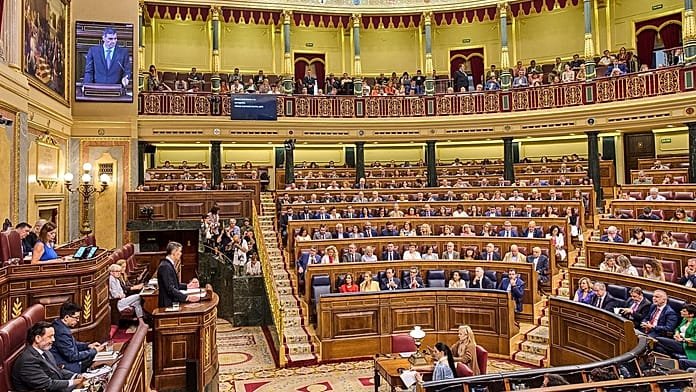
On this chessboard, where Donald Trump and Benjamin Netanyahu are redoubling military pressure on Iran, the government of Pedro Sánchez has emerged as a counterpoint to the US and Israel’s war policy.
Sánchez has established himself as the main European actor opposing the US “maximum pressure” strategy, even hinting that the European position has been aligned with Spain’s stance.
Strait of Hormuz as a political weapon
The Strait of Hormuz is a narrow waterway currently under the control of the Iranian Revolutionary Guard’s naval forces. Tehran has moved from total closure to a strategy of “selective blockade,” with the strait only closed to ships belonging to what Iran considers enemy countries.
In this context, Spain’s position is privileged but also dangerous as Sánchez has been lauded by Iran’s theocracy, which has even used his image on Iranian missiles.
Favourable treatment for Spanish-linked vessels to transit Hormuz would be a response to Sánchez’s policy of “neutrality.”
Spain’s prime minister refused to participate in the military operation led by Washington and has also prohibited the use of the Rota and Morón bases, sparking anger and criticism from the Trump administration and the Israeli government for what they consider to be support for a dictatorial regime that is dangerous for the West because of its nuclear programmes.
“Spain has been terrible,” Trump complained to Germany’s Chancellor Friedrich Merz earlier in March.
“So we’re going to cut off all trade with Spain. We don’t want anything to do with Spain.”
But a majority of Spaniards, 53.2%, back Sánchez’s decision not to allow the US to use the Rota naval base and the Morón air base for strikes against Iran, a poll published earlier this month in the daily newspaper El País showed.
The Algerian connection
The risk of sailing through Hormuz has forced Madrid to look for a plan B to secure its gas supply. After years of tensions with Algiers, due to the Sánchez government’s change of opinion on Western Sahara and its support for Morocco’s plan for the area, the foreign minister, José Manuel Albares, has begun a trip to Algeria to sign new contracts and become less dependent on supplies from the Middle East in order to keep energy prices low.
Although Spain is not highly dependent on the energy supply that passes through Hormuz, the war does have an impact on price volatility in such a globalised market as the crude oil and gas market.
Algeria is an indispensable source of energy for Spain; together with the US, it is the country’s largest gas supplier, with a total of 128,500 GW/h delivered in 2025 and almost 40% of the total imported.
Implications for Spain
This preferential treatment by Tehran could have consequences for Madrid.
The White House has already threatened tariffs on Spanish products and the withdrawal of intelligence cooperation. Trump has not hesitated to attack Sánchez and questioned Spain’s role in the trans-Atlantic alliance.
Israel, for its part, considers Sánchez’s stance to be a “reward for Iranian state terrorism.”
While countries such as France are keeping an eye on Spain’s course, the Atlanticist axis could oppose Madrid’s acceptance of benefits from the Iranian regime.
This could either be a political victory for Sánchez, tarnished by the hand of a repressive regime that killed some 30,000 people earlier this year, but could be a short-lived triumph that ends up leading to Spain’s diplomatic isolation within the West.