


How Israel-US war on Iran puts $50bn in Indian remittances at risk
The US-Israel war on Iran has caused gas shortages, while nine million Indian expats in the Gulf face uncertainty.

 By Saif KhalidPublished On 13 Mar 202613 Mar 2026
Save
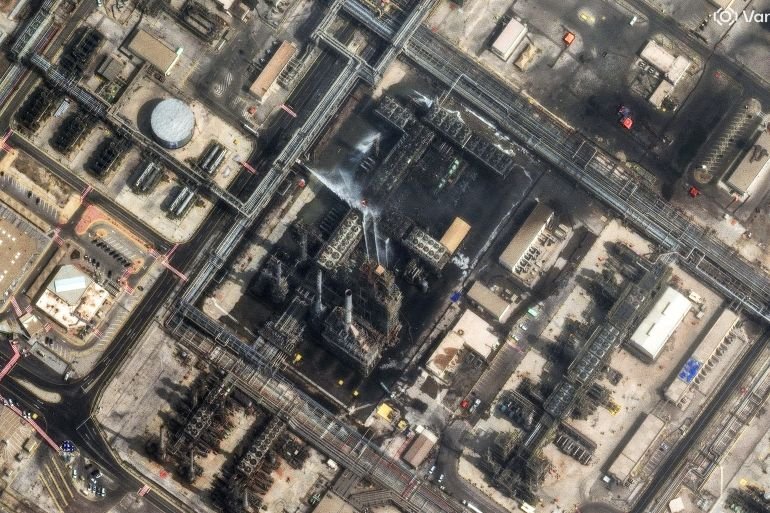
As the United States-Israeli war on Iran completes two weeks, it has triggered a global energy crisis, even as Iran’s retaliation threatens to pull the rest of the Middle East into the conflict.
The Strait of Hormuz, through which some 20 to 30 percent of global crude and liquefied natural gas (LNG) pass, has effectively been closed because of the conflict, sending crude prices soaring and disrupting oil and gas supplies.
Recommended Stories
list of 4 itemsend of list
From Southeast Asia to Pakistan, the ripple effects of the war are being felt across Asia and beyond.
But one country in particular could face a double whammy if the conflict intensifies: India, the world’s fourth-largest economy, depends on the Gulf for its energy needs and also for remittances sent by a vast workforce resident in the Middle East.
We unpack how the war is bleeding India’s economy.
Energy shortage
More than 80 percent of India’s gas and up to 60 percent of its oil pass through the Strait of Hormuz, which connects the Gulf to the Gulf of Oman and the Arabian Sea and is currently at the centre of retaliatory tactics Iran is deploying against the US and Israel. By threatening all shipping coming through, Iran has effectively closed the strait – leaving Gulf oil producers with no sea route by which to deliver oil and LNG.
Most shipping insurers have cancelled war risk coverage for tankers in the strait. Then on Wednesday, a Thai ship heading to India was attacked, drawing criticism from India.
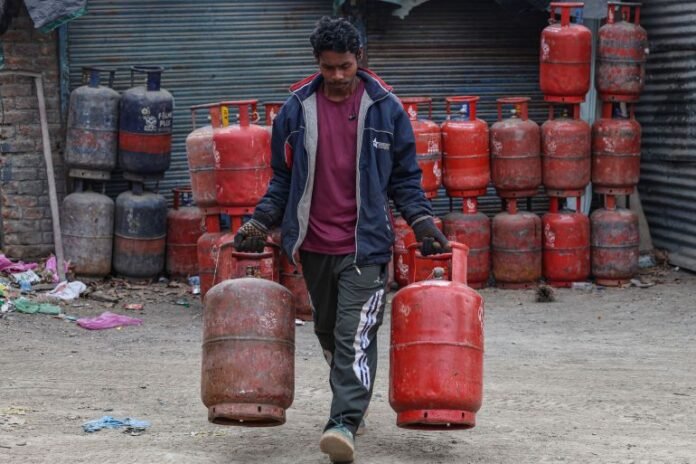
Hotels and restaurants in India are already weighing closure and people are queueing to stock up on LPG (cooking gas) cylinders amid fears of a shortage, even though the government assures the public it has approximately one month’s supply in storage. Such is the panic, however, that the government has gone as far as to invoke emergency measures to discourage hoarding, urging people to remain calm.
Advertisement
Iran has invoked the right to self-defence to justify the retaliatory attacks and has used the strait as leverage in an attempt to end the war. More than 1,300 civilians have been killed and properties have been damaged across Iran amid the US-Israeli attacks.
Iran’s tactics seem to be working, as stocks have plunged and oil prices have spiked, reaching nearly $120 a barrel on Sunday before settling at about $100 this week, which is still about $40 more than before the war began. This week, Iran’s Islamic Revolutionary Guard Corps (IRGC) said it would not allow “one litre of oil” to pass the strait, and warned the world to expect oil to reach $200 per barrel.
The International Energy Agency’s (IEA) move on Wednesday to release a record 400 million barrels of crude oil has failed to stabilise oil prices.
“India’s energy security will be impacted significantly, as it relies on the Middle East for a substantial portion of its energy requirements,” said Harsh V Pant, vice president of the Observer Research Foundation think tank in New Delhi.
“Energy markets are already volatile and costs are rising, which could eventually translate into broader economic and inflationary pressures,” he said.
Indian expats in the Gulf
India is also worried for some 9.1 million of its citizens who work in the Gulf Cooperation Council (GCC) countries – the United Arab Emirates, Saudi Arabia, Qatar, Oman, Kuwait and Bahrain. They send some $50bn in annual remittances back home.
If the war is prolonged, Pant says, “it will result in the loss of remittances … part of that also helps in balancing the trade balance”.
“It will hurt the wider economic robustness of the Indian economy. India’s hope of continuing to have a high rate of growth will suffer,” Pant said. “It’s not simply a question of energy security – it is also a question of economic security.”
Several Indian blue-collar workers and professionals across the Gulf have told Al Jazeera they fear potentially losing jobs if the war escalates further. Several oil and gas firms have shut operations amid the Iranian attacks.
“I hope this does not prolong as I support my family with this job,” an Indian construction worker, who chose to remain anonymous, told Al Jazeera.
“Every Indian who works in the Gulf supports at least four to five people back home. Forty to 50 million Indians directly benefit from their employment in the Gulf,” Talmiz Ahmad, a former Indian ambassador to Saudi Arabia, told Al Jazeera.
Another concern is the physical safety of people amid expanding Iranian attacks. Several Asian workers, including Indians, are among those killed in the Iranian attacks across the Gulf.

Can India evacuate nine million citizens?
If the war escalates beyond control, India could be faced with the huge challenge of evacuating its people, who form the largest expatriate community in most Gulf nations.
Advertisement
Thousands of Western expats have already left or been evacuated by their countries, but the sheer scale of Indian population makes it a logistical nightmare. Some 35 million expats live in the Gulf countries, which have emerged as major economic and aviation hub in addition to the oil wealth. Of them, 9.1 million are from India – almost double the 4.9 million Pakistanis who come in second place.
Ahmad, the former Indian ambassador, said that “there is no way, in a war situation, any country, including India, can evacuate nine or 10 million people”.
His message to Indians in the region: “We have been shoulder to shoulder with our Gulf brethren in the good times; we will be shoulder to shoulder with them in the bad times.”
Ahmad, however, pointed out that India had successfully evacuated nationals in past conflicts, including the 1991 Gulf War, when he was India’s consul general in Jeddah. Nearly 200,000 Indian nationals were evacuated from Kuwait when Iraq invaded the Gulf nation in 1990.
Ahmad recalled how the Indian embassy in Saudi Arabia – he was ambassador to Riyadh at the time – also made contingency plans after the 2003 US invasion of Iraq. “Very quietly, we arranged everything – buses, tents, blankets and catering arrangements. We were fully prepared to take in several thousand people if they crossed the border,” he said.
“The main point is we were ready.”
India’s Ministry of Foreign Affairs has set up a special control room to monitor and respond to queries regarding the situation, while embassies and consulates have set up round the clock helplines to assist Indian nationals in need. Indian embassies have also enabled the return of stranded Indian passengers via commercial flights and non-scheduled flights.
What are India’s interests?
Pant from the Observer Research Foundation said that irrespective of how the war plays out, “India’s reliance on Middle Eastern oil will remain significant, though it may have to look for alternative sources if the conflict expands”.
“I think Russian oil will certainly be an option. There has been engagement with the US on the energy question as well,” he said. “India has been buying energy from the US in the last decade, and that the US role has grown.”
India’s main opposition Congress party has criticised the government for its silence on the killing of Iran’s Supreme Leader Ayatollah Ali Khamenei. India has not issued any statement on Khamenei’s killing, though its foreign secretary visited the Iranian embassy in New Delhi to sign a condolence book.
Meanwhile, New Delhi has condemned the Iranian attacks on the Gulf nations, with which it has close economic ties.
“When the targeted killing of a foreign leader draws no clear defence of sovereignty or international law from our country, and impartiality is abandoned, it raises serious doubts about the direction and credibility of our foreign policy. Silence, in this instance, is not neutral,” wrote Congress Parliamentary Party Chairperson Sonia Gandhi, in a newspaper column.
Advertisement
Prime Minister Narendra Modi’s government has also faced criticism over its refusal to condemn the sinking by a US submarine of an Iranian warship while it was returning home after participating in Indian-hosted military exercises. The ship was off the coast of Sri Lanka when it was torpedoed.
India has subsequently provided shelter to a second Iranian warship that also joined the exercises it hosted. And on Thursday, Modi spoke with Iranian President Masoud Pezeshkian – their first conversation since the start of the war.
Still, the opposition and Modi’s critics have also questioned the timing of the prime minister’s visit to Israel days before the US-Israel attack on Iran. India is the largest buyer of Israeli weapons. Analysts say Modi’s trip to Israel accorded legitimacy to Prime Minister Benjamin Netanyahu, who is facing an International Criminal Court (ICC) arrest warrant for alleged war crimes in Gaza.
“Netanyahu, the most corrupt Israeli leader in recent memory, knows that his political survival depends on two things: the continuation of war in the Middle East and the stamp of legitimacy from foreign leaders. In this instance, Trump gave the former, while Modi obliged with the latter,” wrote Srinath Raghavan, the author of Indira Gandhi and the Years that Transformed India, in a column.
Pant, however, supported the government’s foreign policy stance.
“In the last few years, India’s equities with the Arab states and Israel have grown so much that the India-Iran relationship has had difficulty matching that scale,” he told Al Jazeera.
“India is reacting to the ground realities … India’s interests have been dominated by the Arab world and the relationship with Israel rather than with Iran.”