


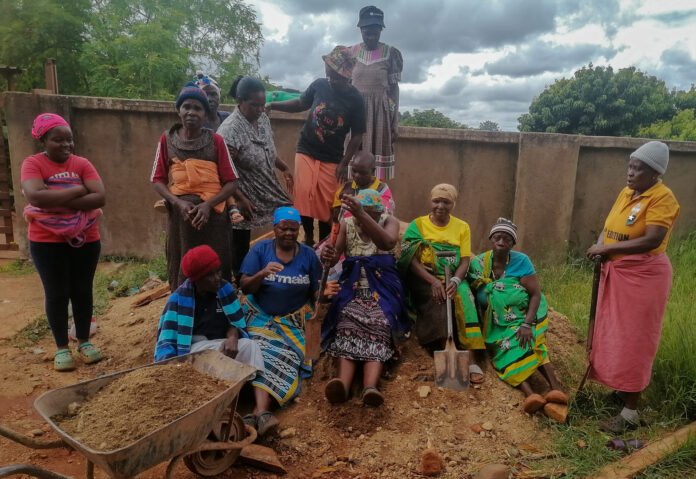

In Lukau Village, 17 elderly women, including 90-year-old Tshinakawu Ndou, have joined forces to fix roads so ambulances can reach the area during heavy rain.
Residents say the work became even more urgent in January, when flooding left roads muddy and inaccessible.
Ward 28 committee member Humbulani Nemutavhani says the danger became clear during the floods, when her younger sister fell ill. The family knew an ambulance would not reach their home.
“My young sister fell ill and we decided to take her to our nearest clinic, about 3km away. But it was raining heavily and we knew that even if we called an ambulance, it would not reach our home because the streets were muddy and inaccessible,” she says.
Nemutavhani says the family covered her sister with a raincoat and pushed her in a wheelbarrow for about a kilometre until they reached the main road, where they were able to get a taxi to the clinic.
Limpopo floods cause widescale damage
In January, large sections of Tshakhuma village were submerged in water, while overflowing rivers across Limpopo cut off key roads and damaged dozens of health facilities.
Several rural villages remained cut off from surrounding areas and in other parts of the province, residents sought temporary shelter after their homes were damaged during the weeklong heavy rains.

A study by environmental researchers at the University of Venda found that extreme rainfall, combined with poor drainage and other infrastructure weaknesses, is intensifying flood risk in the province.
Gogos use social grants to fix damaged roads
The group of Lukau pensioners use money from their social grants to repair four damaged roads with concrete in their village. The roads connect to the main tarred road linking the R524 to Louis Trichardt in the west and Thohoyandou in the east.
The women are buying materials and paying to transport sand and stones to the streets where they live.
90-year-old Tshinakawu Ndou says she no longer does the physical labour, but still supports the group with advice and encouragement.
“I can no longer do this sort of work, but I enjoy giving support and advice to those who are working,” she says, pulling her black shawl over her shoulders.
Money slows down progress
Nemutavhani says the women first agreed in 2015 to raise money for the project after repeatedly raising the matter with the Makhado Municipality.
“We decided to take it upon ourselves to fix the streets. We understand government processes take time, but the community is suffering.”
The project started in 2018, and the women have completed three-quarters of one road. Progress is slow because the women must wait until enough money has been collected.
Three members each contribute R1,600 to buy a cubic metre of river sand, while the remaining 14 each buy two bags of cement at R110 a bag. Transporting a truckload of small stones from the river costs about R8,000, adding to the financial burden.
Nemutavhani says money remains their biggest challenge. The pensioners depend entirely on social grants.
“We will continue slowly with our project. We expect it may take about 10 years to complete all the streets.”
Daily life disrupted
Residents say poor road access affects daily life. On rainy days, some people struggle to get to work.
Thomas Ligaraba, chairperson of the Tshakhuma Community Development and Service Delivery, says the roads become especially difficult to use during heavy rain.
“It becomes a big challenge on rainy days as residents cannot drive through the streets to work. Some parents also find it difficult to drive their children to school,” he says.
Residents also say funerals are disrupted when roads become inaccessible.
Residents currently pay R1,500 to use the traditional council hall to host a funeral service when mourners cannot access their homes.
The women say they are continuing with the project because waiting for government help has taken too long.
Ranwedzi Madzivhandila, deputy chairperson of the Tshakhuma Traditional Council, says he was not aware of the women’s initiative.
Makhado Municipality had not responded to questions by the time of publication. – Health-e News.