


For cricket-mad Bangladesh, T20 World Cup expulsion means heartbreak
As Bangladesh watch the T20 World Cup from afar, the mood in Dhaka is sombre and the players are left disappointed.

Published On 6 Feb 20266 Feb 2026
Save
Dhaka, Bangladesh – Ziaul Haque Tanin had planned his February around the T20 World Cup.
The former first-class cricketer turned sports-goods entrepreneur from Thakurgaon, in northwestern Bangladesh, had lined up a trip combining business, family visits and cricket fandom.
Recommended Stories
list of 4 itemsend of list
Tanin had secured a premium hospitality ticket at the famed Eden Gardens cricket stadium in Kolkata, where Bangladesh would take on Italy on February 9.
Those plans were scrapped after Bangladesh said it would not send its men’s team to India for the tournament, citing security concerns.
The Bangladesh Cricket Board had asked the International Cricket Council (ICC) to move Bangladesh’s matches from India to Sri Lanka, a request the governing body rejected. Bangladesh stood firm in their stance, resulting in their ouster from the tournament and Scotland’s inclusion at their expense.
The decision has drawn Bangladesh’s most popular sport into a wider political dispute, dividing opinion between supporters of the government’s stance and those fearing long-term ramifications on the game.
How cricket became a casualty of politics
Tensions sharpened after January 3, when Bangladesh fast bowler Mustafizur Rahman was dropped from the Indian Premier League, a move that Bangladeshi officials said highlighted the impact of extremist pressure on Indian cricket authorities.
In Dhaka, the episode amplified wider resentment towards India, rooted in trade disputes and anger over New Delhi hosting fugitive former Prime Minister Sheikh Hasina since her ousting in August 2024.
Advertisement
In that charged atmosphere, cricket – Bangladesh’s most emotional public arena – became a proxy for questions of security and national dignity, with debate dominating social media, television talk shows and conversations in Mirpur, the heart of the country’s cricket culture.
About a year and a half after Bangladesh’s July 2024 mass uprising, signs of a thaw appeared in relations with India.
Indian External Affairs Minister S Jaishankar visited Dhaka for the funeral of former Prime Minister Khaleda Zia, while Prime Minister Narendra Modi sent a conciliatory letter to Tarique Rahman, Khaleda’s son, followed by a brief meeting between Jaishankar and Rahman.
Indian High Commission contacts with Jamaat-e-Islami further fuelled speculation that New Delhi was recalibrating its Bangladesh policy ahead of elections.
That cautious optimism, however, was abruptly undercut by actions of the Board of Control for Cricket in India (BCCI), pulling cricket into the centre of a renewed political standoff.

Security first, cricket second
Many supporters say the government had little room to manoeuvre.
Shamim Chowdhury, head of research at Dhaka-based sports channel T Sports, said the issue had hurt Bangladesh’s sentiments and questioned the role of the ICC. “The ICC’s double standards have been exposed,” he told Al Jazeera.
Abu Zarr Ansar Ahmed, a sports journalist in Dhaka, said the security concern goes beyond players and includes staff, journalists and supporters. With national elections approaching, he warned that even a single incident involving Bangladeshi nationals in India could trigger widespread anger at home. “From that perspective, Bangladesh made the right decision,” he said.
Others accept the security logic but are concerned about the long-term cost to cricket. Khairul Islam, a Dhaka-based university lecturer, said the threat level should have been assessed more carefully and suggested a third-country venue as an alternative.
On the streets, support appears strong. At a tea stall in Dhaka’s Tejgaon area, vendor Billal Hossain backed the boycott, citing violence against Muslims in India and border tensions. “If something happened to our players, it would be disastrous,” he said.
Of 14 people interviewed by Al Jazeera across Dhaka, seven supported the government’s decision, three opposed it – all identifying as supporters of Hasina’s party, the Awami League – while four declined to state party affiliations but still backed the boycott. Overall, support outweighs opposition, with dissent largely driven by concerns over cricketing consequences rather than security.
Players regret missed opportunity
The protagonist of the story, Bangladesh’s cricket team, have stayed largely silent, wary of being drawn into a diplomatic dispute, though privately many are anxious.
Advertisement
Two national team players, speaking to Al Jazeera on the condition of anonymity, said the squad had prepared intensively and felt confident after a strong run in T20 cricket. In 2025, Bangladesh won 15 of 30 matches – their best calendar-year record in the shortest format of the game.
“We felt ready,” one player said.
Both relayed the team’s eagerness to play in the T20 World Cup – in India or elsewhere – and had hoped for a compromise on venue. Missing the tournament, they said, means more than the loss of lost match fees – it limits their exposure to quality opposition, franchise opportunities and career growth.
“It’s not just money,” one player said. “It’s the chance to grow.”
Neither player criticised the government or the board publicly, saying that with India central to the dispute, speaking out felt risky.
However, Bangladesh’s absence from the T20 World Cup has left national cricketers facing an unexpected break. To make use of this vacant period, the Bangladesh Cricket Board (BCB) has offered them a swiftly-organised local T20 tournament.
The three-team event, titled “Odommo Bangladesh T20 Cup”, will offer 25 million taka ($200,000) in total tournament prize money and player fees.

‘The sadness of not playing is bigger’
Not all cricket figures back the hardline stance.
Former Bangladesh batter Anamul Haque Bijoy urged keeping sport above politics, saying that a World Cup is the pinnacle of a cricketer’s career and a dream not many can realise.
“Sports should be above everything,” he said.
Others challenged the critics directly.
Behind the scenes, criticism has been sharper. Former BCB director Ahmed Sajjadul Alam said the decision reflected government interference, warning of financial losses and damage to Bangladesh’s standing within the ICC.
Another former director, Syed Ashraful Haque, who helped secure Bangladesh’s Test status, said the country’s influence in world cricket had weakened and argued the issue could have been resolved through dialogue.
Former captain Mohammad Ashraful took a pragmatic view, noting that government approval is mandatory for tours. While acknowledging the disappointment – especially for younger players – he said financial losses could be managed, but “the sadness of not playing is bigger”.
Pakistan’s backing and what comes next
The dispute has taken on a regional dimension after the Pakistan Cricket Board backed Bangladesh and urged the ICC to reconsider venue arrangements. While some in Dhaka see this as a challenge to India’s dominance, officials reject the idea of a new alliance.
Former BCB director Alam dismissed talk of a Bangladesh-Pakistan axis, calling Pakistan a longstanding cricketing friend. BCB officials also avoided any suggestion of formal alignment.
The BCB says the matter is closed and it will not pursue arbitration. “We have accepted the ICC’s decision,” said Amjad Hossain, a BCB director.
Attention has now shifted to managing the fallout. Suggestions of extra tournaments to offset player losses remain unconfirmed, with the board saying benefits are being handled internally.
Advertisement
The government’s youth and sports adviser, Asif Nazrul, said the decision not to travel was taken at cabinet level after the ICC refused to revise the schedule.
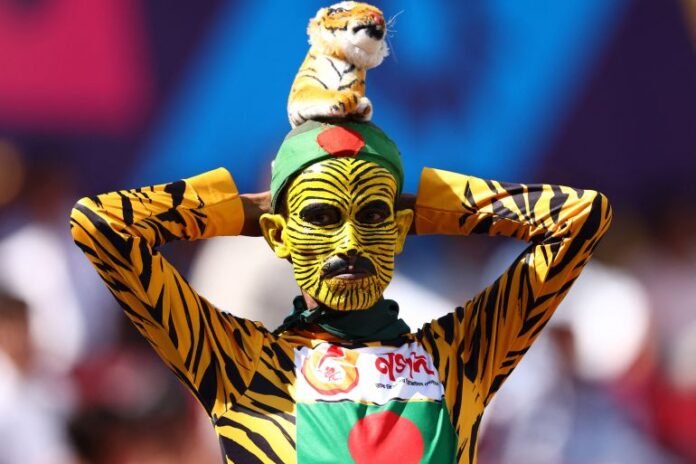
For fans like Tanin, the cost is personal – cancelled plans, unused visas and an idle World Cup ticket – reflecting a wider national sense of loss as cricket once again collides with politics.
Pakistan’s decision not to take part in its match against India at the T20 World Cup has sent shockwaves through world cricket, with its impact also being felt in Bangladesh.
Multiple senior sources at the BCB said the move could reduce the board’s potential earnings from the ICC. However, a top BCB official, speaking on condition of anonymity, said there was little the board could do at this stage. He added that the crisis could still be resolved through dialogue at any time.
Referring to Pakistan’s boycott, he said Pakistan has always been a good friend of Bangladesh in cricket and has maintained a consistently friendly relationship.
Diplomacy in the dark
Questions have emerged over how diplomatic communication was handled. An official at Bangladesh’s Ministry of Foreign Affairs, speaking on condition of anonymity, said the government was not formally engaged in the process, as the BCB communicated directly with the ICC.
Neither the BCB nor the Ministry of Youth and Sports issued any directive to involve the Foreign Ministry, leaving officials largely reliant on media reports.
Political and diplomatic analyst and former Bangladeshi ambassador Humayun Kabir said the situation has grown more opaque due to recklessness on both sides. He argued that groups in both Bangladesh and India actively work to derail normalisation efforts, using multiple flashpoints – with cricket now possibly added to that list.
Once a unifying force, cricket in Bangladesh is now caught in politics. Supporters see sovereignty, critics see a setback for a promising generation, and players see a lost stage.
Whether this strengthens Bangladesh’s position or weakens its standing in world cricket remains unclear – but the cost is already being felt far beyond the boundary rope.