



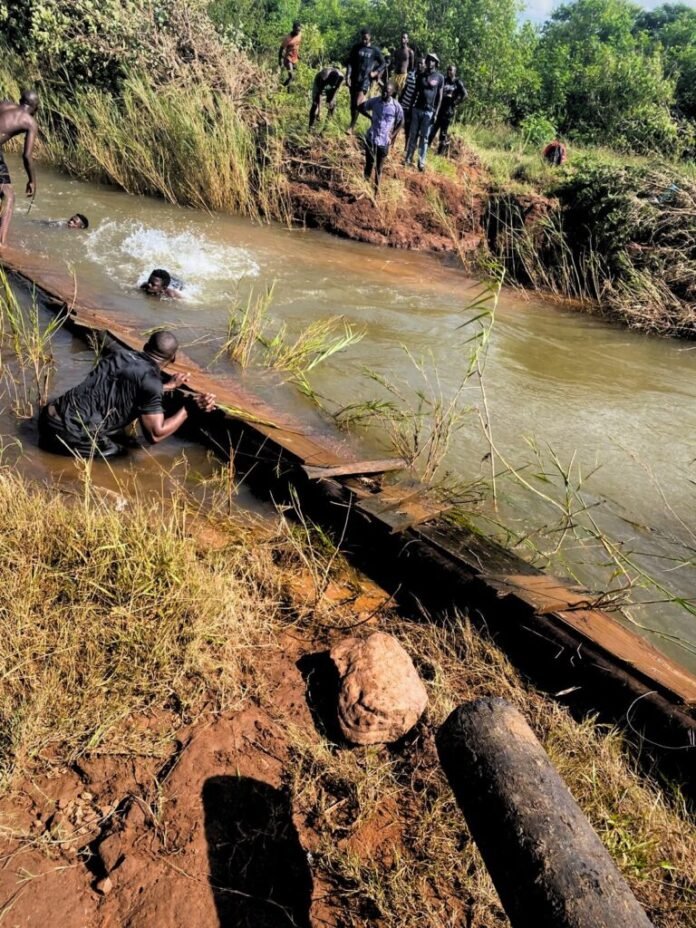
Floods and droughts are becoming more frequent and more destructive in South Africa. But despite the government declaring a national state of disaster earlier this year in response to severe weather in several provinces, questions remain about whether the response on the ground has improved.
South Africa is not alone. Across Southern Africa, a dramatic shift in weather patterns has seen hotter temperatures, floods and droughts. Across the continent, these changes are disrupting lives, damaging crops and infrastructure, and placing already vulnerable communities under even greater strain.
Health-e News spoke to Human Sciences Research Council chief research specialist Dr Wilfred Lunga about who is most at risk, where disaster response is falling short and what needs to change.
What has been the impact of these severe weather events?
There are several populations which are particularly vulnerable to these disasters. Women, the elderly and young children are some of the high-risk groups.
We are experiencing a lot of insect infestations which affect agriculture. Southern Africa is experiencing a lot of diseases, such as malaria. South Africa is not much affected, but countries like Mozambique have a serious malaria burden.
Which areas are most at risk?
Zimbabwe and Zambia were most affected by droughts in the past year. The impact in South Africa was more provincial, hitting the Free State, Limpopo, and the Western Cape. In parts of the Western Cape, it even got to the extent that a disaster was declared.
The flooding that occurred in January mostly affected Mozambique, Malawi, Zimbabwe, and South Africa. In South Africa some areas are affected almost every year. These are Limpopo, KwaZulu-Natal and Mpumalanga.
But the 2025 floods we saw in the Eastern Cape in Mthatha were unprecedented. It’s not an area that usually experiences floods. If you interrogate why Mthatha was really affected, it’s because issues of preparedness were neglected. For example, people were left to build homes where they are not supposed to be building.
How would you describe the government’s response?
There is a regional strategy where, if one country is afflicted, they are supposed to assist each other in terms of responding, evacuating people, and putting people in safe places. But the strategy is not working very well.

That’s because almost all the countries don’t have evacuation centres where they need to put people. Or to relocate people when there’s a severe weather warning.
All you see is people going on television to say, “We are on a high alert”.
I’ve always asked the question, “If you say you’re on high alert, what do you mean?”
When a disaster happens, you’ll find that the people who respond first are those who are affected.
South Africa stands out in the region for preparedness. The National Disaster Management Centre website has a lot of resources, including policies, reports, and plans. And each province has a centre – it might not be well equipped, but at least there’s a centre. And in that centre, you find people performing different roles.
But the government was still found wanting. They are not putting adequate resources into making people aware or mitigating. For example, in South Africa, we know KwaZulu-Natal is going to be affected by flooding almost every year; it’s the same in Alexandra, areas close to Mamelodi, and in Centurion. But nothing is happening.
What must be done to improve disaster response?
There’s a lot which we can do. The most important is enshrined in the Sendai framework, which all countries are party to. This is to ensure that people know about the risks or hazards in their communities.
Governments must continuously do risk and vulnerability assessments. These must be done in a participatory manner, ensuring that all members of society – be it children, women, or the elderly – are part and parcel of those assessments.
As you are doing those assessments, they are also getting new knowledge from other people in their community. This is key so that when disasters happen, people will know what to do, and not just wait for the government to come and do things for them.
There is also a need to train, especially the younger generation. In South Africa, we have only two universities that train in disaster risk management. And most ot those students are old people approaching retirement age.
South Africa should use this gap as one way of addressing the issue of unemployment, where young people are trained in disaster risk management and sent to work in the communities where they come from.
Finally, when governments are developing policies and laws, they must involve all of society. When everyone is part of the process, it’s much easier to tackle the challenges. This can also include the adoption of indigenous knowledge systems. – Health-e News