



07/03/2026 – 7:15 GMT+1
Residents across the Gulf region now live in the harrowing reality of thunderous explosions overhead. As the Iran war shows no sign of slowing down, the authorities are helping educate people on what to do and how to handle this new reality.
Abrupt sounds of explosions, incandescent flashes and emergency alerts on phones – the Gulf countries have been living in a new reality since Tehran started attacking Qatar, UAE, Saudi Arabia, Kuwait, Bahrain and Oman following US-Israeli strikes on Iran.

ADVERTISEMENT
ADVERTISEMENT
For residents and tourists in the region, this new reality was unimaginable only days ago, and what they were used to watching happening elsewhere has now engulfed their daily lives, to which they are quickly adapting by following the authorities’ instructions.
The governments of these countries quickly moved to inform, explain and reassure their populations, teaching them what to do and how to react to both the incoming attacks and the air defence operating.
Media outlets in Qatar and the UAE have quickly published accessible visual and informative guidelines to help people better understand what is happening and know how to stay safe.
Euronews’ correspondents in Doha and Dubai have put together the following digest of these new guides.
What are those booms you can hear in the skies?
In the guidelines, the authorities explained that the loud “booms” they have been hearing since the war started are actually the sounds of the air defence intercepting the incoming missiles and drones.
Depending on where you are, the sound might be very loud, even sending shockwaves and making buildings shake.
The Gulf states have some of the most modern and powerful air defence systems, which can detect and destroy aerial threats before they reach their targets, including drones and missiles.
Should the public be worried?
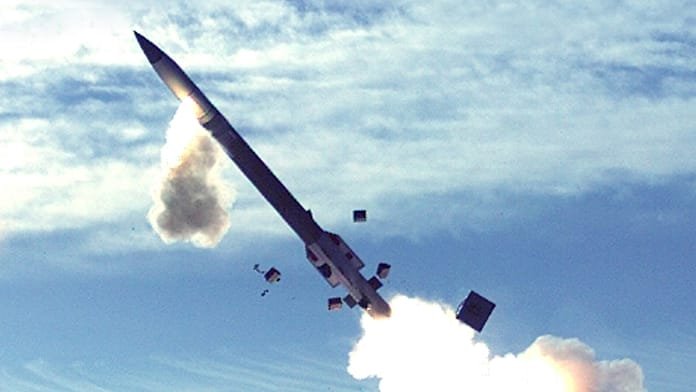
In the UAE, Saudi Arabia and Qatar, lots of incoming aerial targets have been intercepted by long-range Patriot batteries, one of the world’s most advanced, combat-proven surface-to-air missile defence systems.
Patriot remains one of the key tools for countering ballistic missiles, which makes it one of the most popular and sought-after systems in the world.
Officials across the Gulf say air defence systems are designed to intercept threats far from populated areas whenever possible, as they pick up missiles soon after launch, track them, and guide interceptors to destroy them before impact.
Most interceptions occur several kilometres above the ground. The aim is to neutralise the threat long before it reaches its ground target.
Once Patriots or other air defence systems are operating, loud explosions can be heard, with flashes visible in the sky, especially at night.
And although loud and scary, these are the sounds of effective air defence protection and safety for the people of these countries, and the sound of explosions should actually reassure people.
How fast do these missiles travel and how big are they?
Ballistic missiles are among the fastest weapons in modern warfare.
Short and medium-range ballistic missiles can reach speeds of about 3 km/s, or roughly eight times the speed of sound.
Powered for a short boost phase, ballistic missiles then go on a curved trajectory, travelling hundreds of kilometres in minutes.
Air defence systems, therefore, have only a brief window to detect the threat, calculate its trajectory, and launch an interceptor.
Cruise missiles travel differently with a low and flat trajectory. They typically move at subsonic speeds of around 800 to 900 kilometres per hour and often fly low to the ground to avoid radar detection.
Ballistic missiles can be quite large. Many short and medium-range missiles measure between eight and 12 metres in length, roughly the size of a small bus.
Cruise missiles are smaller, usually around five to seven metres long, and are designed to fly closer to the ground.
Interceptor missiles in air defence systems are several metres long. Patriot interceptors are about five metres in length, while THAAD interceptors are longer and built for higher altitudes.
Iran’s drone arsenal
Alongside missiles, Iran has developed a large fleet of unmanned aerial vehicles capable of long-range travel.
One of the most widely known is the Shahed-136. It is a loitering munition designed to fly toward a target and explode on impact. These UAV’s are up to 3.5 metres long with a wingspan of 2.5 metres.
The drone features a triangular wing and a small rear engine, with an estimated range of up to 2,000 kilometres and a speed of 150 to 190 kilometres per hour.
A smaller variant, the Shahed-131, follows a similar design but has a shorter range.
Iranian Shahed-type drones first surged into the spotlight with Russia’s full-scale invasion of Ukraine in 2022.
Due to their distinctive, loud buzzing noise, which sounds similar to that of lawnmowers, they are frequently called “mopeds” in Ukraine.
Iran also fields the Mohajer-6, a larger drone for surveillance and attacks. It can carry guided munitions and stay airborne for long periods.
Drones are cheaper than ballistic missiles, so they are sometimes launched in large numbers and in waves.
With the Gulf states operating mostly with expensive and sophisticated air defence systems, on many occasions they have not intercepted the Shahed-type drones, which are also much cheaper than missiles.
How far away can drones and missiles be detected?
Modern air defence systems used across the Gulf are designed to detect threats long before they approach cities or critical infrastructure.
Ballistic missiles, cruise missiles and long-range drones are tracked using a combination of ground radar, satellite warning systems and regional defence networks. Together, these systems can identify a launch within seconds and begin calculating the weapon’s trajectory.
Early warning satellites can detect the heat signature of a ballistic missile launch almost immediately. As the missile climbs higher, powerful ground radars begin tracking it.
Radars such as the AN/TPY-2 system — an X-band radar used for missile detection and tracking — used with THAAD can detect ballistic missiles at distances of up to around 1,000 kilometres, depending on altitude and conditions.
Cruise missiles and drones can be harder to detect because they fly lower and are often smaller. Detection ranges can vary from around 50 kilometres to several hundred kilometres, depending on the radar system.
Why layered defence systems matter
Different weapons travel at very different speeds and altitudes.
Ballistic missiles move extremely fast and reach high altitudes before descending towards their target. Cruise missiles and drones are slower and usually fly lower to avoid radar detection.
For that reason, Gulf states deploy multiple integrated air defence systems: high-altitude units intercept ballistic missiles early in descent, while low-altitude units target drones and cruise missiles near the ground.
If one system fails to intercept the threat, another has a second opportunity to destroy it before it reaches its destination.
For people on the ground, the flashes and sudden booms in the sky are often the only visible sign of a high-speed defensive battle unfolding far above the Gulf.