


A Limpopo mother who recently lost her 13-year-old daughter with cerebral palsy says families raising children with severe disabilities need more support, not silence or stigma.
Grannie Maake, 29, from Ga-Sekgopo village outside Modjadjiskloof, Limpopo is mourning the death of her daughter, Lehlogonolo Princess. She died on 15 February, just two weeks after being admitted to a boarding school for children with special needs. Her mother had hoped would offer better care and opportunities.
For Maake, the loss was devastating.
“I am completely heartbroken and struggling to come to terms with the death. I took my child to school, hoping she would be safe and cared for, never thinking I would lose her so soon,” she says.
“ We believe she was sick as she was no longer eating properly. I was not ready to say goodbye to my daughter.”
Health-e News reached out to the school, but the principal did not answer our phone calls or respond to our text messages.
A life shaped by care
Princess was diagnosed with cerebral palsy as an infant in 2012 after missing key developmental milestones.
From then on, Maake says, her life revolved around caring for her daughter.
“She was my whole world,” she says. “Everything I did was for her. Even when things were hard, her smile gave me the strength to keep going.”
Because of her condition, Princess was non-verbal and unable to walk and perform other tasks. This means that Maake had to provide around-the-clock care. This includes feeding her daughter, meeting her daily needs with limited support and carrying her daughter long distances to reach transport for medical care, because her wheelchair was difficult to use on the gravel roads in her rural village.
Maake also relied on disability grants to cover basic needs.
“I always worried about the future, but I never stopped loving her or fighting for her,” she says. “I even dropped out of tertiary so I could take care of her as her nanny complained that she didn’t want to eat. I wanted her to feel loved every single day.”
More than love needed
For Maake, her daughter’s admission to a boarding school for children with special needs, had given her hope that Princess would receive more structured care. Instead, the placement ended in tragedy.
The incident raises broader issues around the burden on caregivers raising children with severe disabilities in rural communities: what support is available to families before children reach school age, while they are waiting for placement, or when daily care becomes too much for one caregiver to carry alone.
A recent South African study on caregivers of children with cerebral palsy in rural Limpopo, found that the burden of care often falls heavily on mothers, who need stronger social support, mental health support and better access to resources.
Limpopo Department of Social Development spokesperson Joshua Kwapa says the government funds institutions that care for people with cerebral palsy when families are unable to do so.
“We encourage families to contact their social workers for support. Social workers can provide counselling and help direct them to suitable facilities near where they live. Help is always available,” Kwapa says.
Turning grief into purpose
In the midst of grief, Maake says she wants to turn her pain into something that may help others facing similar challenges.
She plans to start a support group for parents raising children with disabilities in her village.
“I don’t want any parent to feel alone the way I sometimes did. I want to go around the village telling them to keep loving their children, to be patient and never give up on them,” she says.
She hopes the initiative will help families connect with social workers, therapy services and assistive devices, while creating a space where caregivers can speak openly about their struggles.
Remembering Princess
Maake says she wants her daughter to be remembered for the joy she brought into people’s lives.
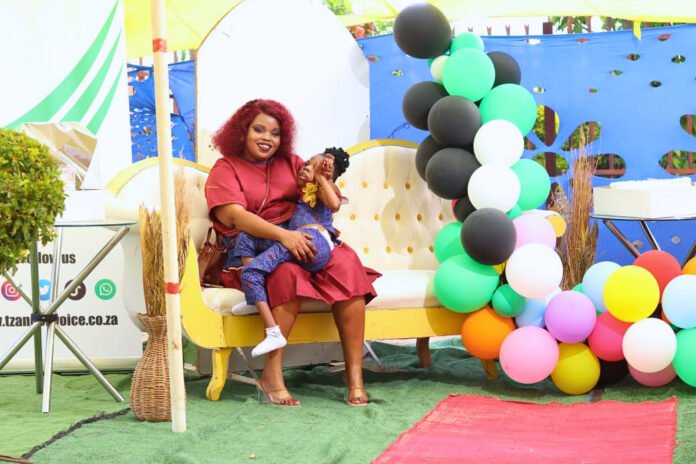
In September 2025 – mere months before her death – villagers, community leaders and other local stakeholders organised a party to celebrate Princess’s 13th birthday. For Maake, it remains one of her most treasured memories.
“My child may be gone, but the love she gave us will never disappear,” she says.
Maake says she hopes to honour her daughter’s memory by supporting other parents raising children with disabilities.
“I will keep her memory alive by helping other parents and children.” – Health-e News