


Kenya Ports Authority managing director, Captain William Ruto, in the spotlight over alleged irregular recruitment. PHOTO/KPA.
By SHIPPING CORRESPONDENT
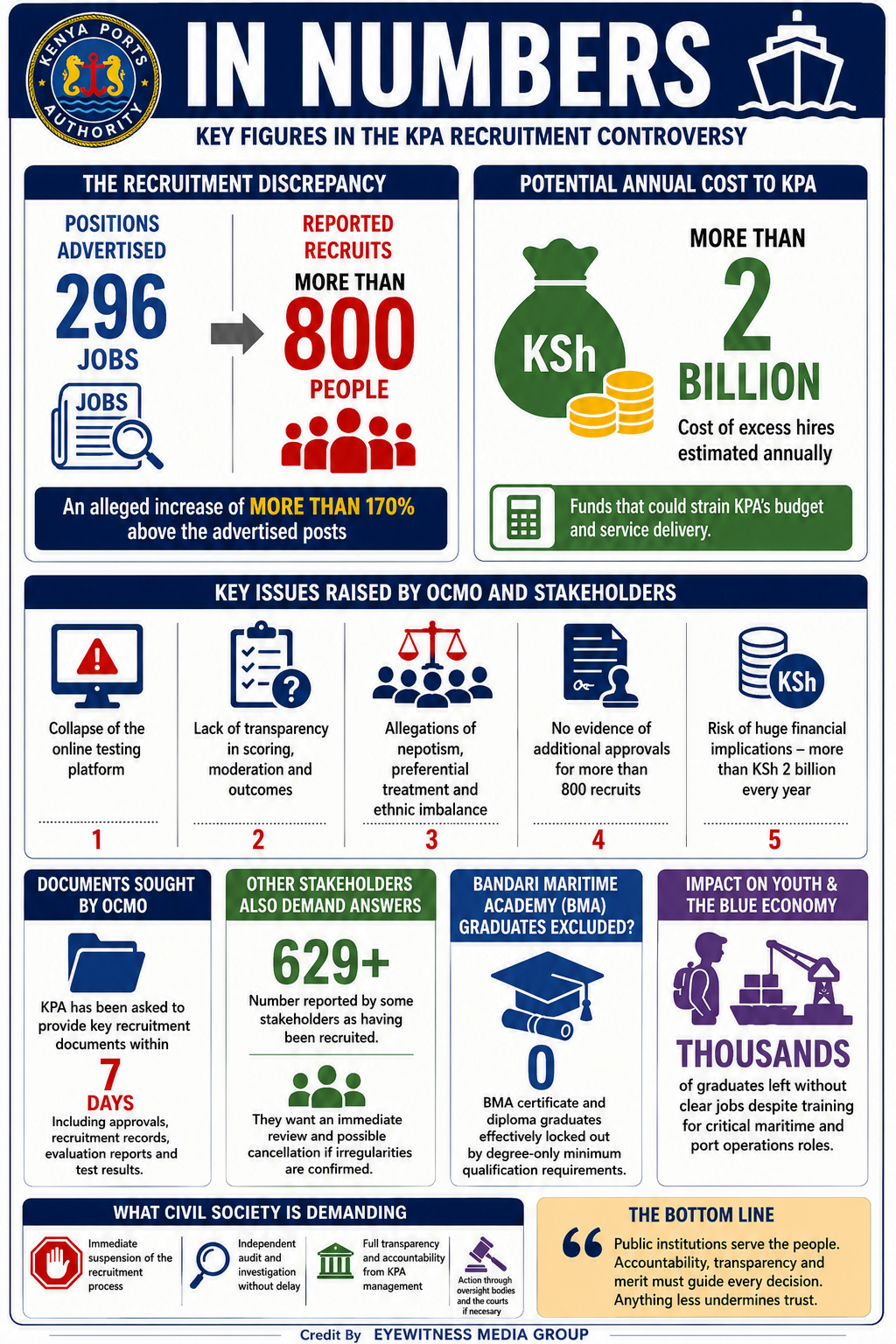
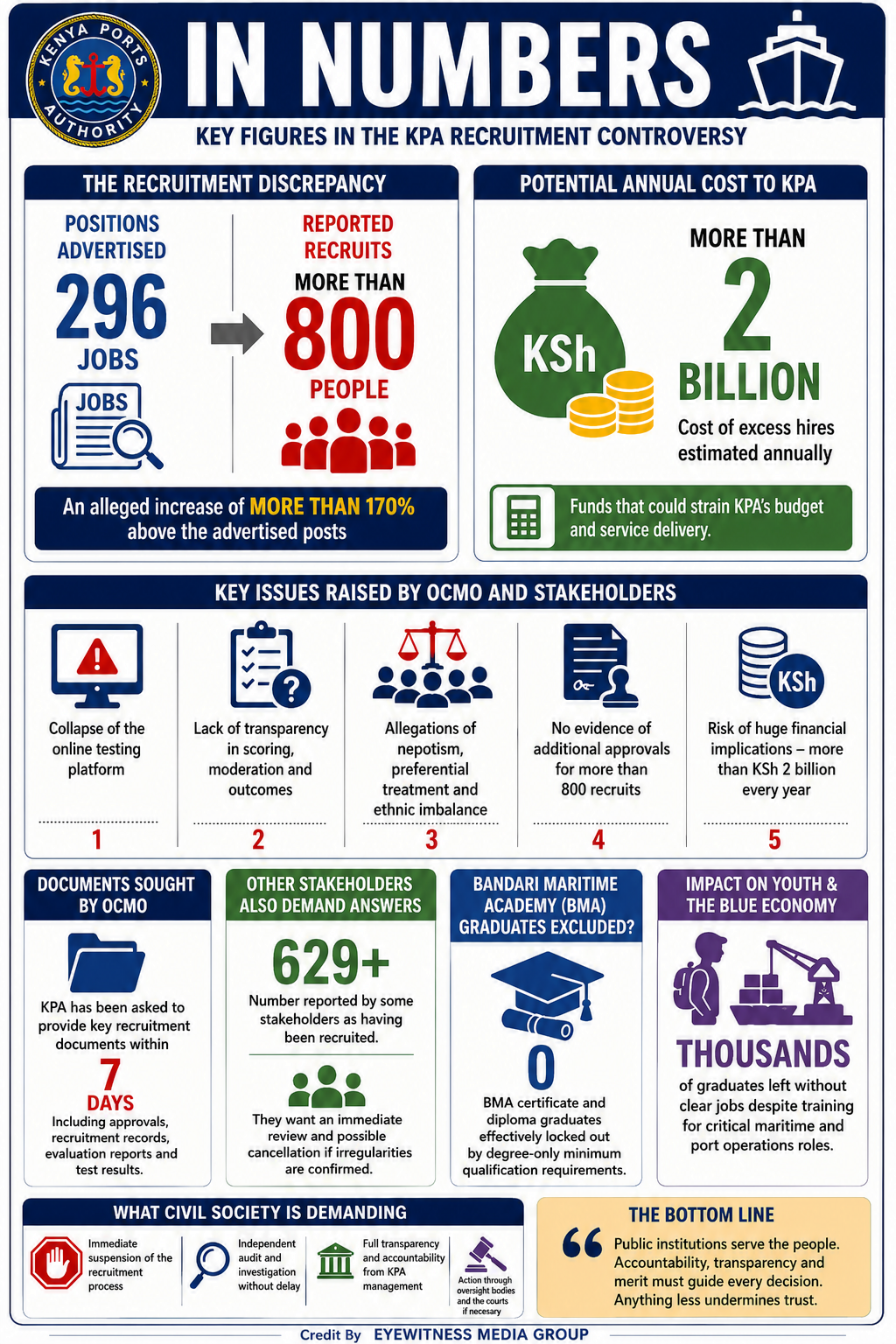
Fresh controversy has engulfed the Kenya Ports Authority (KPA) after a civil society organisation accused the State corporation of carrying out an opaque recruitment exercise allegedly marred by nepotism, tribalism and irregular hiring practices that could cost taxpayers more than Sh2 billion annually.
The accusations were raised by One Clear Mission Organization (OCMO), which has formally petitioned the Public Service Commission of Kenya and the Ethics and Anti-Corruption Commission to investigate the recruitment exercise.
In a strongly worded letter prepared by Bunde Mangaro & Co. Advocates and addressed to KPA Board chairman Benjamin Tayari, the organisation questioned why KPA allegedly recruited more than 800 workers despite publicly advertising only 296 positions.
OCMO claimed the recruitment process was riddled with serious procedural irregularities, including the collapse of the online testing platform used during the hiring exercise.
“Serious procedural failures were observed, including system-wide collapse of the online testing platform, raising questions as to the credibility of the evaluation process, lack of transparency in scoring, moderation, and verifiable recruitment outcomes,” part of the letter states.
The organisation further claimed it possesses credible information indicating that the number of successful applicants ballooned from the advertised 296 positions to more than 800 recruits without evidence of additional approvals or expansion of the approved staff establishment.
According to OCMO, the alleged increase raises constitutional and governance concerns, particularly regarding ethnic balance, fairness and merit-based hiring in public institutions.
“The process further raises constitutional concerns, including apparent ethnic imbalance in the final recruitment outcomes, and allegations of nepotism and preferential treatment,” the letter adds.
The organisation argues that such actions directly undermine constitutional principles governing equality, inclusiveness, transparency and meritocracy in public service appointments.
Beyond governance concerns, OCMO warned that the alleged excessive hiring could expose KPA to enormous financial strain at a time when public institutions are under pressure to cut expenditure.
The civil society organisation estimates that the excess recruitment could cost the port authority more than Sh2 billion every year in salaries and related employment costs.
OCMO is now demanding the immediate suspension of the recruitment process and a comprehensive independent audit and investigation into the exercise. The organisation warned that failure to act could trigger court action.
It also wants KPA to provide a series of documents relating to the recruitment process within seven days, including approvals, recruitment records and evaluation details.
The pressure on KPA intensified after other maritime stakeholders also wrote to the authority’s management demanding answers over what they termed a flawed and non-transparent recruitment process.
The stakeholders questioned the discrepancy between the advertised 296 vacancies and reports that between 629 and more than 800 individuals may have ultimately been recruited.
“This apparent discrepancy raises fundamental questions about transparency, fairness, and adherence to established public service recruitment procedures,” the stakeholders said in their communication.
The group challenged KPA management to explain whether additional recruitment approvals had been formally granted and under what authority the extra hiring was undertaken.
They also questioned whether the entire exercise complied with public service regulations and constitutional principles governing fairness and merit in public appointments.
“Public institutions do not belong to individuals; they serv
 e the people of Kenya. Those entrusted with leadership roles must be prepared to account for their decisions and actions transparently,” the stakeholders said.
The group further warned that evidence, including names linked to the recruitment process, had already been compiled and that the matter would be escalated through relevant oversight and accountability institutions.
The stakeholders called for an immediate review of the recruitment exercise and demanded corrective action, including possible cancellation of the process if irregularities are confirmed.
The recruitment controversy has also reignited debate over the treatment of graduates from Bandari Maritime Academy, a KPA-owned institution established to train young Kenyans for careers in the maritime and blue economy sectors.
Reports indicate that many graduates from the academy remain unemployed despite possessing technical maritime qualifications.
Critics argue that the recruitment frameworks used by both Kenya Maritime Authority (KMA) and KPA increasingly favour university degree holders while locking out diploma and certificate graduates trained specifically for technical maritime roles.
Recent recruitment cycles at KMA reportedly set Bachelor’s degrees as the minimum qualification across several positions, effectively disqualifying many BMA graduates.
Observers say the contradiction exposes deeper policy failures within Kenya’s maritime sector. BMA was established to produce technically skilled personnel for port operations, marine engineering support, vessel management and logistics.
However, critics say the growing emphasis on degree qualifications has created what they describe as “credential inflation”, shutting out technically trained youth from employment opportunities in the very sector they were trained to serve.
The result, stakeholders warn, is growing frustration among young people from the Coast region who had viewed the blue economy as a major source of employment and economic mobility.
Maritime experts and stakeholders are now calling for sweeping reforms to align training institutions with labour market realities in the maritime sector.
Among the proposals being floated are the introduction of quotas reserving technical positions for diploma holders, the establishment of structured apprenticeship programmes within KPA and KMA, and the creation of dual career pathways separating technical and managerial roles.
There are also calls for structured upgrading programmes that would allow diploma graduates from BMA to transition into degree qualifications through partnerships with institutions such as Technical University of Mombasa.
Stakeholders further want the government to establish a coordinated maritime skills council bringing together regulators, employers, training institutions and policymakers to ensure that recruitment policies align with the needs of the blue economy.
For many young people at the Coast, the unfolding controversy has become symbolic of broader frustrations over unemployment, exclusion and the widening disconnect between education and access to jobs.
By Thursday evening, KPA had not publicly responded to the allegations.