


Sudan
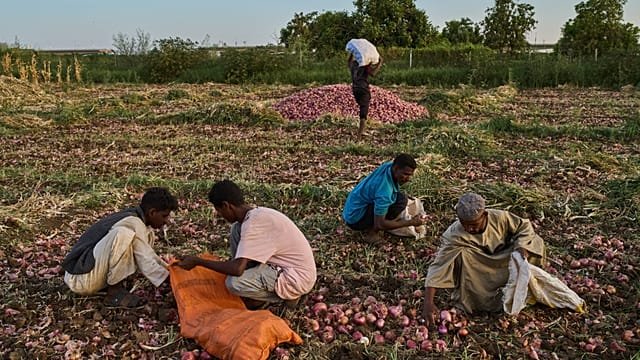
Two years after Sudan’s civil war forced him from his land, Omer al-Hassan returned to rebuild his farm in Omdurman.
But now the conflict in the Middle East threatens to push him deeper into financial loss and food insecurity as fuel and fertiliser prices soar.
Al-Hassan and other farmers in Sudan are bracing for an expensive planting season in the weeks ahead.
Some said they are reducing production or not planting at all, which is dangerous news for a country where over three years of war have left millions facing acute food insecurity.
The Iran war has “affected everything related to agriculture,” al-Hassan said as he and others pulled onions from the ground.
They had spent two months clearing the weed-choked land, ”ploughed the soil and we said God bless, and even then we struggled so much, one had to sometimes skip a meal.”
He and 10 other farmers who work his land said they can’t handle agricultural costs without government support, forcing cuts in production and rationing of fertiliser on his farm that also produces potatoes and tomatoes.
Another farmer, Mohammed al-Badri, said he could afford to plant only half his land because of the rising costs: “The rest of it is nothing.”
The Gulf region, where hundreds of commercial ships have been stranded for weeks because of Iran’s grip on the Strait of Hormuz, provides over half of Sudan’s fertiliser that’s imported by sea.
And fuel prices have shot up by around 30 per cent.
That means food prices in Sudan are jumping, too. Prices for vegetables and dairy have risen by about 40 per cent due to fuel price spikes.
Farmers already stressed by the war at home between Sudan’s military and the paramilitary Rapid Support Forces are now watching costs rise for fertiliser, the petrol needed to power farm equipment, and diesel for irrigation pumps.
“Petrol is now, it was 130 pounds, I bought a can a week ago. And now I am hearing it is 146 pounds. I am just wondering how will get it? How will I work? How will I do?” said al-Hassan.
Farmers like al-Hassan and al-Badri are doing what they can to save costs, from planting less to giving less fertiliser.
They also plant less intensive plants like purslane and onions to make it work.
“We have had to decrease the fertiliser, the soil preparation we decreased, we decreased the weed clearing. We decreased these things because we just don’t have the ability to harvest at 100 per cent,” he said.
You may also like
From the same country