


01/05/2026 – 19:10 GMT+2
The agency has re-routed sea cargo via Jordan’s Aqaba Red Sea port and has switched to land corridors including truck routes from Dubai across the Arabian peninsula and Turkey.
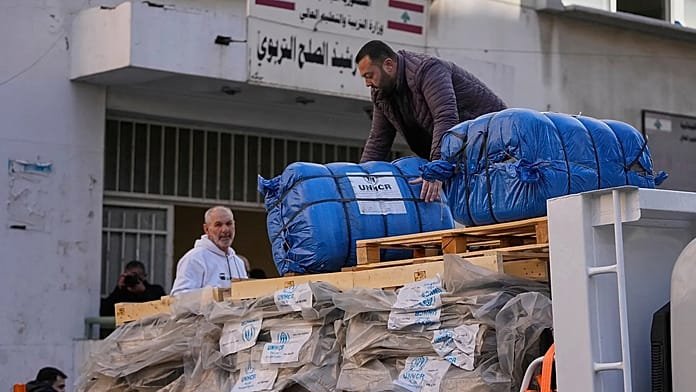
The UN refugee agency said on Friday that the Iran war had sent its freight rates soaring, affecting the delivery of aid to refugees in the wider region and across Africa.

ADVERTISEMENT
ADVERTISEMENT
Shipping rates from UNHCR’s three main source countries for emergency supplies, India, Pakistan and China, have shot up by nearly 18%, the agency said, while delivery delays and port congestion are also having an impact.
Every extra dollar spent on fuel and higher war-risk shipping insurance premiums is a dollar less that can be spent in the field, UNHCR added.
“The Middle East crisis has generated far-reaching ripple effects well beyond the region, with growing consequences for global humanitarian supply chains and the delivery of aid,” spokeswoman Carlotta Wolf said at a press conference in Geneva.
While freight rates have surged, the capacity of UNHCR’s usual transport providers to respond to its requests has dropped from 97% at the start of the year to 77%.
The agency has re-routed sea cargo via Jordan’s Aqaba Red Sea port and has switched to land corridors including truck routes from Dubai across the Arabian peninsula and Turkey.
“For some shipments, costs have more than doubled, such as transport costs for relief items from UNHCR’s global stockpiles in Dubai to our Sudan and Chad operations, which have increased from around $927,000 (€789,000) to $1.87 million (€1.59 million),” said Wolf.
The Iran war began on 28 February with a barrage of US and Israeli strikes and Tehran retaliated by attacking infrastructure across the Gulf and putting a chokehold on the critical Strait of Hormuz.
The restrictions on traffic through the strait has cut off vast amounts of oil, gas and fertiliser from the world economy, while the United States has imposed a counterblockade on Iranian ports.
Impact on Africa
Wolf said the impact was “particularly worrisome” in Africa.
Fuel price increases in Kenya, where UNHCR has one of its seven global stockpiles, have triggered delays and reduced truck availability for shipments to Ethiopia, the Democratic Republic of Congo and South Sudan.
In Sudan, the cost of delivering aid has doubled in recent months, she said, with the rerouting of shipments around the Cape of Good Hope adding up to 25 days on delivery times.
“If instability in the Middle East persists, rising costs, delays and limited transport capacity are likely to constrain humanitarian operations further,” said Wolf.
“Prolonged disruption risks reducing the scale and speed at which assistance can reach people in need, with serious consequences for millions of refugees and displaced people worldwide.”
While its global stockpiles are currently sound, in the longer term, UNHCR is concerned about how costly it will be to restock.
UNHCR needs $8.5 billion (€7.2 billion) for its operations this year, of which only 23% is funded so far.