



Crypto exchanges in 2026 are competing on lower fees, simpler apps, and stronger security for first-time users. Choosing the best crypto exchanges for beginners matters for an easy and safe start. Here’s how the top beginner-friendly platforms compare and which one may suit you best.
Best Crypto Exchanges for Beginners — Quick Comparison
| Exchange | Trading Fees | Beginner Score | KYC Required | Supported Region |
| Coinbase | 0.40% – 0.60% | 10/10 | Yes | US, Europe, Africa (limited) |
| Binance | 0.10% | 7/10 | Yes | Global (restricted in some areas) |
| MEXC | 0.00% – 0.01% | 6/10 | Yes | US, Europe, select regions |
| Kraken | 0.16% – 0.26% | 8/10 | Yes | Global |
| Crypto.com | 0.075% | 8/10 | Yes | Global |
| Gemini | 0.20% – 0.40% | 9/10 | Yes | US, limited global access |
| OKX | 0.08% – 0.10% | 7/10 | Yes | Global (Excludes US) |
| Bybit | 0.10% | 7/10 | Yes | Global (Excludes US) |
| Bitstamp | 0.00% – 0.40% | 8/10 | Yes | Global |
| Robinhood | 0.00% (Spread applies) | 10/10 | Yes | US & Select EU Countries |
Top Cryptocurrency Exchanges for Beginners in 2026
Finding a reliable platform that prioritizes security and intuitive design is key to a smooth onboarding experience. Here are the top crypto exchanges for beginners in 2026.
1. Coinbase — Best Overall for Beginners
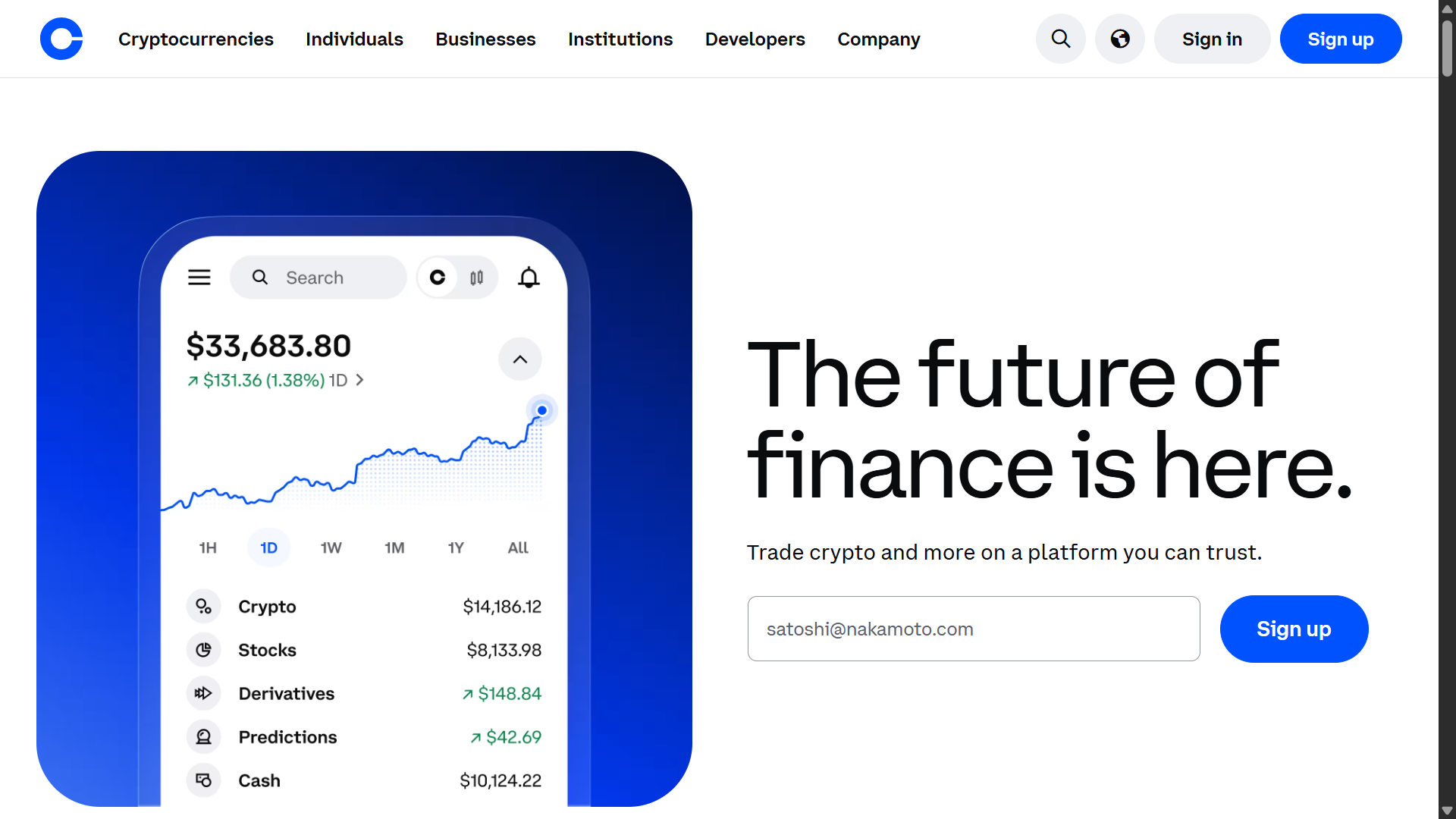
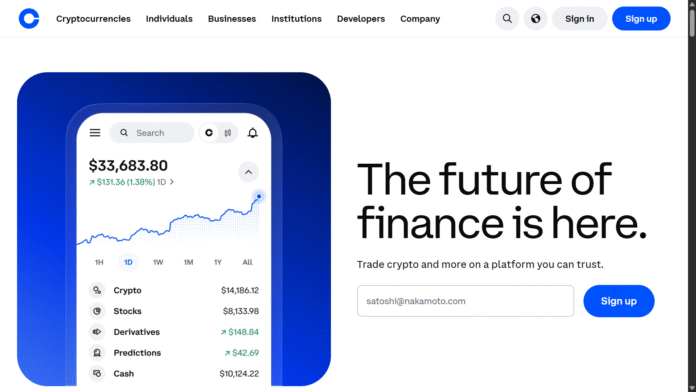
Coinbase is one of the best crypto exchanges for beginners because it focuses on simplicity, strong security, and regulatory compliance. Founded in 2012 by Brian Armstrong and Fred Ehrsam, the platform has grown into the largest U.S.-based crypto exchange, serving users across more than 100 countries. It offers a clean interface where you can buy, sell, and store crypto without dealing with complex tools.
Daily trading volume often exceeds $2.5 billion, reflecting deep liquidity and reliable execution. Coinbase supports regions like Australia, Bermuda, Bulgaria, Canada, Denmark, and Germany, making it widely accessible. The platform also integrates fiat payments, so you can fund your account using bank transfers or cards.
Coinbase focuses on ease of use while maintaining strong regulatory compliance. While fees can be higher than some competitors’, many beginners prefer the clarity and safety it provides when starting out.
Pros & Cons
Pros
- Simple interface built for beginners
- Strong regulatory compliance and security
- Supports fiat deposits and withdrawals
- Available in 100+ countries
Cons
- Higher fees compared to some exchanges
- Limited advanced features for experienced crypto traders
- Some features are restricted by region
Key Stats
- Founded: 2012
- Founders: Brian Armstrong, Fred Ehrsam
- Daily Trading Volume: ~$2.51 billion
- Supported Countries: 100+
- Example Regions: Australia, Bermuda, Bulgaria, Canada, Denmark, Germany
Who It’s Best For
If you’re new to crypto and want a simple, trusted starting point, Coinbase fits well. You get an easy onboarding process, clear pricing, and a platform that reduces the risk of making costly beginner mistakes.
2. Binance — A Global Leader in Crypto Trading
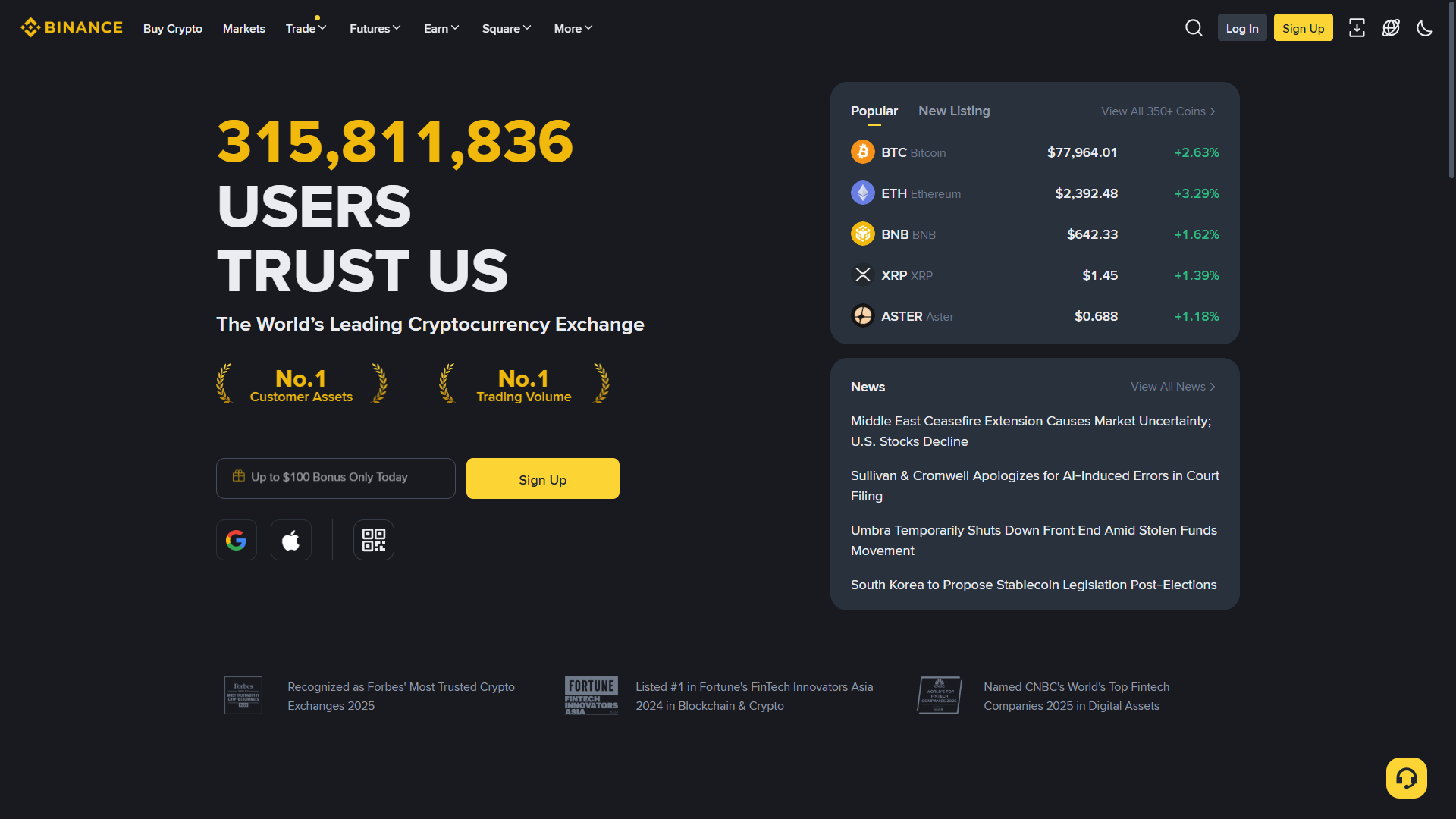
Binance is a cryptocurrency exchange built for low fees, a wide range of crypto coins, and flexible trading tools. Founded in 2017 by Changpeng Zhao, it has grown into one of the largest platforms globally, serving over 315,764,416 users. With that scale, trades usually execute fast.
We see Binance as a platform that supports both simple and advanced active trading. It offers a basic interface for quick buy and sell, alongside deeper tools for charting and strategy. Fees start low, which keeps costs down when you trade often. However, the layout can feel crowded at first, and some features depend on your region due to regulations. If you want a cryptocurrency exchange with broad access and low costs, Binance is a strong option, but you’ll need time to get used to it.
Pros & Cons
Pros
- Low trading fees
- Wide range of cryptocurrencies
- High liquidity for fast trades
- Beginner and advanced tools in one place
Cons
- Interface can feel complex at first
- Some features vary by region
- Customer support can be inconsistent
Key Stats
- Founded: 2017
- Founder: Changpeng Zhao
- Users: 315,764,416+
- Trading Fees: From ~0.10%
- Availability: Global, with some regional limits
Who It’s Best For
Binance is best for users who want low fees, a wide range of coins, and a cryptocurrency exchange that scales as they gain experience.
3. MEXC — Low Fees and Diverse Offerings
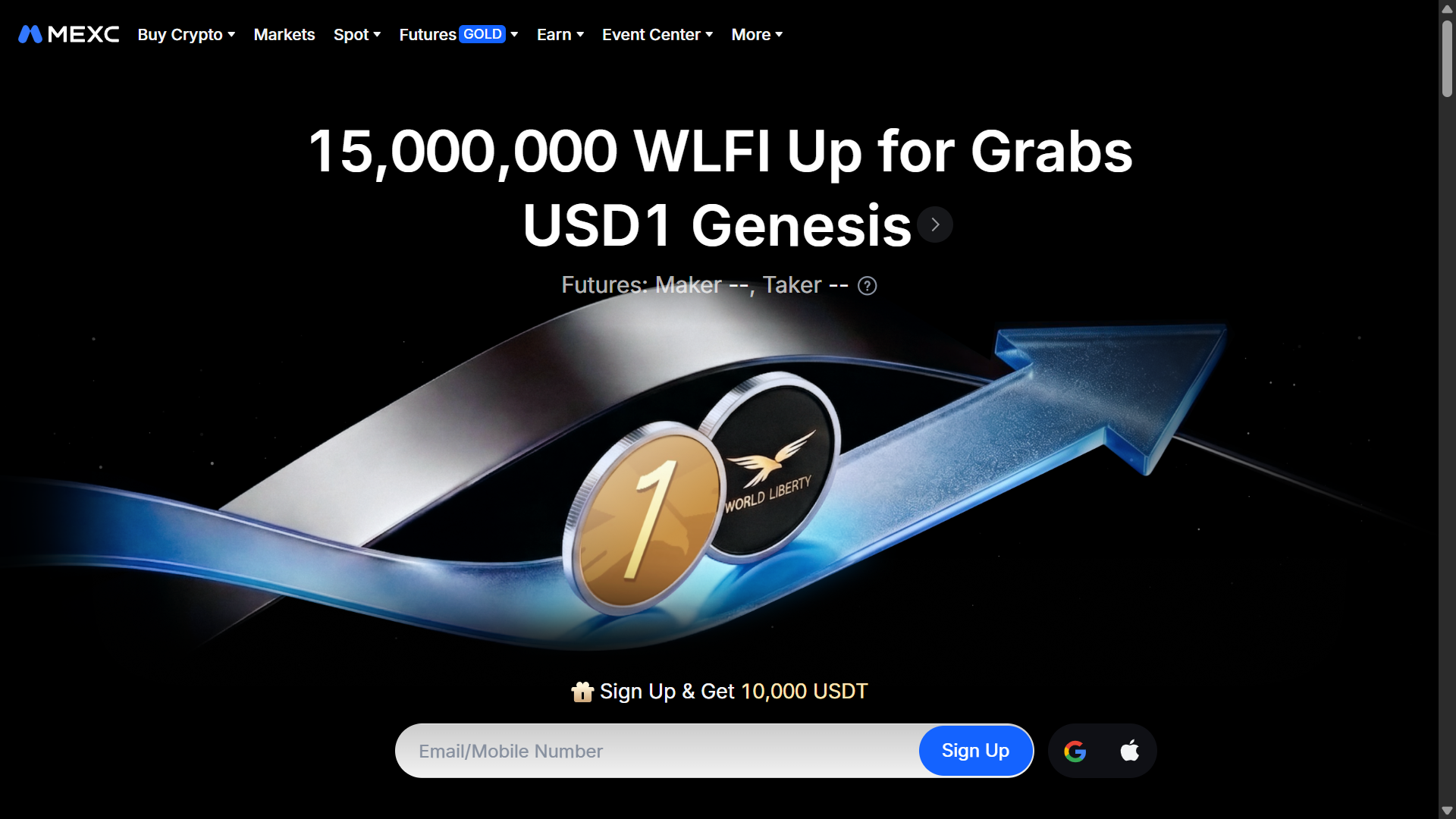
MEXC is a cryptocurrency exchange built for traders who want low fees and access to a wide range of coins. Founded in 2018, the platform has grown fast by listing thousands of tokens, including many newer projects you won’t find on more conservative exchanges. It supports over 3,000 spot trading pairs and more than 1,000 futures pairs, which gives you more flexibility if you want to explore beyond major crypto coins like Bitcoin and Ethereum.
We see MEXC as a strong option if you care about cost efficiency. It offers zero maker fees on many trades, which means you don’t pay when you add liquidity to the market. That can make a real difference if you trade often or start with small amounts. The platform also includes tools like grid trading and copy trading, where you can follow strategies used by other traders.
At the same time, MEXC doesn’t focus heavily on fiat services. You may need to move funds through another platform before active trading. The interface can also feel busy because of the large number of tokens and features.
Pros & Cons
Pros
- Zero maker fees on many trades
- Huge range of cryptocurrencies
- Advanced tools like grid and copy trading
- Strong global availability
Cons
- Limited fiat withdrawal options
- Interface can feel crowded
- Token quality varies across listings
Key Stats
- Founded: 2018
- Trading Pairs: 3,000+ spot, 1,000+ futures
- Daily Trading Volume: ~$29 billion
- Availability: Global (not available in some regions like the U.S.)
Who It’s Best For
MEXC is best for traders who want low fees and access to a large range of cryptocurrencies, especially newer altcoins.
4. Kraken — Trusted and Secure
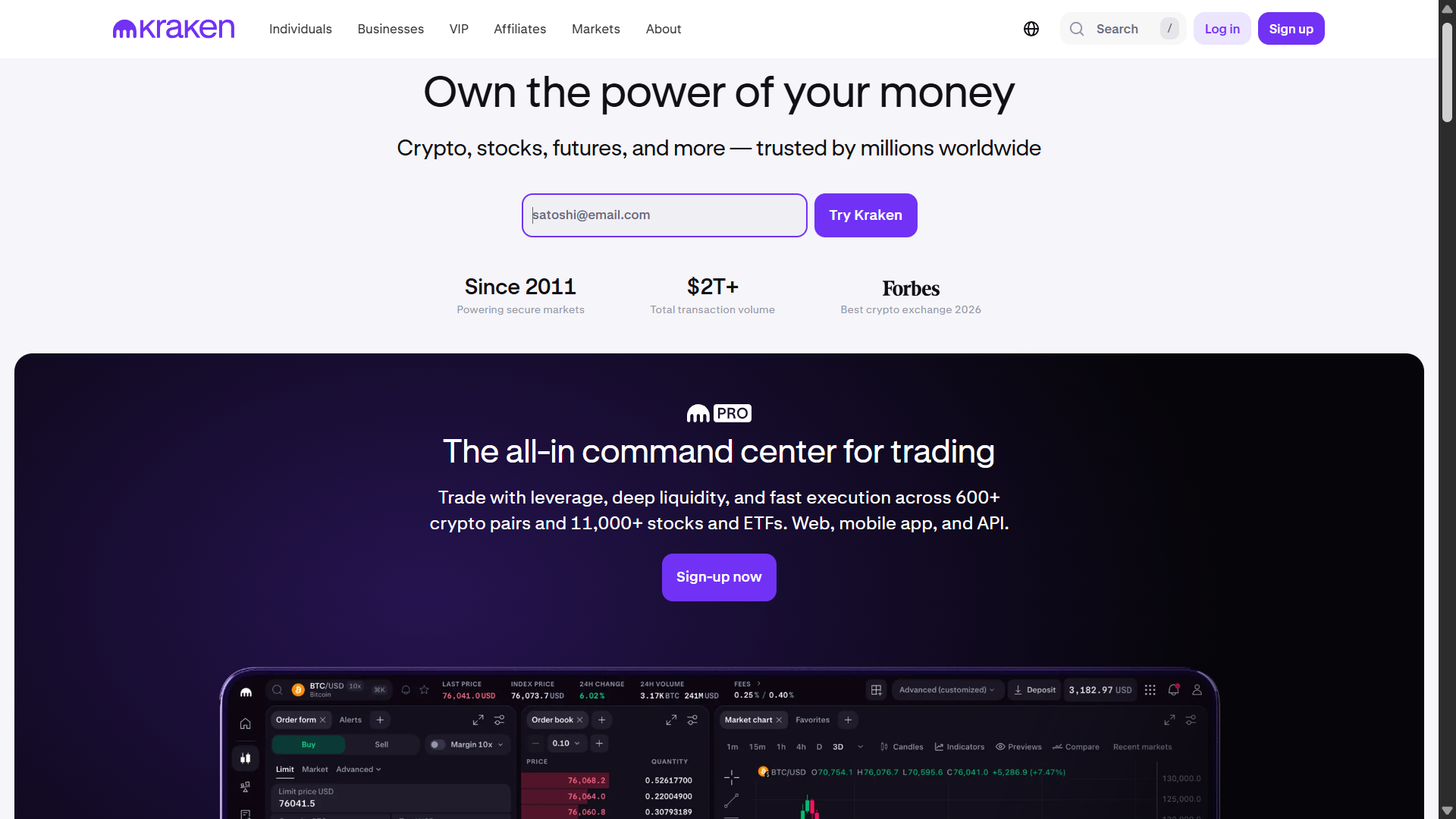
Kraken is a cryptocurrency exchange known for security, transparency, and a long track record. Founded in 2011, it is one of the oldest platforms still operating today. That history matters if you want an exchange that has handled multiple market cycles and built trust over time. Kraken supports over 500 cryptocurrencies, along with fiat currencies like USD, EUR, and GBP (British pound) so you can move money in and out without extra steps.
Kraken strikes a balance between beginner access and advanced cryptocurrency trading. The standard interface keeps things simple when you want to buy or sell quickly. At the same time, Kraken Pro offers lower fees and deeper tools for charting and order types. The platform also focuses heavily on security, with most user funds stored in cold storage, which means offline wallets that reduce hacking risk.
Fees for instant purchases can be higher than on some competitors, and support response times can vary. Still, Kraken’s structure feels steady and predictable, which helps if you’re new to crypto.
Pros & Cons
Pros
- Strong security and long track record
- Supports 500+ cryptocurrencies
- Fiat deposits and withdrawals available
- Beginner and advanced modes
Cons
- Higher fees for instant buys
- Customer support can be slow
- Interface feels more functional than simple
Key Stats
- Founded: 2011
- Cryptocurrencies: 500+
- Daily Trading Volume: ~$279 million
- Availability: 190+ countries
Who It’s Best For
Kraken is best for users who want a secure cryptocurrency exchange with a strong reputation and clear pricing.
5. Crypto.com — Best for Mobile Users
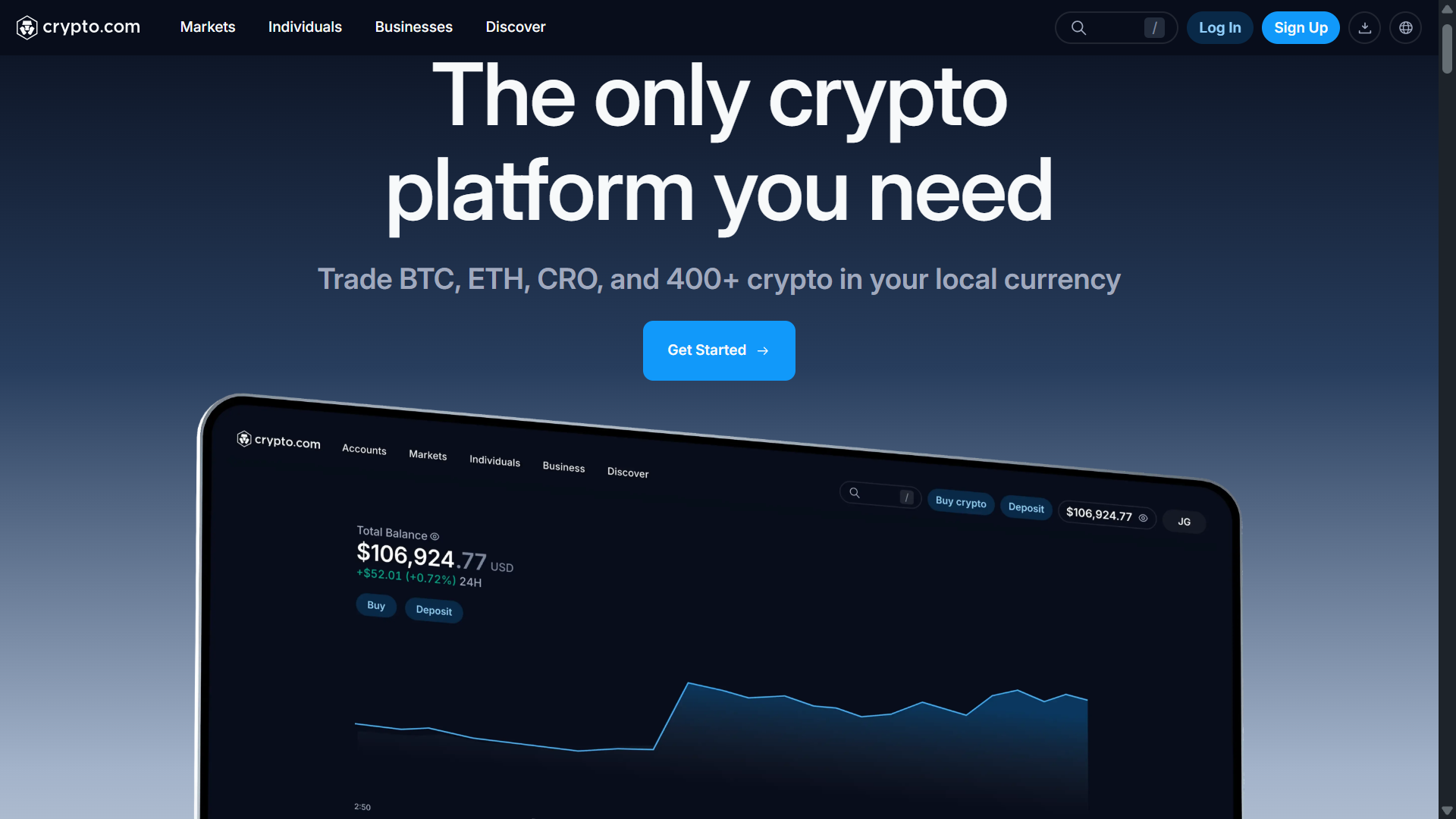
Crypto.com is a cryptocurrency exchange built around a mobile-first experience. Founded in 2016, it has grown into a global platform with over 150 million users across 90 countries. The crypto app combines cryptocurrency trading, staking, payments, and rewards in one place, which makes it more than just a basic exchange.
We see Crypto.com as a strong fit if you prefer managing everything from your phone. The crypto app makes it easy to buy and sell crypto, track prices, and explore features like staking, where you earn rewards by holding certain coins. It also offers a crypto debit card, which lets you spend crypto in everyday transactions.
The main challenge is pricing clarity. Fees are not always shown in a simple format, especially for instant buys, so you need to check the final cost before confirming a trade. Desktop features are also more limited compared to some competitors.
Pros & Cons
Pros
- Easy-to-use mobile app
- Offers a crypto debit card
- Large global user base
- Extra features like staking and rewards
Cons
- The fee structure can feel unclear
- Limited desktop experience
- Best features may depend on ecosystem tokens
Key Stats
- Founded: 2016
- Users: 150 million+
- Supported Countries: 90+
- Core Features: Trading, staking, payments
Who It’s Best For
Crypto.com is best for users who want a mobile-first cryptocurrency exchange with extra features beyond trading.
6. Gemini — Best for Security and Compliance
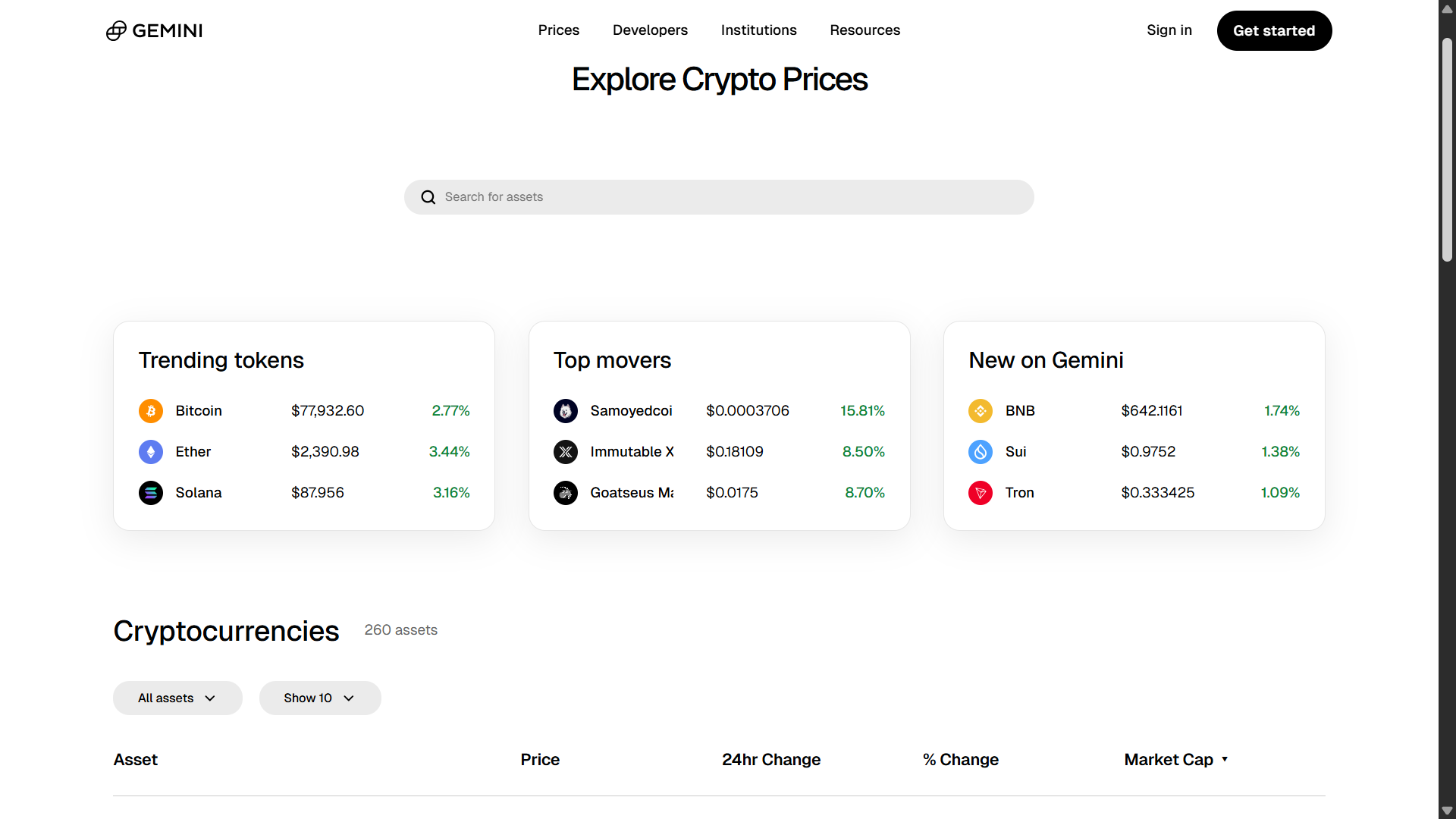
Gemini is a cryptocurrency exchange built around regulation, transparency, and user protection. Founded in 2015 by Cameron and Tyler Winklevoss, it operates mainly in the United States and supports users in over 60 countries. The platform focuses on compliance, which means it follows strict financial rules that help build trust, especially for new users.
We find Gemini easy to use if you want a clean and simple interface. It removes unnecessary clutter and focuses on core actions like buying, selling, and storing crypto. Gemini also emphasizes safety through features like insurance for custodial funds and proof of reserves, which shows that user crypto assets are backed.
The trade-off is cost and flexibility. Gemini’s fees are higher than some competitors, and it offers fewer extra features like staking or advanced earning tools. Still, its compliance-focused approach makes it more predictable to use.
Pros & Cons
Pros
- Strong focus on security and compliance
- Simple, clean interface
- Insurance for custodial funds
- Trusted U.S.-based platform
Cons
- Higher fees than many competitors
- Fewer extra features
- Limited global reach compared to larger exchanges
Key Stats
- Founded: 2015
- Founders: Cameron and Tyler Winklevoss
- Daily Trading Volume: ~$214 million
- Supported Countries: 60+
Who It’s Best For
Gemini is best for users who want a regulated cryptocurrency exchange with strong security and a simple experience.
7. OKX — Advanced Features for Global Traders
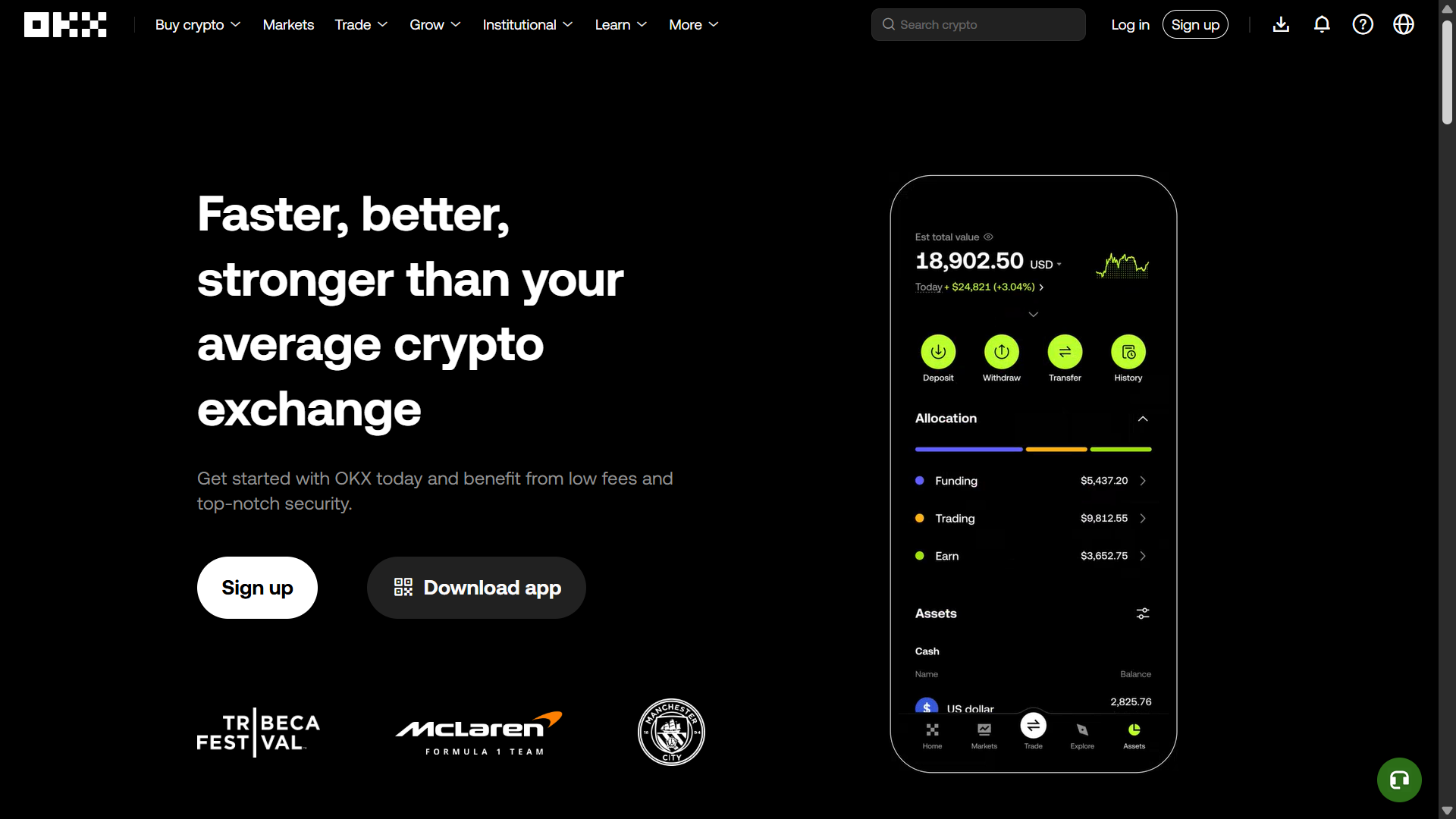
OKX, established in 2017 and headquartered in Seychelles, is a crypto trading platform designed for crypto traders seeking advanced tools and global accessibility. With a daily trading volume of $4.5 billion, it supports 314 cryptocurrencies and 739 trading pairs, making it a versatile choice for diverse trading needs.
The platform offers a range of features, including spot trading, futures, and staking, all supported by its proprietary OKX Wallet for secure asset storage. OKX is licensed in multiple regions, including the United Arab Emirates, Australia, and Europe, ensuring compliance and trustworthiness. Its low trading fees, ranging from 0.08% to 0.1%, further enhance its appeal to cost-conscious crypto traders.
We find OKX’s interface can feel overwhelming at first, but it delivers a comprehensive experience for those ready to explore advanced tools.
Pros & Cons
Pros
- Low trading fees (0.08%-0.1%)
- Supports 314 cryptocurrencies
- Advanced trading features
Cons
- Complex interface for beginners
- Limited fiat deposit options
Key Stats
- Founded: 2017
- Daily Trading Volume: $4.5 billion
- Supported Countries: Global
Who It’s Best For
It suits experienced traders who want access to advanced features, global reach, low fees, and a wide range of cryptocurrencies.
8. Bybit — Best for Derivatives Trading
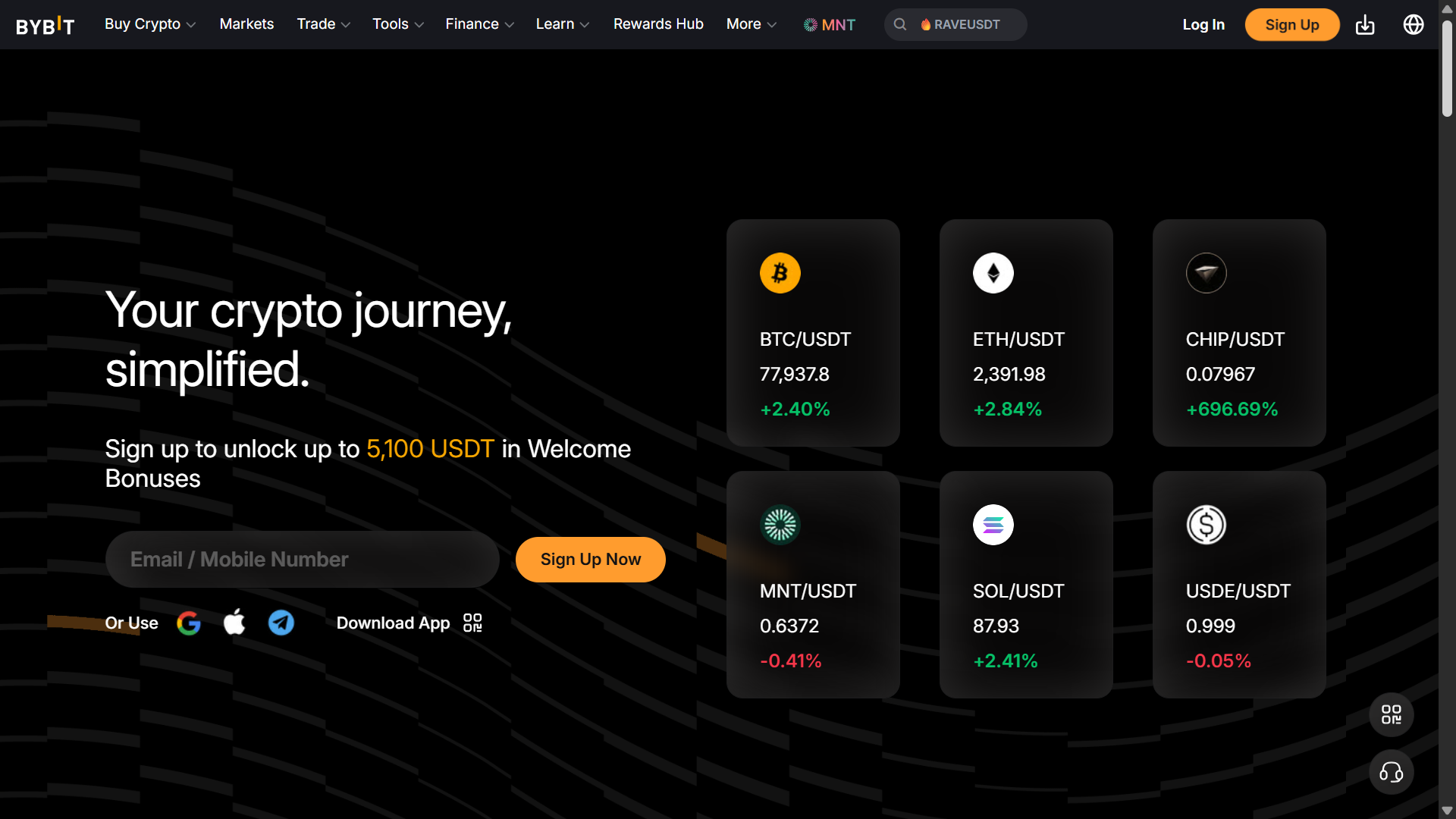
Bybit, established in 2018 and headquartered in Dubai, is a crypto trading platform specializing in derivatives. We see Bybit offering advanced tools like trading bots and high-leverage futures trading, supported by strong trading activity. The platform supports 515 cryptocurrencies and provides a user-friendly interface for both web and mobile.
We find Bybit better suited to users who already understand derivatives, trading bots, and leverage. Its low fees (0.1% for spot trading) and advanced tools may appeal to experienced traders, but its complexity and limited availability in regions like the U.S. and U.K. can make it less suitable for beginners.
Pros & Cons
Pros
- Low trading fees (0.1%)
- Advanced tools like trading bots
- High-leverage futures trading
Cons
- Not available in the U.S. and U.K.
- Complex for beginners
Key Stats
- Founded: 2018
- Daily Trading Volume: $6 billion
- Supported Countries: Global (Excludes U.S. and U.K.)
Who It’s Best For
Bybit tends to suit advanced crypto traders who focus on derivatives and leverage trading.
9. Bitstamp — Best for Simplicity and Compliance
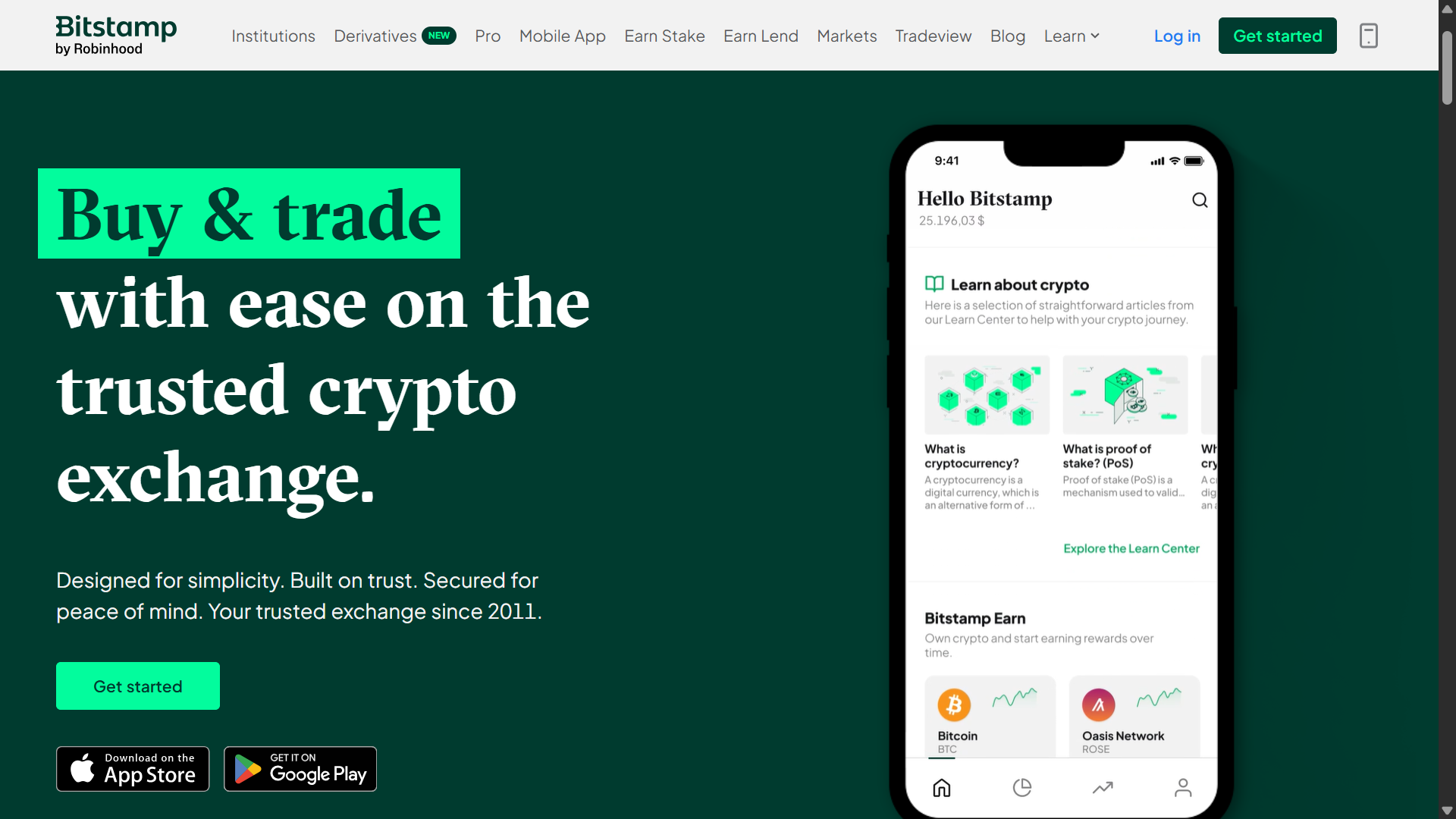
Bitstamp, founded in 2011, is one of the oldest crypto trading platforms in the industry. Known for its regulatory compliance and straightforward interface, Bitstamp supports 80+ cryptocurrencies and offers spot trading with multiple order types.
The platform’s tiered fee structure starts at 0.50% for retail traders, decreasing with higher volumes. While its asset selection is limited compared to competitors, Bitstamp’s focus on security and compliance may appeal to cautious traders.
Pros & Cons
Pros
- Strong regulatory compliance
- Simple and user-friendly interface
- Long operational history
Cons
- Limited asset selection (80+ cryptocurrencies)
- Higher fees for low-volume traders
Key Stats
- Founded: 2011
- Daily Trading Volume: Varies
- Supported Countries: Global
Who It’s Best For
Bitstamp works well for traders who prioritize simplicity and regulatory compliance. Its straightforward platform is a strong fit for beginners and those seeking a secure trading environment.
10. Robinhood — Best for Fee-Free Trading
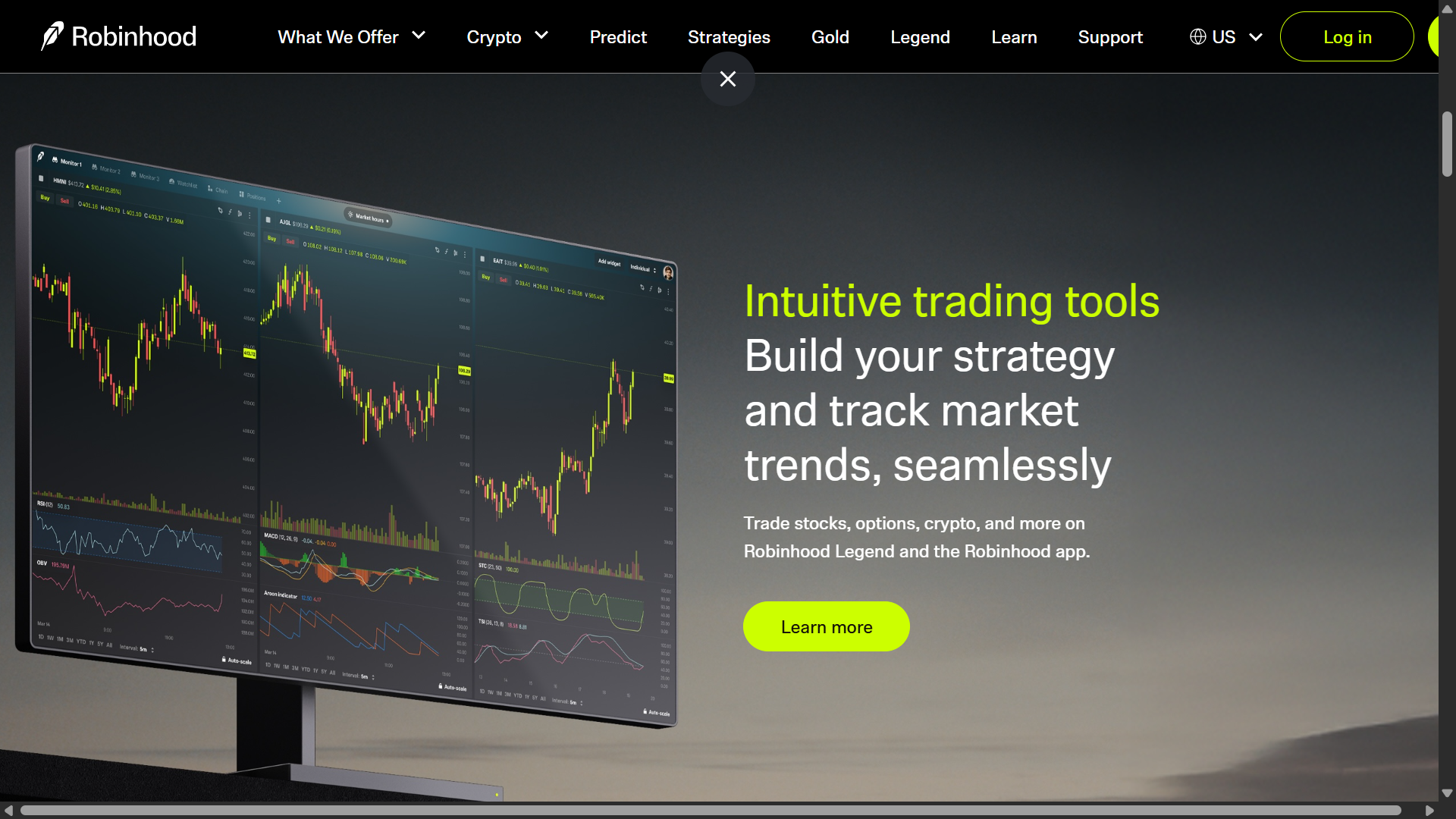
Robinhood, launched in 2013, is a U.S.-based platform offering commission-free trading for stocks and cryptocurrencies. Its simple interface and low entry barrier make it a popular choice for beginners. Robinhood supports a limited selection of cryptocurrencies but excels in providing a seamless trading experience.
The platform’s lack of advanced features and limited crypto options trading may not suit experienced crypto traders. However, its focus on accessibility and fee-free trading may appeal to users who are new to investing.
Pros & Cons
Pros
- Commission-free trading
- Simple and intuitive interface
- Supports both stocks and crypto
Cons
- Limited cryptocurrency options
- No advanced trading features
Key Stats
- Founded: 2013
- Daily Trading Volume: Varies
- Supported Countries: U.S.
Who It’s Best For
Robinhood suits beginners who want a simple, fee-free way to trade both stocks and cryptocurrencies.
What Makes a Crypto Exchange Good for Beginners?
When you start with crypto, the exchange you choose shapes how easy or hard the process feels. A beginner-friendly platform should help you sign up, verify your account, add funds, and make your first trade without confusion. Here is what to look for:
Ease of Use & Onboarding
We first look at how simple the platform feels from the start. You should be able to open an account and move through each step without second-guessing what to do next. If the layout feels crowded or full of trading jargon, that can slow you down.
A strong beginner centralized exchange keeps the process clear. It explains how to verify your identity, connect a payment method, and place your first order. Good design matters because it helps you focus on learning instead of fixing mistakes.
This is also where setting up your crypto wallet becomes easier. A good exchange shows where your crypto assets are stored, how transfers work, and what to check before moving funds.
Fee Transparency
Clear and upfront fees help you avoid surprises. Many platforms include hidden costs in spreads or final prices, which makes it hard to know what you’re actually paying. A beginner-friendly exchange shows trading, deposit, and withdrawal fees before you confirm.
That transparency makes comparison easier before you decide on the best crypto broker for beginners. Two platforms may advertise low fees, but only one shows the real cost clearly. Without that clarity, it’s easy to overpay without realizing it. Whether you’re buying, selling, or moving digital assets, visibility keeps your decisions informed.
Security Standards
We treat security as a basic requirement, not a bonus. In 2025, $2.17 billion was stolen in crypto hacks, which shows how serious the risks are. Beginners need exchanges that make protection part of the core experience.
We look for two-factor authentication (2FA), cold storage, proof of reserves, and withdrawal checks. Two-factor authentication adds an extra step at login. Cold storage keeps most funds offline. Proof of reserves helps show that customer crypto assets are backed.
These tools help lower risk while you learn. A secure platform gives you more protection as you build good habits and learn how to spot scams or suspicious activity.
Customer Support & Education
Fast support and clear learning tools matter. When you’re new to crypto, even simple problems can feel stressful. You may need help with account checks, deposits, transfers, or security settings.
The best exchanges offer live chat, help centers, and beginner guides written in plain language. They explain important terms clearly and help you solve problems without wasting time. When answers are easy to find, you can keep moving without turning a small issue into a bigger mistake.
How to Choose the Right Crypto Exchange as a Beginner
Choosing the right platform depends on how easy it feels, how much it costs, and what tools you actually need. Not every exchange fits every user. The goal is to match your needs with the best crypto trading platform or best crypto trading app for your level. Here is how to choose the right crypto exchange as a beginner.
- Start with the basics: Start with spot trading, which means buying and holding actual crypto. It’s the simplest way to begin and is available on every major platform. More advanced tools like futures contracts come later. Futures contracts are agreements to buy or sell crypto at a set price in the future, without owning the asset.
- Choose the trading platform. Look for the best crypto trading platform that matches your comfort level. Some platforms focus on interface simplicity and liquidity.
- An easy-to-use platform keeps you consistent and avoids mistakes early on.
- Pick the trading app. If you plan to trade on your phone, the best crypto trading app has a clean layout and fast loading speed.
- Check Risk, Fees, and Growth Options. A good exchange should help you manage risk as you grow. Compare trading fees and spreads. Check the withdrawal cost.
Crypto Exchange Fees Explained: What Beginners Need to Know
Fees shape how much you actually keep when you trade. During a crypto surge, prices move fast and trading activity spikes, which makes the fee structure even more important. Small costs can add up quickly if you don’t understand how they work.
A beginner-friendly exchange should make every fee clear before you confirm a trade. Hidden costs reduce your gains and make it harder to compare platforms.
Maker vs. Taker Fees
Maker and taker fees depend on how your order interacts with the market. A maker adds an order to the order book, which means you set a price and wait for someone to match it. A taker fills an existing order instantly.
Makers usually pay lower fees because they add liquidity to the market. Takers pay higher fees because they remove liquidity. This difference becomes more noticeable during a crypto surge, when fast trades dominate.
If you want to reduce costs, placing limit orders instead of instant market orders can help you act as a maker.
Spread Fees vs. Trading Fees
Trading fees are the direct charges you see per transaction. These are often listed as a percentage, such as 0.1% per trade. They are easy to track and compare across exchanges.
Spread fees are less visible. The spread is the gap between the buy price and sell price of an asset. Some platforms increase this gap instead of showing a clear fee.
During a crypto surge, spreads can widen due to volatility. That means you may pay more than expected, even if the platform advertises low trading fees. Always check the final price before confirming a trade.
Deposit & Withdrawal Fees
Deposit and withdrawal fees affect how you move money in and out of the exchange. Some platforms offer free deposits, especially for bank transfers, while others charge for card payments.
Withdrawal fees vary depending on the coin and network. These fees can increase during a crypto surge when blockchain networks become congested, and transaction demand rises.
Before choosing an exchange, check:
- Deposit methods and costs
- Withdrawal fees for your preferred coins
- Network fees during high activity periods
How to Get Started on a Crypto Exchange: Step-by-Step

Here is how to get started:
Step 1: Choose a Reliable Crypto Exchange
Start by picking a trusted exchange that fits your needs. Look for platforms with strong security, clear fees, and a simple interface. That support makes a real difference early on.
You should also check if the exchange is available in your country and supports your preferred payment methods. A platform that works smoothly in your region will save you time and reduce friction later.
Step 2: Create and Verify Your Account
After choosing a platform, sign up using your email and create a secure password. Most exchanges will ask you to complete KYC (Know Your Customer) verification. This means uploading an ID and sometimes a selfie to confirm your identity.
Verification helps protect your account and allows you to access full features like deposits and withdrawals. While it may feel slow, it’s a standard step across most regulated platforms.
Step 3: Fund Your Account
Next, add funds to your account using a supported method. This could be a bank transfer, debit card, or mobile payment option, depending on the exchange.
Some methods are faster but cost more, while others take longer but have lower fees. It’s worth checking the cost and speed before choosing how to fund your account.
Step 4: Buy Your First Cryptocurrency
Once your account is funded, you can place your first trade. Most beginner platforms offer a simple buy option, where you choose an amount and confirm the purchase. At this stage, focus on understanding the process rather than trying complex strategies. You can start with small amounts while you learn how prices move and how orders work.
Step 5: Secure and Manage Your Assets
After buying crypto, make sure your account is secure. Turn on two-factor authentication (2FA) and review your security settings. You should also understand where your crypto is stored. Exchanges hold your assets in their wallets, but over time, you may choose to move them to a personal wallet for more control. Managing security early helps you avoid risks as your balance grows.
Common Mistakes Beginners Make When Choosing a Crypto Broker
Below are some of the mistakes to avoid:
- Ignoring fees beyond the headline rate. Many beginners only look at trading fees and miss spreads, deposit costs, and withdrawal charges. These hidden costs can reduce your returns over time.
- Skipping security checks. Not checking for two-factor authentication (2FA), cold storage, or platform reputation exposes your funds to unnecessary risk.
- Not checking regional availability. Some platforms restrict features or block users based on location. Signing up without checking this can limit what you can do later.
- Falling for hype or promotions. Bonus offers and aggressive marketing can distract you from what actually matters, like security, fees, and ease of use.
- Using one broker without comparison. Sticking to the first option you see limits your choices. Comparing a few platforms helps you find a better fit.
- Ignoring customer support quality. When issues come up, slow or unhelpful support can delay access to your funds or account.
- Starting with large deposits too early. Adding too much money before understanding the platform increases risk. Starting small gives you room to learn safely.
- Not reading terms and policies. Skipping terms can lead to surprises around fees, limits, or account restrictions.
Is It Safe to Use a Crypto Exchange as a Beginner?
We find many crypto exchanges can be safe to use, but they are not risk-free. The level of safety depends on the platform you choose and how you manage your account. Understanding the risks helps you avoid costly mistakes early. Safety comes down to:
- Choosing a trusted exchange
- Using strong security settings
- Avoiding scams and rushed decisions
Before you invest, here’s what you need to know:
Crypto Transactions Have Limited Protection
One key difference from traditional finance is the lack of legal protection. If something goes wrong, you don’t get the same support you would with a bank or credit card.
Crypto payments are usually not reversible. Once you send funds, you can only get them back if the receiver agrees to return them.
That means a single mistake, like sending funds to the wrong address, can result in a permanent loss.
Security Risks Are Real
Crypto exchanges invest in security, but risks still exist. Hacks, phishing attacks, and data breaches happen across the industry.
Billions of dollars are lost to crypto theft each year, including major exchange hacks and security breaches.
This is why features like cold storage and withdrawal checks matter. A secure exchange reduces risk, but it does not remove it completely.
Scams and Fraud Are Common
Crypto is still a developing space, and scams are a major risk. Fraud can come from fake platforms, phishing emails, or investment schemes that promise high returns. Since transactions are irreversible and often lack regulation, recovering lost funds is difficult. Doing basic checks before using any platform or sending funds is essential.
Volatility Adds Another Layer of Risk
Crypto prices move quickly due to volatility. This volatility can create opportunities, but it can also lead to sudden losses. Prices often react to news, regulation changes, or market sentiment. That means your portfolio value can rise or fall sharply within hours.
So, Is It Safe?
Crypto exchanges are safe enough for beginners when used carefully, but they require more responsibility than traditional finance. Unlike banks, there is no automatic protection or refund system if something goes wrong. That means your actions, from choosing a platform to confirming transactions, directly affect your safety.
Security depends on both the exchange and your behavior. Trusted platforms use monitoring systems to protect accounts, but these tools only work if you enable and use them correctly. Simple steps like using a strong password, avoiding suspicious links, and double-checking wallet addresses can prevent the most common losses.
Risk also comes from the market itself. Prices can change quickly, and scams are still common in the crypto space. Staying safe means starting small, using well-known exchanges, and taking time to understand how things work before making bigger moves.
Our Verdict: Which Exchange Should You Start With?
If you want the most beginner-friendly exchange, Coinbase may be a practical starting point. Its simple layout, clear onboarding, and strong compliance make it easy to use from day one. For the most trusted experience, Coinbase and Kraken stand out due to their long track records and regulatory focus. When it comes to the most secure platform, Kraken leads with its reputation for strong security practices and consistent performance over time.
Our verdict is that Coinbase may suit users who value simplicity and safety, Binance works well for lower fees and more options, and Kraken stands out for security. A safer approach is to start with a trusted platform, keep your first trades small, and build confidence as you learn.
FAQs
Which crypto exchange is best for beginners in 2026?
Coinbase is often considered the best crypto exchange for beginners in 2026 because it offers a simple interface, clear onboarding, and strong regulatory compliance. It helps new users buy, sell, and manage crypto without dealing with complex tools or confusing layouts.
What is the best crypto exchange for beginners in the USA?
Coinbase is one of the best crypto exchange for beginners in the USA due to its full regulatory compliance, ease of use, and strong security standards. Gemini is another solid option if you want a platform focused on compliance and user protection.
What is the best crypto exchange for beginners in Europe?
Kraken is one of the best crypto exchanges for beginners in Europe because it supports multiple fiat currencies and follows regional regulations. It combines strong security with a straightforward interface, making it suitable for both new and advanced traders.
Which crypto trading platform has the lowest fees for beginners?
Binance and MEXC offer some of the lowest trading fees for beginners, with fees starting around 0.10% or lower. MEXC stands out for zero maker fees, while Binance provides discounts when using its native token, helping reduce trading costs.
What happens if a crypto exchange gets hacked?
If a crypto exchange gets hacked, users may lose funds depending on the platform’s security and insurance policies. Some exchanges cover losses through reserves, but recovery is not guaranteed, so using strong security settings is critical.
Do beginners need a crypto wallet to start trading?
No, beginners do not need a separate crypto wallet to start trading because exchanges provide built-in wallets. However, learning about personal wallets later can help improve security and give you more control over your digital assets.
The post 10 Best Crypto Exchanges For Beginners (2026 Ranked) appeared first on Memeburn.