



By Dr Patrick Ngassa Piotie, Chairperson of the Diabetes Alliance
A few years ago, during the implementation of the Tshwane Insulin Project, we encountered a troubling reality. Across our primary healthcare facilities, we saw patients living with diabetes presenting with dangerously high HbA1c levels, a clear indicator of suboptimal management and a high risk of life-threatening complications. Yet, too often, these patients were not receiving the care they needed.
It wasn’t because our healthcare workers didn’t care. It wasn’t because we lacked clinical guidelines. It was because the system simply couldn’t “see” them.
Patient records were paper-based. Data was fragmented. There was no systematic way to identify, track, and prioritise the individuals who needed urgent intervention. In many ways, these patients were invisible.
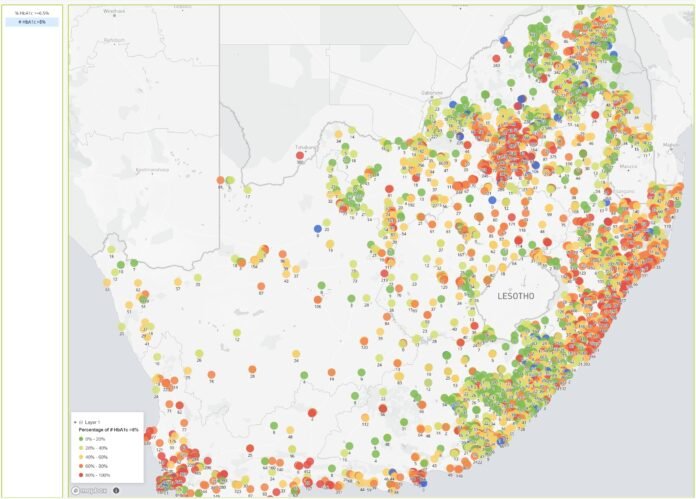
This is why the recent announcement by the National Health Laboratory Service (NHLS), in collaboration with the Gauteng Department of Health, the Wits Diagnostic Innovation Hub, and National Priority Programmes, is such a significant development. For the first time, South Africa has a near-real-time, nationwide view of diabetes control, with laboratory data refreshed within 48 hours.
This is not just a technological upgrade; it is a fundamental shift in how we deliver public healthcare.
Moving from hindsight to foresight
Until now, diabetes data management in the public sector has been largely reactive, dependent on monthly Excel reports that required manual analysis and delayed distribution. By the time a patient was flagged for poor control, the opportunity for early intervention had often passed.
The new dashboard changes the equation. By leveraging NHLS laboratory data to provide a live view of diabetes control, it allows us to transition from reactive care to proactive population health management. Clinicians and programme managers can now identify high-risk patients earlier, monitor trends across districts and provinces, and intervene rapidly to prevent long-term complications.
Why this matters now
This development arrives at a critical juncture. Diabetes is now a leading cause of death in South Africa, placing a devastating burden on individuals, families, and our health system. Two weeks ago, civil society organisations, alongside people living with diabetes, issued the Johannesburg Declaration for Accelerated Action on Diabetes in South Africa. A core pillar of that declaration was the urgent need for a digital surveillance system to strengthen accountability.
The NHLS dashboard is a direct, evidence-based response to that call. It aligns perfectly with the National Strategic Plan for the Prevention and Control of Non-Communicable Diseases (2022-2027), specifically the goal of ensuring that 50% of individuals with diabetes on treatment achieve control.
Data is not the solution, action is
While this dashboard is a major leap forward, we must be clear-eyed: data alone does not change clinical outcomes, action does. For this tool to be effective, we need to bridge the gap between digital insights and bedside care. This requires:
- Integrated training: Healthcare providers must be empowered to interpret and act on this data immediately.
- Operational pathways: We need clear clinical protocols so that identifying a high-risk patient triggers an immediate, supported intervention.
- Systemic support: This must include the integration of point-of-care testing to ensure that data gaps at the facility level are closed.
A role for partnership
The success of this initiative will be defined by how we collaborate. The Diabetes Alliance stands ready to support the NHLS and health authorities in promoting the uptake of this tool, strengthening the training of our frontline workers, and ensuring that the voices of people living with diabetes remain at the centre of this implementation.
South Africa has finally taken an important step forward. For too long, people living with diabetes have been lost in the system, diagnosed but not followed up, treated but not “controlled”, present but unseen.
This dashboard provides the tools to change that reality. The opportunity before us is immense, the need is urgent, and the time to move from data to action is now.
____________________________________________________________________________________________
Dr Patrick Ngassa Piotie is a Senior Programme Manager at the University of Pretoria Diabetes Research Centre and the Chairperson of the Diabetes Alliance
The views expressed in this opinion piece are those of the author, who is not employed by Health-e News. Health-e News is committed to presenting diverse perspectives to enrich public discourse on health-related issues.