


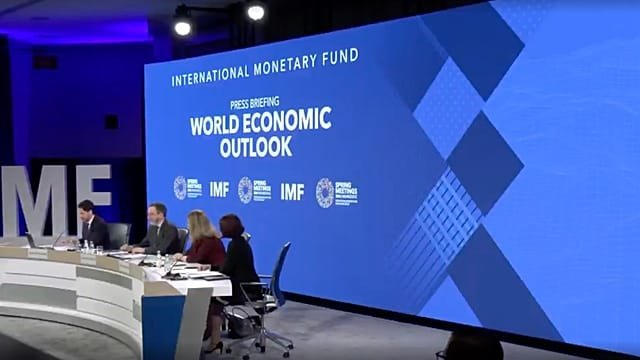
The latest World Economic Outlook from the International Monetary Fund paints a sobering picture for Sub-Saharan Africa, as escalating conflict in the Middle East threatens to derail an already fragile global recovery.
Speaking at the 2026 Spring Meetings, IMF Chief Economist Pierre-Olivier Gourinchas highlighted a sharp shift in global momentum. What had been a stable growth trajectory of around 3.3% in recent years has now been downgraded to 3.1% for 2026, with inflation projected to climb to 4.4%.
Adding to this assessment, Deniz Igan emphasized the broader implications of the crisis, noting that “with the war, global growth has been reduced,” reinforcing concerns about weakening economic activity worldwide.
A Region Highly Exposed to Global Shocks
Sub-Saharan African economies are especially vulnerable due to their reliance on imported food and energy. The IMF identifies three main transmission channels through which the crisis is expected to hit hardest: surging commodity prices, persistent inflationary pressures, and tightening global financial conditions.
For many countries across the region, higher fuel and food costs risk worsening already elevated living expenses. Net oil-importing nations could see widening trade deficits and increased fiscal strain.
Deniz Igan also pointed to additional structural pressures facing the region, warning that it is “facing challenges from the reduction of foreign aid,” a factor that could further constrain government budgets and development spending.
Limited Policy Space, Tough Choices Ahead
The IMF warns that policymakers across Sub-Saharan Africa face a delicate balancing act. Central banks must remain vigilant against rising inflation while avoiding aggressive tightening that could stifle growth.
Fiscal policy options are also constrained. Many governments in the region entered this period with elevated debt levels following pandemic-era borrowing and subsequent global shocks. As a result, broad-based subsidies or untargeted spending increases may prove unsustainable.
Echoing these concerns, Deniz Igan highlighted that several countries are already experiencing a “downgrade in growth,” alongside rising price pressures, adding that “inflation is projected to go up,” further complicating policy responses.
Energy Security and Structural Reform as Long-Term Solutions
Beyond immediate crisis management, the IMF emphasizes the importance of long-term structural reforms. Investments in renewable energy and domestic energy production could help reduce reliance on volatile global markets, a key vulnerability exposed by the current crisis.
Risks Tilted to the Downside, But Opportunities Remain
According to Gourinchas, the risks to the global and regional outlook remain firmly tilted to the downside. A prolonged or escalating conflict could further disrupt supply chains and commodity markets, amplifying economic stress across vulnerable economies.
However, there is also room for cautious optimism. A swift resolution to the conflict, easing global trade tensions, or productivity gains from emerging technologies such as artificial intelligence could provide a much-needed boost.
For Sub-Saharan Africa, the coming months will be critical. The region’s ability to navigate external shocks while advancing structural reforms may determine whether it can withstand the current turbulence or face deeper economic setbacks.