


A Limpopo mother is calling for answers about her daughter’s condition, and for better healthcare and social support for families caring for children with severe disabilities in rural areas.
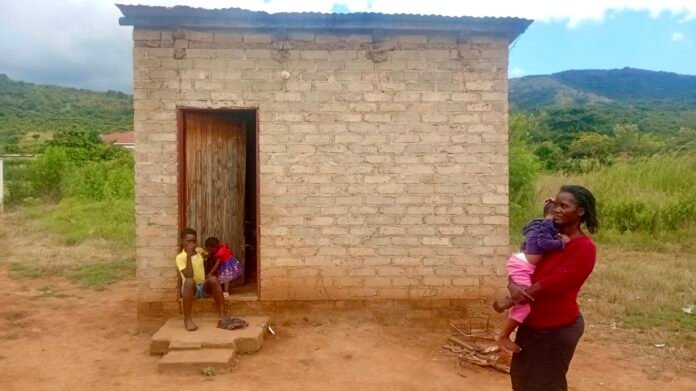
Andronicca Rasebotsa, 38, from Mphame Village lives in the Greater Tzaneen Local Municipality with her three children – including her 13-year-old and one-year-old sons – and her five-year-old daughter who has cerebral palsy.
The family lives in a one-room structure where cooking, bathing and sleeping all happen in the same space. Rasebotsa says the cramped conditions make it even harder to care for a child with complex needs.
“It pains me every day,” she says. “You can see that my child wants to speak. She wants to say something, but she can’t.”
Rasebotsa says her daughter cannot walk, speak, feed herself or use her hands independently. She is also unable to leave her with strangers.
“I must do everything for her,” she says.
“She feels abandoned. I can see it when she cries.”
Questions that were never answered
Rasebotsa says her concerns began during pregnancy in 2020, when she went to Phatudi Hospital in Shiluvane after noticing that her unborn baby was no longer moving.
“I told the doctor that my baby was not moving and asked to be examined,” she says. “The doctor refused and told me to come back in October.”
On 7 October, she returned to the hospital after still not feeling foetal movement. She alleges that nurses alerted the same doctor that her condition was an emergency.
“The doctor again told me to wait and be patient,” she says.
According to Rasebotsa, the doctor later checked the baby’s heart rate and said she was still far from giving birth.
She says one nurse disagreed and urged that she be taken to theatre.
Rasebotsa was eventually taken for a caesarean section. She says she was later told that her baby did not cry at birth.
A doctor later told her that her child has cerebral palsy and might never walk or speak. “He said even if she walks, she might not speak,” she says.
After about a week in hospital, she was discharged. She says she was not given clear explanations about what had gone wrong or what to expect.
Years later, she says she still does not know exactly what happened.
“I want to know what went wrong. Why can’t my child speak or walk?” she asks.
Follow-up health care
Rasebotsa is also unhappy with the subsequent care her daughter receives during some hospital visits.
“When I take her for check-ups, nurses and doctors don’t examine her properly,” she says. “They just give medication without checking her.”
She also recalls a comment from a nurse that left her feeling defeated.
“One nurse told me I must accept the situation because there is nothing they can do and that my child will remain like this for the rest of her life,” she says.
The strain of home care
Rasebotsa says caring for her daughter has been physically and emotionally overwhelming.
“I don’t sleep well because I’m always thinking about my child,” she says.
Rasebotsa says the family’s living conditions add to the pressure. The small home is not suitable for a child with severe care needs, especially during bad weather.
Her only income is the R2,320 she receives each month through SASSA child support and disability grants.
“That money is not enough to build a proper house,” she says.
Rasebotsa says she has repeatedly asked the local municipality for help, including for more suitable RDP housing, but has not received a solution.
“When I ask the councillor, I’m always told to wait,” she says.
“I even sent an SMS saying I was thinking of taking my life,” she says. “But when I think of my children, especially my child with a disability, I stop.”
Municipal spokesperson Neville Ndlala says Rasebotsa relocated to the village in 2022.
“The last allocation of houses was conducted in 2022 and was based on a pre-approved list of beneficiaries,” Ndlala says.
He says the ward councillor had been engaging relevant stakeholders to explore possible solutions.
Unanswered medical questions
In early 2023, she returned to Phatudi Hospital seeking answers. But she says she was told the hospital had no answers for her.
She believes earlier medical intervention might have changed the outcome.
“If the doctor had examined me earlier, maybe my child would have been saved,” she says.
“I need justice for my child.”
Rasebotsa says her most urgent need now is specialist medical care, therapy, and assistive devices. And she wants compensation and a proper explanation of what caused her child’s condition. She has since enlisted the help of a lawyer.
“I want a good doctor to examine her properly. Maybe one day she can walk or speak,” she says.
Government response
In March, the Limpopo Department of Social Development spokesperson Joshua Kwapa said social workers would be dispatched to assess the family and recommend professional interventions. This has still not happened.
Limpopo Department of Health spokesperson Neil Shikwambani says the case had not previously been submitted through formal complaints or medico-legal channels, but that the department had started an internal review after Health-e News’ enquiry.
He confirmed that reduced foetal movement is treated as a medical emergency under national maternity care guidelines.
He also says children with cerebral palsy are managed through a multidisciplinary approach, including physiotherapy, occupational therapy and speech therapy. Rasebotsa says her child is not receiving any of these services.
The department says it remains committed to patient-centred care and encourages patients to report complaints through official channels. – Health-e News