



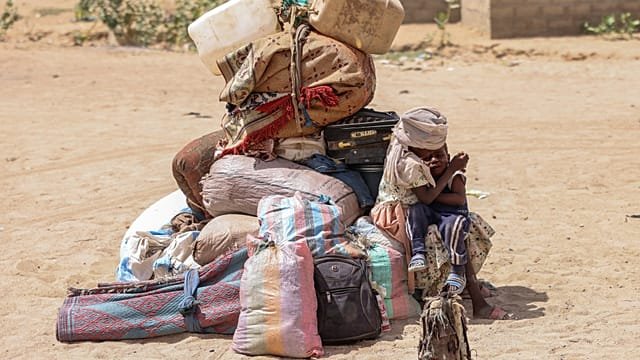
Despite a relative decline in international attention, the humanitarian situation in the Central African Republic (CAR) remains severe and largely ignored. 2.3 million people – 35 percent of the population – live in extreme vulnerability.
The number of people in need is well beyond what humanitarian assistance alone can address.
Conflicts particularly in the southeast and west, epidemics, and climate-related chocs continue to be the root causes of vulnerabilities that lead to humanitarian needs.
Without renewed visibility, solidarity, and political engagement, this silent crisis risks deepening and fueling regional instability. Regional dynamics are exacerbating already fragile conditions.
The war in Sudan has driven significant population movements into the CAR, which hosts 35,048 Sudanese refugees as of March 2026, particularly in Birao in the Vakaga Prefecture, northwest where the population has doubled since, straining already scarce resources.
Over 120 humanitarian bases belonging to 60 organizations closed since 2025 due to underfunding, including six in Vakaga hosting 62 per cent of Sudanese refugees.
Without immediate, robust, sustainable, targeted, and flexible support, CAR risks a deepening humanitarian emergency that could undermine the wider region.
Despite these challenges, Fatna Saleh Youssouf, a single mother of one who lost her leg in an explosion during the war in Sudan, refuses to give up.
Thanks to the support she has received from humanitarian organizations, she sells doughnuts to provide for herself and her child, embodying resilience and hope for thousands of Sudanese refugees.