



10/04/2026 – 15:05 GMT+2
Medián, currently considered among the most accurate pollsters in Hungary, predicts a two-thirds majority in parliament for opposition party Tisza. Most other pollsters estimate a smaller lead for them, while few have the ruling Fidesz party narrowly ahead.
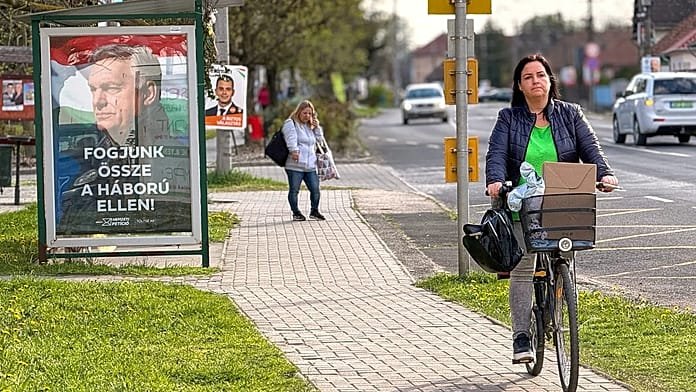
Hungary’s parliamentary election, taking place this coming Sunday, is shaping up to be the biggest challenge to Prime Minister Viktor Orbán during his 16 years in charge of government.

ADVERTISEMENT
ADVERTISEMENT
Polling agencies continue to show significantly different outcomes, with overall trends over time favouring the opposition Tisza Party.
A survey by Medián has support for Tisza, led by former Fidesz Party member and MEP Péter Magyar, at 58%. The same poll showed support for Fidesz to be at 33%, a much wider gap between the two compared to earlier polls by the same agency.
Other pollsters including Publicus Institute, Závecz Research, 21 Research Centre, Republikon Institute, IDEA Institute and Iránytű Institute, all show Tisza ahead of Fidesz at lower but still significant rates.
Magyar Társadalomkutató, Alapjogokért Centre, XXI. Század Institute and Nézőpont are the only pollsters to predict that Fidesz will end up on the winning side.
A number of Hungary’s polling agencies found that a series of government scandals coming to light in the run-up to the election have worked against Orbán’s governing Fidesz party.
Nevertheless, understanding the voting intentions of people who avoid taking part in surveys has remained a challenge.
Four pollsters – Medián, Iránytű Intézet, 21 Research Centre and IDEA Intézet – published their most recent figures in the final week before the election. All of them show that Tisza has widened its lead over Fidesz.
Nézőpont Institute published its most recent figures last week, predicting a narrow Fidesz majority.
Medián predicts a nearly two-thirds majority for Tisza
Polling agency Medián is considered one of the most accurate on Hungarian elections.
Ahead of the most recent parliamentary elections four years ago, it surprisingly predicted a two-thirds majority for Fidesz just days before the election. It turned out to have only slightly overestimated support for the opposition by a few seats, as Fidesz scored an easy victory.
Medián has now produced a seat projection based on its five most recent surveys, predicting that Tisza can expect to secure between 138 and 143 out of 199 seats in parliament.
This would completely upend Hungary’s existing political direction and provide Tisza with the two-thirds majority needed to amend the country’s constitution, overturn laws and introduce new ones.
According to Medián, Fidesz is headed for a resounding defeat and, due to the nature of Hungary’s electoral system heavily favouring the winning side, would only take between 49-55 seats and barely register any victories in individual constituencies.
The same polls show the far-right Mi Hazánk party securing five or six seats in parliament. The socialist Democratic Coalition (DK) and satirical Hungarian Two-Tailed Dog Party (MKKP) are set to win no seats in parliament.
Medián’s methodology consisted of five telephone surveys in the last week of February and March, using three different call centres and a total sample of 5,000 people.
If proven accurate, the result would mean Fidesz lost a quarter of its base from the 2022 elections, and point to a significant drop from its result in the 2024 European Parliament elections.
In terms of demographics, age is the biggest determining factor for voting intentions, with education in second place, while where voters live appears to be becoming less influential.
Urban areas would normally be expected to see higher support for Tisza, with rural areas more likely to lean towards Fidesz. However, surveys conducted in March predict Tisza to be ahead in rural areas, with 41% compared to Fidesz’ 35%.
The Tisza Party remains most popular among young people and is on an upward trajectory, according to Medián. Three-quarters of those under 30 intend to vote for Tisza, and 63% of those aged between 30 and 40. Fidesz’s support in these two age groups sits at just 10% and 17% respectively.
Fidesz holds the advantage with those 64 or older – almost half support the governing party, while 29% prefer Tisza.
Those who are more highly educated are more likely to vote for Tisza, according to the poll. Meanwhile 49% of people who have completed eight years of primary school or less support Fidesz, compared to 29% for Tisza. Fidesz holds a slight lead among those with vocational training.
Further analysis conducted in late March by Hungarian civic movement group aHang and the 21 Research Center shows that voters are generally keen to see a change of government.
A poll conducted by both organisations, based on eight questions, showed voters’ desire to see a change of government grew over time, with the proportion now estimated to be at 51%.
On the other hand, 30% of respondents said they would like the ruling party to stay in office.
Their analysis showed that the overall assessment of the current Orbán government’s performance is negative. Some 38% of Hungarians are not at all satisfied, and another 13% are quite dissatisfied.
11% are quite satisfied and 15% are fully satisfied, a combined 26%. A further 9% placed themselves in the middle and 14% did not want to answer.
The most recent figures from the Nézőpont Institute, which has in the past few months consistently shown the Fidesz Party holding a small lead, predict a 6% margin between them and Tisza, with 46% and 40% respectively.
Nézőpont conducted a survey early this month that asked respondents whether they believe price cuts on utility bills will remain in place if Fidesz wins. 60% said they would, while 56% felt a Tisza-led government would abolish them.
It also found that a quarter of Tisza voters believe the party they intend to vote for plans to raise utility bills if in government.
Orbán projects confidence but remains cautious
Addressing the polling numbers, Orbán pointed to surveys predicting a Fidesz victory, insisting that “as far as we know, we are on course to win”.
During an interview on Wednesday, he said, “We do not need to run a campaign to overturn the balance of power, but rather a campaign to defend our lead.”
He added that it is hard to assess the veracity of polling numbers at this stage, as emotions are running high with election day so close.
Minister of the Prime Minister’s office Gergely Gulyás, meanwhile, admitted this week that “winning a two-thirds majority belongs in the realm of miracles”.
Asked how many seats he currently considered attainable, he replied that anything above 100 seats would be a gift. Still, he insisted that the governing party has the better chance of finishing in first place come Sunday.