



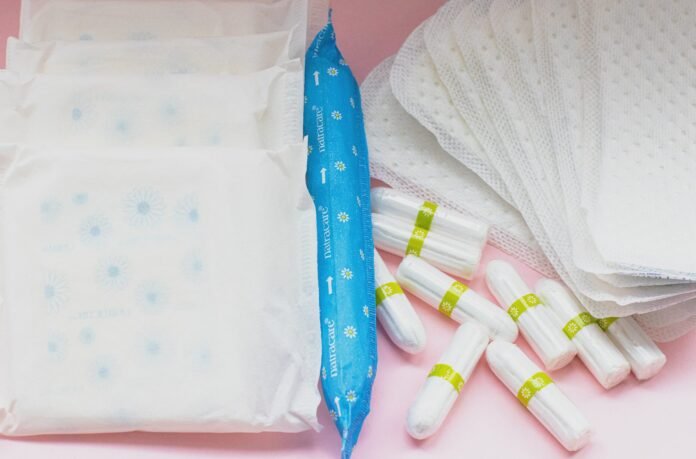

While the health department has sought to reassure the public about hormone-disrupting chemicals found in sanitary products, activists say the bigger issue is whether South Africa’s regulation of these products is transparent enough.
This follows last week’s response by Health Minister, Aaron Motsoaledi to a study by the University of the Free State (UFS) that detected endocrine-disrupting chemicals (EDCs) such as phthalates, bisphenols, and parabens in menstrual pads and panty liners.
“The detection of EDCs does not translate to evidence of harm to South Africans. Just because a chemical is present does not mean that it represents a risk,” the minister said during a press briefing last week.
Academic and menstrual health advocate Candice Chirwa is not convinced, arguing that dismissing the study findings isn’t the same as guaranteeing safety.
“When the Minister [Motsoaledi] says there is ‘no evidence of harm’, what he’s really saying is that we haven’t actually looked yet. We haven’t done the long-term studies on what happens when you use these products 15,000 times over 40 years”, she says.
In a statement prepared alongside several medical and regulatory bodies, Motsoaledi said the finding of EDCs in menstrual products is not new nor surprising. EDCs are natural or human-made chemicals that can interfere with hormone action, especially reproductive and thyroid hormones.
According to the minister, 20 studies have been published over the years looking at EDCs in sanitary pads. None of these showed “any evidence of clinical harm to the people using these products”.
“While I respect the clinical experts, we have to be honest about the gap in our knowledge. Business as usual for a regulator might work for a paper towel, but it’s not enough for a product used against a sensitive part of the body for 40 years,” says Chirwa.
What the research found
Published in February, the UFS study analysed the presence of 20 EDCs in 16 commercially available sanitary pads and seven panty liners in South Africa. When EDCs were detected in a product, researchers estimated how much of these chemicals women would be exposed to with daily use of sanitary products.
Researchers found phthalates were the major compounds found in liners and bisphenols the major compounds in pads. The study concluded that ‘although estimated daily exposure doses from these products may appear low, their significance lies in cumulative exposure across multiple sources, as well as the repeated, long-term contact with sensitive tissues during menstruation.’

But the South African Society of Obstetricians and Gynaecologists (SASOG), South African Society of Reproductive Medicine and Gynaecological Endoscopy (SASREG), and the College of Obstetricians & Gynaecologists (CMSA), called the study’s conclusion into question, arguing that “the implication to the general public of harm has not been proven in this study”.
To emphasise the low risk, the joint expert statement cites a 2020 study that found that sanitary pads “contributed only 6.8% of the total exposure” to EDCs.
The UFS study authors did not respond to our requests for comment.
Chirwa is adamant that “finding hormone-disruptors in a product used for four decades should be a priority, not dismissed because the ‘traces are small’.
To stress the limited content of EDCs in sanitary pads, Motsoaledi highlighted that some men face more EDC exposure than women because of their working conditions.
“But men in those jobs can wear PPE to stay safe. Women and girls shouldn’t need PPE just to manage a period. We aren’t asking for panic – we’re asking for total transparency,” Chirwa tells Health-e News. “Comfort only comes when regulators care as much about chemical purity as they do about how much liquid a pad can hold.”
The regulators
Motsoaledi emphasised that regulators, including the South African Health Products Regulatory Authority and the South African Bureau of Standards, will continue in their oversight roles to ensure product safety.
“If the current framework doesn’t require manufacturers to disclose full ingredient lists or meet specific purity levels, then simply continuing as before doesn’t address the transparency gap
“I’ll feel more confident in the regulatory process when we see a shift from testing how a product performs to also testing what it is made of.”
She calls for regulatory guidelines to be updated to compel the inclusion of mandatory chemical screening.
“True reassurance doesn’t come from a press briefing telling us not to worry,” she says.
“It comes from seeing a full ingredient list on every box and knowing that our regulators are prioritising our long-term reproductive safety every single month. Our health is a necessity, not a ‘low-risk’ afterthought.” – Health-e News