


As Syria marks 15 years since anti-Assad uprising, security issues remain
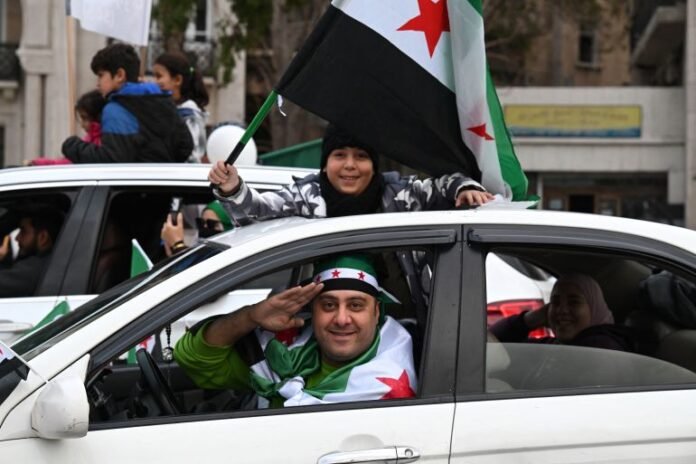
Syrians celebrate the start of the 2011 uprising that, in 2024, put an end to Bashar al-Assad’s rule.

 By Al Jazeera StaffPublished On 15 Mar 202615 Mar 2026
Save
On Sunday, people across Syria will celebrate the 15th anniversary of the uprising that, in late 2024, put an end to President Bashar al-Assad’s rule.
On March 15, 2011, antigovernment protesters descended onto the streets of Deraa, Damascus and Aleppo.
Recommended Stories
list of 4 itemsend of list
After Tunisia and Egypt, the Arab Spring had arrived in Syria.
Many of the initial demonstrations erupted after news emerged of the arrest and torture of teenage boys from Deraa, in southwestern Syria. The boys were arrested for painting anti-Assad graffiti.
As the protests grew to demand democratic reforms and the release of political prisoners, al-Assad and his forces began responding with brutal force and suppression. By July 2011, defectors from the Syrian army announced the formation of the Free Syrian Army. Other armed groups also joined the fray, as did many nations and regional rebel groups, and soon, the country fell into a vicious war in which hundreds of thousands were killed and millions displaced.
Then, in December 2024, a lightning offensive by the Hayat Tahrir al-Sham (HTS) group removed al-Assad, who fled to Russia. The leader of the since-disbanded HTS, Ahmed al-Sharaa, is now the country’s president and has led the effort to rebuild a battered state, including its security.
Syrians told Al Jazeera on the uprising’s anniversary that they are proud to have deposed the Assad dynasty that ruled the country for more than 50 years.
Last year, the capital was filled with roses as Syrians celebrated the first anniversary of the revolution without al-Assad as their leader. And this time, with the anniversary coming amid the Muslim holy month of Ramadan, authorities have planned a big iftar in Qatana, just south of Damascus, with the families of people killed, as well as a gathering of young revolutionaries and activists in Barzeh.
Advertisement
“God willing, we will celebrate,” Bassem Hlyhl, an employee at the Ministry of Information, told Al Jazeera.
‘International legitimacy’
When al-Sharaa came to power, questions loomed over whether he would be able to overcome some of the major challenges facing the country, including the severe international sanctions imposed on it.
But al-Sharaa quickly gained international legitimacy, building good relations with several regional countries, as well as the United States under President Donald Trump.
“Al-Sharaa has achieved a level of international legitimacy no other Syrian president has reached before him,” Omer Ozkizilcik, a non-resident senior fellow at the Atlantic Council’s Syria Project, wrote in a December 2025 report.
Still, obstacles remain. Many Syrians say they no longer have to worry about al-Assad’s security forces arresting or torturing them, but the country’s security is still tenuous.
“For me, it is safer by daylight,” Ahmad Khallak, a Syrian from Idlib, told Al Jazeera.
“There are still a lot of weapons with unknown people or assailants.”
He mentioned that some areas are safer than others, but there are still security concerns, including the presence of ISIL (ISIS) fighters in parts of the country. He also said petty crime, such as robbery, was still present.
The Syrian government under al-Sharaa has worked to establish control over the state after some 14 years of war. That included asserting control over the coast, where fighting in March 2025 led to mass violence, including from members of Syrian security forces, and attempts to extend government control to Suwayda, in the south, where violence spiralled last summer.
Syria’s security forces have recruited a large number of members in a short space of time, but observers say they are still in need of more recruits. This means that parts of the country’s periphery do not enjoy the same security presence as, for example, Damascus.
The government also undertook negotiations to incorporate the Kurdish-led Syrian Democratic Forces (SDF) into the Syrian army. The SDF controlled much of the northeastern of Syria, but a January offensive by the government retook large swaths of the area.
In November, the murder of a couple in Homs threatened to spark sectarian violence, but the government and tribal leaders intervened to calm tensions.
“[T]he Ministry of Interior has moved to strengthen its internal systems and assert greater responsibility over the country’s myriad security actors,” Julien Barnes-Dacey wrote in a recent report for the European Council on Foreign Relations.
Advertisement
“In some areas, such as Homs, where local tensions remain high, government forces’ professional responses to security incidents have prevented new cycles of escalation.
“And following the violence last March that saw more than 1,400 Alawites [a Shia minority] murdered, communal relations appear to be slowly improving on the ground – though minority groups still have deep concerns over their status in the new Sunni dominated country and face ongoing security threats,” he wrote.