


12/03/2026 – 12:03 GMT+1
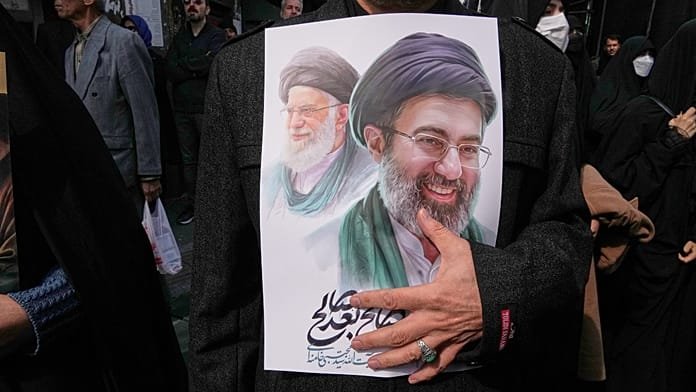
Mojtaba Khamenei’s secretive rise as Iran’s new ayatollah and absence from public has fuelled speculation over his injuries, whereabouts and whether he really controls the IRGC. What is known so far?
Iran’s new Ayatollah Mojtaba Khamenei has not appeared publicly since his appointment by the Assembly of Experts, fuelling uncertainty about his health and whereabouts following the attack that killed his father.

ADVERTISEMENT
ADVERTISEMENT
Initial reports suggested Mojtaba Khamenei had been killed alongside his father Ayatollah Ali Khamenei in US-Israeli strikes on Tehran last Saturday.
However, it emerged that while his mother, father, wife and possibly other family members all died in the strike, he survived.
The Assembly of Experts then chose Mojtaba Khamenei as his father’s successor in a process shrouded in secrecy, with no public details disclosed about deliberations and after further bombing destroyed the assembly’s building in Qom, raising questions of whether all 88 members of the body were alive.
Days after his reported appointment, no video messages, written statements or recent photographs of him have been released. At his inauguration, a cardboard cutout with his image was presented instead.
This resulted in a series of speculations on Mojtaba Khamenei’s current condition, with some raising the possibility he was severely injured or even incapacitated.
With reports of the Revolutionary Guards (IRGC) — elite military units responsible solely to the ayatollah — operating independently since Ali Khamenei’s death, it is unclear whether anyone, the new supreme leader included, have any control over them since the war started nearly two weeks ago.
Reports of injury persist
Alireza Salarian, Iran’s ambassador to Cyprus, told The Guardian that Mojtaba Khamenei suffered injuries to his legs, arms and hands. “I’ve heard his legs and arms were injured,” Salarian said in an interview at the Iranian embassy in Nicosia. “I think he’s in the hospital because he was wounded.”
However, Yousef Pezeshkian, son and adviser to President Masoud Pezeshkian, claimed on his Telegram channel that Mojtaba was “safe and in a secure location”, according to informed sources.
International media outside of Iran reported Mojtaba suffered a fractured foot and minor facial injuries, including bruising around his left eye and superficial cuts, according to insiders familiar with his condition.
Israel’s Channel 12 reported last week that Mojtaba Khamenei was injured but alive. Iran’s state television briefly acknowledged his injuries after his appointment but provided no further details. However, Tehran-run state media referred to Mojtaba Khamenei as “janbaz” — a term used for Iran’s disabled war veterans — further fuelling speculation on the severity of his injuries.
Since his appointment, Mojtaba Khamenei has remained absent from funerals of senior military commanders killed in the initial US-Israeli strikes, which Salarian explained by saying that the new ayatollah is not comfortable with public speaking.
“I don’t think he would be comfortable giving speeches in any situation,” he said. This is unusual in Iran, where the ayatollah traditionally guides the nation through public addresses.
How was Mojtaba Khamenei chosen?
Salarian claimed Ali Khamenei had opposed dynastic succession. “Senior clerics asked (Mojtaba Khamenei), but the late leader said no because he didn’t want a dynastic system,” he said. After the attack, clerics reportedly pressured Mojtaba to accept the role, arguing it was his duty.
This account contrasts with statements from Assembly of Experts members, who told state-affiliated media that Ali Khamenei left no specific instructions regarding his successor.
UK-based Amwaj Media reported the late leader’s will set conditions for his successor, including prior experience in high-level governance and electoral legitimacy—criteria Mojtaba allegedly did not meet.
According to Amwaj, Mojtaba’s appointment was pushed through by Hossein Taeb, former head of the IRGC’ intelligence organisation and a close ally, with the Assembly of Experts reportedly influenced by Guards’ pressure.
Opposition to his selection reportedly came from figures including Tehran’s most influential powerbroker, Ali Larijani.
Key details about Mojtaba’s location, medical condition and capacity to fulfil his duties remain undisclosed. Some analysts suggest he may still be under medical care, while others speculate he is in a secure, undisclosed location for security reasons.