


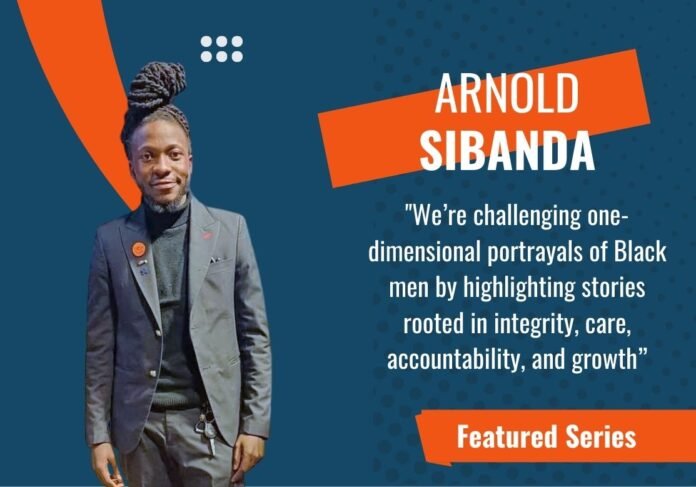
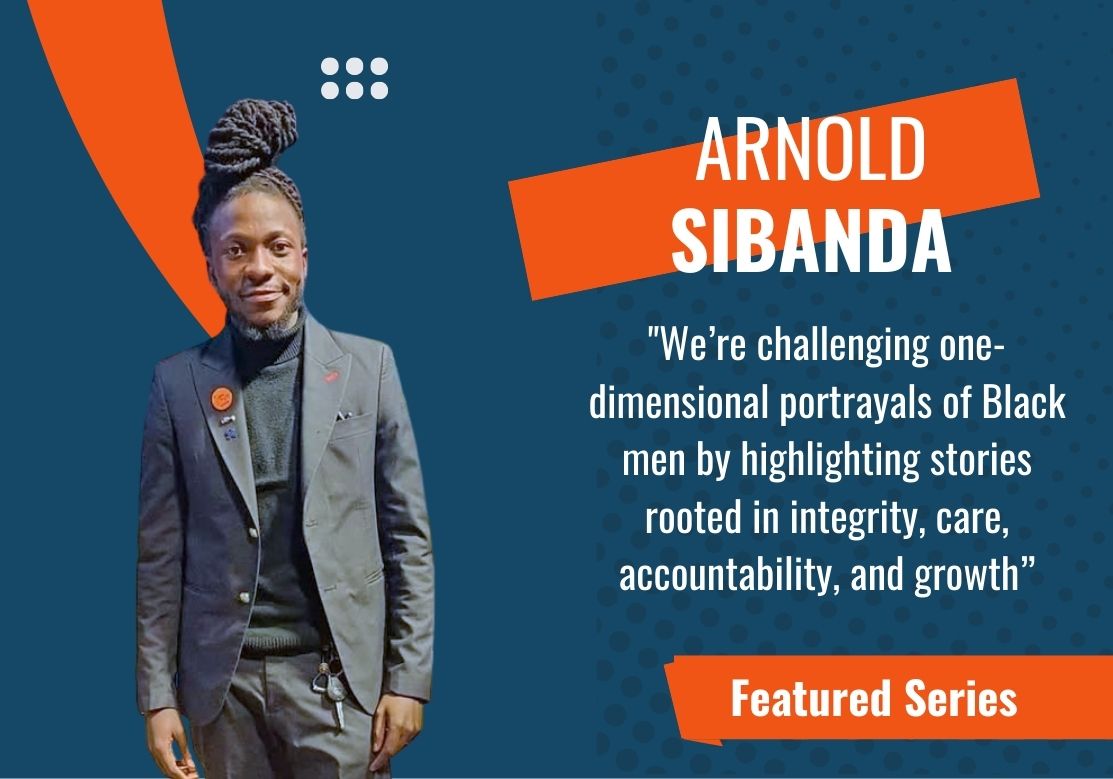
In a society where men aren’t known to speak out, some take it upon themselves to shine a light on the diverse experiences of Black men. One of the platforms that stands out in this area is the Black Male Positivity Project.
This article will delve into Arnold Sibande’s journey in creating the Black Male Positivity Project and highlight the project’s role in creating spaces for Black manhood.
This article will delve into the journey of visionary Arnold Sibanda, tracing the genesis of the Black Male Positivity Project and highlighting its profound significance in establishing nurturing and affirming spaces where Black manhood can be authentically explored, celebrated, and supported, challenging long-standing stereotypes and fostering community resilience.
The Black Male Positivity Project takes a look at critical and challenging issues within the African male community. The project prioritises transmedia conversations among Black men from a range of geographic, economic, generational, educational and social strata. The project serves as a platform for honest expression and provides opportunities for healing on themes that divide, unite and disturb Black males today in Africa.
Loss and Reflection Turned to Purpose
For Sibanda, the Black Male Positivity Project began from a deeply personal moment of loss and reflection. “Shortly before my son was born, my father, who was my role model, mentor, and emotional anchor, passed away. That experience forced me to think intentionally about fatherhood, identity, and the kind of example I wanted to set, not only for my son but for other young Black men navigating similar spaces,” he explains.
During Sibanda’s journey of grieving his father, he realised that there wasn’t enough space in public conversation amongst men where they could be vulnerable. He felt that he could change the narrative and show a different perspective of manhood from the perspectives that existed. “Too often, the narrative is deficit-based and narrow,” Sibanda says.
Reframing the Narrative
What began as small, honest conversations has evolved into structured community engagement. Through storytelling sessions, book discussions, mentorship circles, and public dialogues, the Black Male Positivity Project provides platforms where men can express themselves authentically. “Over time, it became a focused initiative using conversation, literature, and community-building to reshape narrative and identity,” Sibanda explains.
“At its core, the Black Male Positivity Project is about reframing narratives about black men and restoring dignity. We exist to challenge one-dimensional portrayals of Black men by highlighting stories rooted in integrity, care, accountability, and growth.”
Sibanda continued to outline the core values that drive the project. The core values include the following:
- Authenticity: Embracing honest self-expression.
- Responsibility: Owning our growth and our impact.
- Community: Building networks of support among men.
- Purposeful visibility: Amplifying stories that counter stereotypes.
Breaking Inherited Cycles: From Boys to Men
The Black Male Positivity Project primarily targets Black men and boys across generations. “We’re shaping identity from adolescence to fatherhood as a means to break inherited cycles. This focus is critical because identity is formed through representation and reinforcement,” says Arnold.
The founder passionately explains that young boys consistently see limited images of themselves, which narrows their imagination of who they can become. By providing alternative narratives grounded in dignity and possibility, we expand that imagination. The project engages fathers, mentors, and community leaders.
Defining Positivity in Action
For the Black Male Positivity Project, positivity is not the denial of hardship, it is truth paired with intention. Arnold defines it as embracing vulnerability as strength, practising emotional intelligence, taking accountability, and celebrating care, fatherhood, mentorship, and creativity. “It’s about becoming better men while uplifting others in the process,” he explains.
By redefining what it means to be a positive Black man, the project challenges widespread misconceptions. Sibanda explains to us that Black Man Positivity Project challenges stereotypes such as Black masculinity being monolithic. Other ideas challenged by the project include ideas around vulnerable men being weak, their value being tied to their finances, aggressive, or emotionally distant. It’s crucial to shine light on positive roles around men, such as Black men as artists, fathers, thinkers, entrepreneurs, mentors, and leaders. This echoes further Arnold’s statement earlier. “Positivity is not the denial of hardship. It is truth paired with intention.” The younger generation can see positive examples of masculinity.
Relying on Community Support
Arnold has managed to start and sustain the project through self-funding and relying on his community. “In the early stages, there was no external capital, only conviction and consistency.”
Bootstrapping the project meant:
- Using accessible public spaces.
- Leveraging personal savings.
- Partnering with aligned organisations.
- Reinvesting small revenues back into programming.
“Limited funding demanded clarity and discipline. It ensured growth was intentional and values-driven. Now, we are exploring sustainable partnerships and funding opportunities that align with our mission without compromising integrity.
” says Arnold.
Inspiring Change
Arnold Sibande’s journey demonstrates the transformative power of intentional storytelling, community engagement, and authentic leadership. By creating platforms where Black men can reflect, express, and grow, the Black Male Positivity Project not only reshapes narratives, it reimagines the possibilities for Black manhood in South Africa.
In a society where men are rarely encouraged to speak openly, initiatives like this remind us that vulnerability, accountability, and care are not signs of weakness, but the building blocks for healing and creating resilient communities.