


27/02/2026 – 13:43 GMT+1
More than two years later, the border between Russia and Finland remains closed. And the consequences for Finnish businesses are dire: many are still suffering economically from the loss of revenue.
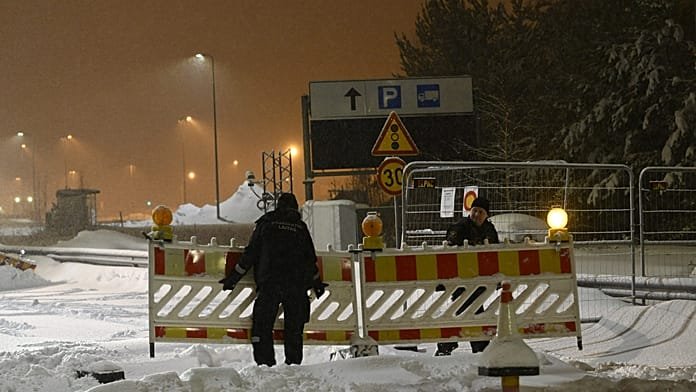
Life has slowed to a crawl across much of eastern Finland since the government shut its 1,300-kilometre border with Russia in December 2023.

ADVERTISEMENT
ADVERTISEMENT
Helsinki said it was responding to what it described as a deliberately engineered influx of undocumented migrants aimed at destabilising Finland — an accusation the Kremlin has repeatedly denied.
The closure also came against a backdrop of increased movement after President Vladimir Putin announced an expansion of the mobilisation of reservists.
Finland has since accelerated work on a border fence. A new 200-kilometre stretch was completed last November, with a three-metre-high barbed-wire barrier installed in areas deemed most sensitive.
The fence is fitted with night-vision cameras, lighting and loudspeakers.
Businesses hit first
The economic shock has been immediate in the border regions, where many cafés, restaurants and small shops relied heavily on cross-border traffic.
Before the closure, nearly two million crossings were recorded each year.
With that flow cut off, some businesses say they have been pushed to the brink, forced to shorten opening hours, slash staffing costs or shut down entirely.
Unemployment climbs
By December 2025, Finland’s unemployment rate stood at 10.2% — the highest in the EU — but it was far higher in border areas, reaching 18.2%.
Local officials have complained about a lack of government support to ease the pressure on communities.
Even so, many say the border closure was necessary despite the growing economic toll.