


27/02/2026 – 5:19 GMT+1
The Oman-mediated negotiations follow repeated threats from Donald Trump to strike Iran, with the US president last Thursday giving Tehran 15 days to reach a deal.
Iran and the United States made “significant progress” in talks in Switzerland on Thursday, mediators said after the latest round of negotiations, and agreed to further discussions next week.

ADVERTISEMENT
ADVERTISEMENT
The talks were not expected to lead to a breakthrough and the US continues to weigh strikes as it gathers a massive fleet of aircraft and warships in the region. US President Donald Trump last Thursday gave Tehran 15 days to reach a deal.
While Iran has insisted the discussions focus solely on its nuclear programme, the US wants Tehran’s missile programme and its support for militant groups in the region curtailed.
Iranian Foreign Minister Abbas Araghchi told state TV that the talks “made very good progress and entered into the elements of an agreement very seriously, both in the nuclear field and in the sanctions field”.
He said the next round would take place in “perhaps less than a week”, with technical talks at the UN’s nuclear agency to begin in Vienna on Monday**.**
Araghchi also called the latest round of talks “the most intense so far”.
“It concluded with the mutual understanding that we will continue to engage in a more detailed manner on matters that are essential to any deal, including sanctions termination and nuclear-related steps,” Araghchi posted on X.
The two sides held multiple rounds of talks last year that collapsed when Israel launched a 12-day conflict against Iran in June and the US carried out heavy strikes on its nuclear sites, leaving much of Iran’s nuclear programme in ruins even as the full extent of the damage remains unclear.
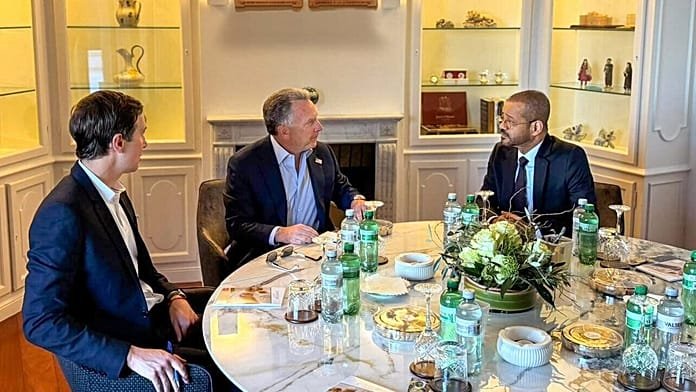
Araghchi represented Iran at the talks. Steve Witkoff, a billionaire real estate developer and friend of Trump who serves as a special Mideast envoy, reprsented the US delegation with Trump’s son-in-law Jared Kushner.
The two sides adjourned after around three hours of talks and resumed the discussions later.
During the break, Iranian Foreign Ministry spokesperson Esmail Baghaei said the Iranians felt there were “constructive proposals” offered on both nuclear issues and sanctions relief.
Trump wants Iran to completely halt its enrichment of uranium and roll back both its long-range missile programme and its support for regional armed groups. Iran says it will only discuss nuclear issues, and maintains its atomic programme is for entirely peaceful purposes.
Military buildup
In his State of the Union address on Tuesday, Trump accused Iran of “pursuing sinister nuclear ambitions”, though Tehran has always insisted its programme is for civilian purposes.
Trump also claimed Tehran had “already developed missiles that can threaten Europe and our bases overseas.” The Iranian foreign ministry called these claims “big lies”.
Iran’s President Masoud Pezeshkian insisted ahead of the talks that the Islamic Republic was not “at all” seeking a nuclear weapon.
As part of the dramatic US buildup, the USS Gerald R. Ford, the world’s largest aircraft carrier, sent to the Mediterranean this week, was seen leaving a naval base in Crete on Thursday.
Washington currently has more than a dozen warships in the Middle East: one aircraft carrier,the USS Abraham Lincoln, nine destroyers and three other combat ships.
It is rare for there to be two US aircraft carriers in the region.